Cosmetic Dentistry: Procedures, Costs, Technology & How to Choose a Dentist
Talk to our team
In this article 22 sections
Cosmetic dentistry covers every treatment that improves how your smile looks — from a simple whitening to a full smile makeover. But choosing well means understanding more than the procedures: what a cosmetic dentist actually does, the technology behind a modern result, how to tell a genuine expert from a general dentist taking on a cosmetic case, and what it all costs.
This complete guide walks you through every procedure, the tech that makes results predictable, how to choose the right dentist, and why so many patients travel to Turkey — so you can make a confident, informed decision.
What is cosmetic dentistry?
Cosmetic dentistry is the branch of dentistry focused on improving the appearance of your teeth, gums and smile — colour, shape, alignment and symmetry — while often improving function and oral health at the same time. It ranges from quick, non-invasive treatments like whitening to comprehensive transformations combining several procedures.
The demand is enormous: over eight million veneer procedures alone are performed worldwide each year, and most patients say their main goal is simply a better-looking smile — with a growing preference for minimally invasive options that preserve natural tooth structure.
What does a cosmetic dentist do?
A cosmetic dentist improves how your smile looks while keeping it healthy and functional. Where a general dentist focuses on treating decay and gum disease, a cosmetic dentist combines dental science with artistic judgement to create natural-looking results — and this "art meets science" balance is exactly what defines the field. In practice, their work involves:
- Diagnosis & smile analysis: assessing your teeth, gums, bite and facial proportions to understand what will actually suit your face — not just whiten one tooth in isolation.
- Smile design: planning shape, length, proportion and shade so the result looks natural and harmonises with your lips, gums and features.
- Shade matching & layering: one of the hardest skills — matching porcelain colour and translucency to mimic real enamel, so veneers and crowns don't look flat or artificial.
- Balancing aesthetics with function: a beautiful smile that causes jaw pain or uneven wear isn't a success. Cosmetic dentists ensure the bite is correct and the gums and bone are healthy before and during treatment.
- Managing multi-step treatment plans: coordinating whitening, veneers, crowns, gum work and sometimes specialists into one coherent plan.
Every cosmetic dentistry procedure explained
Teeth whitening
The quickest, easiest way to brighten your smile — a bleaching treatment that lightens the natural tooth colour. Often the first step before other cosmetic work, so the final shade matches. See teeth whitening.
Veneers
Thin porcelain or composite shells bonded to the front of teeth to hide chips, cracks, discolouration and gaps — the backbone of most smile makeovers. Learn about the types of veneers (E-max, porcelain, zirconia, composite, Lumineers) or see our full veneers guide.
Composite bonding
Tooth-coloured resin applied and shaped directly on the tooth to fix small chips, cracks and gaps — affordable, usually done in a single visit. See composite bonding.
Dental crowns
Caps that cover a whole damaged, heavily filled or root-treated tooth, restoring both strength and appearance — available in zirconia, E-max and porcelain. See dental crowns.
Dental implants
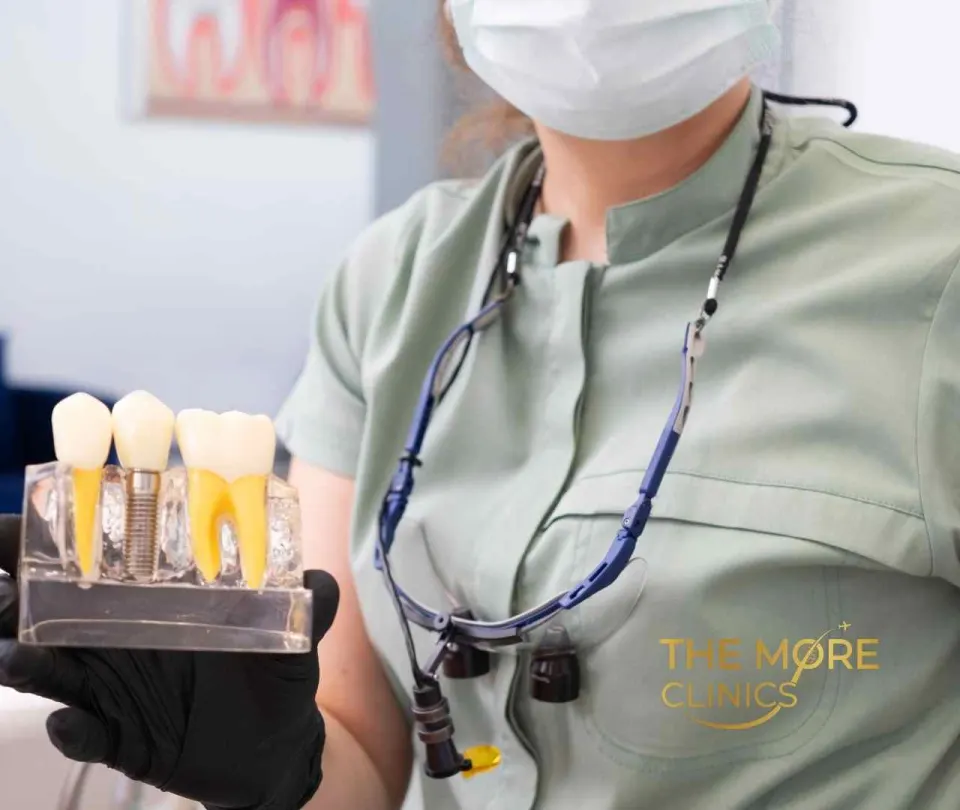
A fixed, long-term solution for missing teeth: a titanium post placed in the jaw, topped with a natural-looking crown. See our dental implants guide.
Invisalign & orthodontics
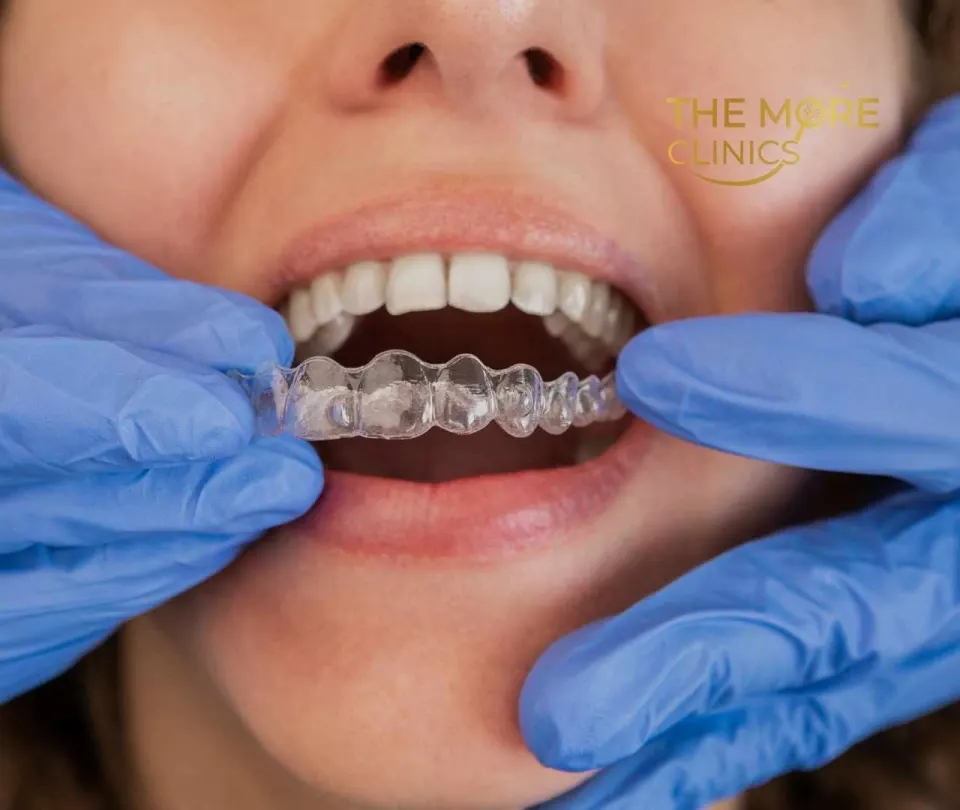
Clear aligners (or traditional braces) that gradually straighten teeth and correct bite issues — a discreet way to fix alignment without veneers. See Invisalign.
Smile makeover
A combination of procedures — whitening, veneers, crowns, bonding, gum contouring — planned together for a complete transformation, often finished in a single trip. See smile makeover.
Gum contouring & crown lengthening
Reshaping the gumline to correct a "gummy" smile or uneven gums, creating better proportion and symmetry. See crown lengthening.
White (composite) fillings
Tooth-coloured fillings that restore decayed teeth while blending in seamlessly — a modern alternative to metal amalgam. See metal-free fillings.
Which cosmetic dentistry procedure do you need?
| If you want to fix… | Often the right procedure |
|---|---|
| Yellow / stained but healthy teeth | Whitening |
| Chips, gaps, discolouration on front teeth | Veneers or composite bonding |
| A damaged, weak or root-treated tooth | Crown |
| A missing tooth | Implant |
| Crooked or misaligned teeth | Invisalign / braces |
| A "gummy" or uneven gumline | Gum contouring / crown lengthening |
| A complete transformation | Smile makeover (combined) |
Often the best result combines procedures — for example whitening first to set the shade, then veneers on the front teeth and a crown where a tooth is damaged. A good cosmetic dentist plans the whole smile, not one tooth in isolation.
The technology behind a modern result
Modern cosmetic dentistry is far more predictable than it used to be, largely thanks to digital technology. The tools a practice invests in reflect its commitment to precision and comfort — and they're worth understanding (and asking about):
| Technology | What it does for you |
|---|---|
| Digital Smile Design (DSD) | Software that models your new smile from photos and facial proportions, so you can preview the result before any irreversible work begins and co-design it with your dentist. |
| Intraoral scanner | Replaces messy impression trays with a quick, comfortable digital scan — giving highly accurate 3D models for a tighter-fitting veneer or crown. |
| CAD/CAM milling | Lets the clinic design and mill restorations in-house with great accuracy — sometimes delivering the final result in a single appointment. |
| 3D printing | Produces precise models, temporaries and surgical guides. |
| CBCT (3D cone-beam CT) | 3D imaging for cases involving implants or bone assessment — precise, safe planning. |
| Laser dentistry | Minimises discomfort and speeds healing during gum reshaping and other soft-tissue work. |
The single most valuable of these for a cosmetic patient is Digital Smile Design: when you can see a simulation of your projected result, you and the dentist are working from the same picture — which means fewer surprises and better-matched expectations on both sides. It's fair to ask any clinic whether they'll show you a digital preview before preparation begins.
Materials & why they matter
The material a veneer or crown is made from directly affects how natural it looks and how long it lasts. The best modern ceramics — lithium disilicate (E-max) and zirconia — offer superior strength and light-transmitting qualities that mimic natural tooth enamel, which is what makes a result look real rather than chalky or opaque.
This is also where suspiciously low prices become a warning sign: if a quote is far below everything else, the clinic may be using inferior materials or low-cost labs, which can lead to premature chipping, staining, or an artificial, flat appearance. Quality materials from reputable brands cost more for a reason — they're a large part of what you're paying for. (For how the materials differ tooth by tooth, see our types of veneers guide.)
What the process looks like, step by step
While it varies by procedure, a typical cosmetic treatment — say a set of veneers or a smile makeover — follows this path:
- 1. Consultation & smile analysis: photos, digital scans and an assessment of your teeth, gums, bite and goals.
- 2. Digital smile design: a preview of your proposed result, refined together until you're happy.
- 3. Preparation: minimal, conservative tooth reshaping where needed (or none, for no-prep options), then a precise digital scan.
- 4. Temporaries: provisional veneers/crowns while the lab crafts your finals — letting you "test drive" the look.
- 5. Fitting & bonding: the final restorations are checked for fit, shade and bite, then bonded.
- 6. Review & aftercare: final adjustments and a care plan to protect your investment (see veneers aftercare).
A whitening or single bonding may take one visit; veneers and crowns usually need a few appointments with lab work between — which, as we'll see, is where an all-inclusive trip abroad can compress weeks into days.
How to choose a cosmetic dentist
Because "cosmetic dentist" isn't a protected title in many places, the credentialing work falls to you. A cosmetic result is something you wear every day for decades — so this decision deserves more than a quick search and a coupon. Here's what actually separates a genuine cosmetic dentist from a general dentist taking on the occasional case:
| Check | What to look for |
|---|---|
| Credentials & training | Post-graduate cosmetic training and memberships (e.g. AACD). Dental school alone isn't enough for advanced aesthetic work. |
| Real before/after portfolio | Photos of their actual patients (not stock images), ideally cases similar to yours, with consistent lighting and natural-looking results. |
| Case volume | How often they perform the specific procedure you need — experience with your exact case matters. |
| Technology | Digital scanners, DSD and (for implants) CBCT signal a commitment to precision and predictable results. |
| Communication | A good dentist listens first and recommends second, uses visual aids, and sets realistic expectations. |
| Transparent pricing | A written, itemised quote with no vague "extras" added later at the chair. |
- Prices far below everyone else with no explanation (often inferior materials or labs)
- Pressure to commit immediately, or a rushed consultation
- No portfolio of their own real cases
- Only star ratings offered as proof — volume and stars alone are weak signals (most patients admit they can't judge review quality)
- No digital preview or clear plan before irreversible work
Cost comparison: Turkey vs UK vs USA (2026)
Cosmetic procedures aren't usually covered by insurance, so cost matters — and it's the main reason Turkey has become a popular destination for cosmetic dentistry. Indicative 2026 prices:
| Procedure (per tooth unless noted) | 🇬🇧🇺🇸 UK / USA | 🇹🇷 Turkey |
|---|---|---|
| Teeth whitening | up to £1,000 | ~£100–340 |
| Composite bonding | £200–400 | from ~£100 |
| Porcelain / E-max veneer | £500–1,000 ($1,200–2,500) | £150–300 |
| Crown (zirconia / E-max) | £700–1,200 (up to $3,000) | £170–300 |
| Full smile makeover (16–20 veneers) | £15,000–20,000+ | £2,880–6,200 |
Savings of roughly 60–80% — and Turkish quotes typically include consultation, digital smile design and temporary teeth, which are often charged separately in the UK/USA. The saving reflects lower operating costs, not lower quality: the same premium brands (E-max, Ivoclar, zirconia) are used.
Cosmetic dentistry in Antalya, Turkey
Turkey — and Antalya in particular — has become a popular hub for cosmetic dentistry, and the reasons go beyond price:
- 60–80% lower cost than the UK, USA or Western Europe — the saving often covers flights and hotel on its own.
- Speed: a full smile makeover often completes in a single 5–7 day trip, thanks to on-site labs and CAD/CAM, versus weeks of appointments at home.
- Technology: leading Antalya clinics use digital smile design, intraoral scanners, CBCT and in-house milling.
- Experience: high-volume cosmetic and implant clinics with internationally trained dentists who treat patients from around the world.
- All-inclusive care: consultation, design, temporaries, treatment and aftercare bundled into one transparent quote — plus the appeal of recovering in a Mediterranean coastal city.
The same selection principles above still apply when choosing a clinic abroad — check credentials, ask to see real before/after cases of your exact treatment, confirm which materials and technology they use, and insist on a transparent written quote. A reputable Antalya clinic will welcome all of these questions. Explore our dental clinic in Antalya.
Before you decide
A few honest considerations: cosmetic procedures usually aren't covered by insurance, so understand the cost upfront; each procedure has its own risks and benefits worth discussing; and good candidates have healthy teeth and gums (any decay, gum disease or bite issues are treated first).
Modern cosmetic dentistry increasingly favours conservative, minimal-prep approaches that preserve as much natural tooth as possible — so ask whether a less invasive option (like no-prep veneers or bonding) could achieve your goal. If you're exploring a holistic or biocompatible approach, see our holistic dentistry guide.
Cosmetic Dentistry — Frequently Asked Questions
What does a cosmetic dentist do?
A cosmetic dentist improves the appearance of your teeth, gums and smile — through whitening, veneers, bonding, crowns, implants and more — while keeping the smile healthy and functional. They combine dental science with artistic skill in smile design, shade matching and bite balance.
Is cosmetic dentistry a recognised specialty?
In many countries, no — it's not a formally recognised dental specialty, so any licensed dentist can use the title. That's why checking post-graduate cosmetic training, memberships (like AACD) and a real portfolio matters when choosing one.
What is the most popular cosmetic dentistry procedure?
Teeth whitening and veneers are the most requested — whitening for a quick brightening, veneers for reshaping and covering imperfections. Full smile makeovers are the leading reason patients travel to Turkey.
How much does cosmetic dentistry cost?
It varies by procedure: whitening from ~£100, bonding from ~£100, veneers £150–300 per tooth, crowns £170–300, and full smile makeovers £2,880–6,200 in Turkey — roughly 60–80% less than the UK/USA.
How do I choose a good cosmetic dentist?
Check credentials and post-graduate cosmetic training, review a portfolio of their real before/after cases, ask about case volume and the technology they use, make sure they communicate and set realistic expectations, and get a transparent written quote. Be wary of unexplained low prices and pressure to commit.
What technology should a modern cosmetic dentist use?
Digital Smile Design (to preview your result), intraoral scanners (comfortable, accurate digital impressions), CAD/CAM milling, and CBCT for implant cases. These improve precision, comfort and predictability.
How long does a smile makeover take?
In Turkey, a full smile makeover often completes in a single 5–7 day trip, thanks to on-site labs and digital design — versus weeks of appointments elsewhere.
Is cosmetic dental work reversible?
Whitening and bonding are largely reversible or repairable, but veneers and crowns involve reshaping the tooth and are considered permanent — which is why choosing carefully matters. No-prep options are the most conservative.
The Last Word from The More Clinics
Cosmetic dentistry offers a treatment for almost every smile concern — whitening for colour, bonding and veneers for shape and imperfections, crowns for damaged teeth, implants for missing ones, Invisalign for alignment, and full makeovers to bring it all together.
But the procedure is only half the story: the technology behind it and the skill of the dentist choosing and executing it decide whether you get a natural, lasting result. Match the right procedure to your teeth, choose a genuinely qualified cosmetic dentist, and insist on transparency — and cosmetic dentistry does exactly what it should.
Our team in Antalya designs each smile individually using digital smile design and premium materials, and gives transparent, all-inclusive quotes. Send a few photos over WhatsApp for a personalised plan and cost breakdown — free and without obligation.
Get a Free Consultation → WhatsApp Us →
Explore treatments: Whitening · Veneers · Types of veneers · Bonding · Crowns · Implants · Invisalign · Smile makeover · Crown lengthening · Holistic dentistry · Veneers aftercare · Dental clinic Antalya
 Written by The More Editorial Team and Medically Reviewed by Dr. Onur Ademhan, specialist in Oral and Maxillofacial Surgery and Implantology. See Editorial Process. Last Updated: [24 August 2026]
Medical disclaimer: This guide is for general informational purposes only and does not replace a personal dental consultation. The right cosmetic procedure and its suitability depend on individual assessment of your teeth, gums, bite and goals by a qualified dentist. Prices are indicative and vary by case.
This article provides general information and does not replace an individual medical assessment, diagnosis or treatment advice. Discuss decisions about your health and treatment with your treating clinician.