Dental Crowns Before and After: Real Results, Types & Guide 2026
Talk to our team
In this article 11 sections
Dental crowns before and after photos are the most useful research tool before committing to treatment — they show what different crown materials actually look like on real teeth, what level of transformation is achievable, and how specific problems (discolouration, damage, missing teeth) are addressed in practice. This guide presents real patient results from The More Clinics Antalya alongside a clear explanation of what each crown type delivers.
For full cost information, the procedure timeline and Antalya-specific details, see our Dental Crowns Antalya Cost & Guide 2026 →
Dental crowns before and after — by crown type
The crown material determines the final appearance. Understanding which material produced which result helps you match the before/after photos you see to your own situation.
Zirconia crowns — before and after
Zirconia is the most commonly placed crown material at Antalya clinics in 2026. It is extremely strong, white in colour, and suitable for both front and back teeth. Before and after results with zirconia show a significant improvement in whiteness and uniformity — the result is clean and bright but can look very white if a high-brightness shade is selected.
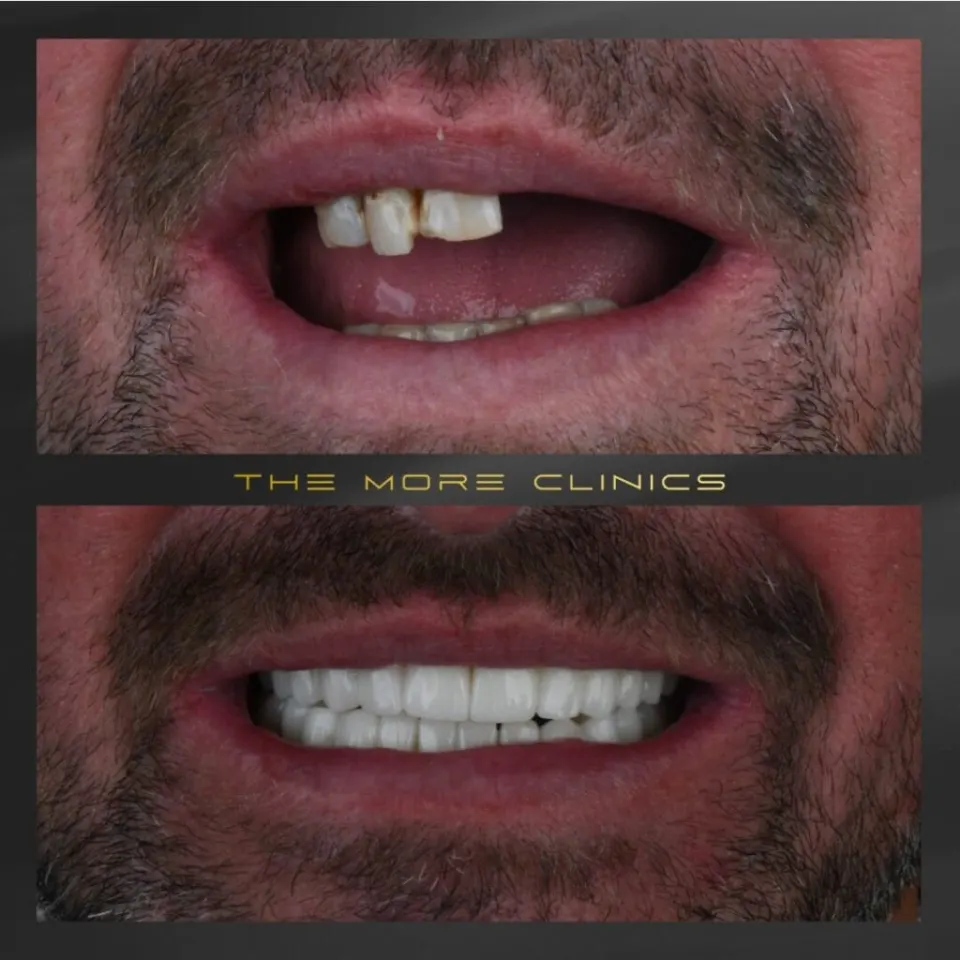
Zirconia crown before after - full smile — severely damaged teeth restored
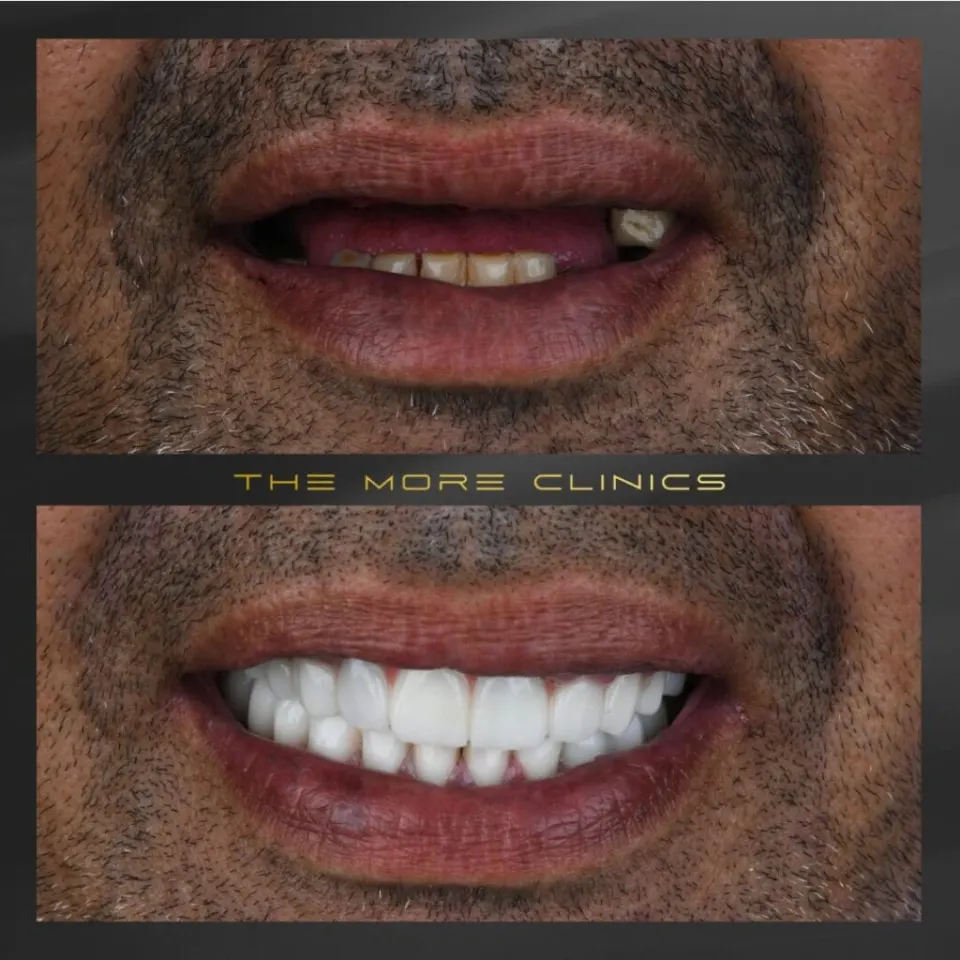
Single zirconia crown before after — natural shade match
What to look for in zirconia before and afters: Shade selection is the most important variable — ask whether the shade shown in the after photo is a natural white or a Hollywood white. A good zirconia before and after shows uniform shape, healthy gum margins (no grey line), and a result that looks like teeth rather than tiles.
E-Max all-ceramic crowns — before and after
E-Max (lithium disilicate) produces the most natural-looking results of any crown material — its translucency mimics natural enamel more closely than zirconia. Before and after results with E-Max show a softer, more lifelike appearance. It is the preferred material for front teeth where aesthetics are the priority.
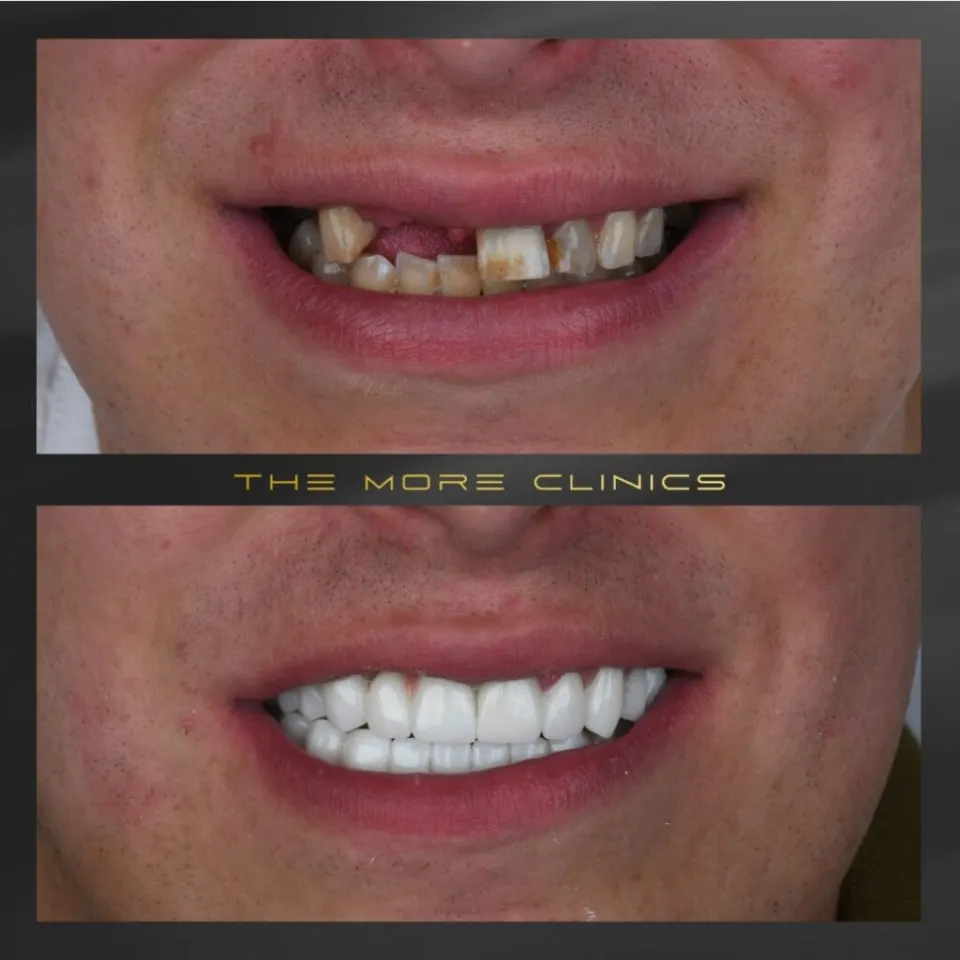
E-Max crown before after— natural translucency, front teeth
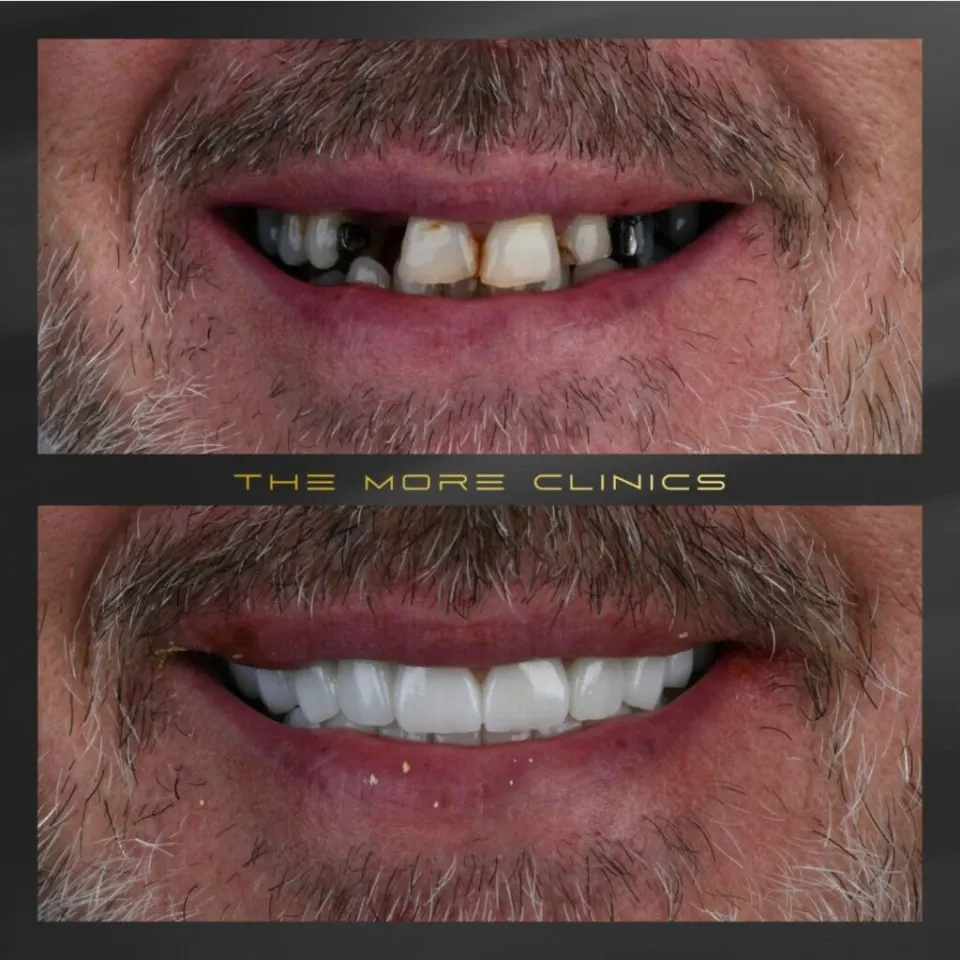
Front tooth crown before after— E-Max ceramic
What to look for in E-Max before and afters: The hallmark of a well-executed E-Max case is that the crown blends into the surrounding teeth rather than standing out. Light interacts with E-Max similarly to natural enamel — look for subtle colour variation within the crown itself, not a flat uniform white.
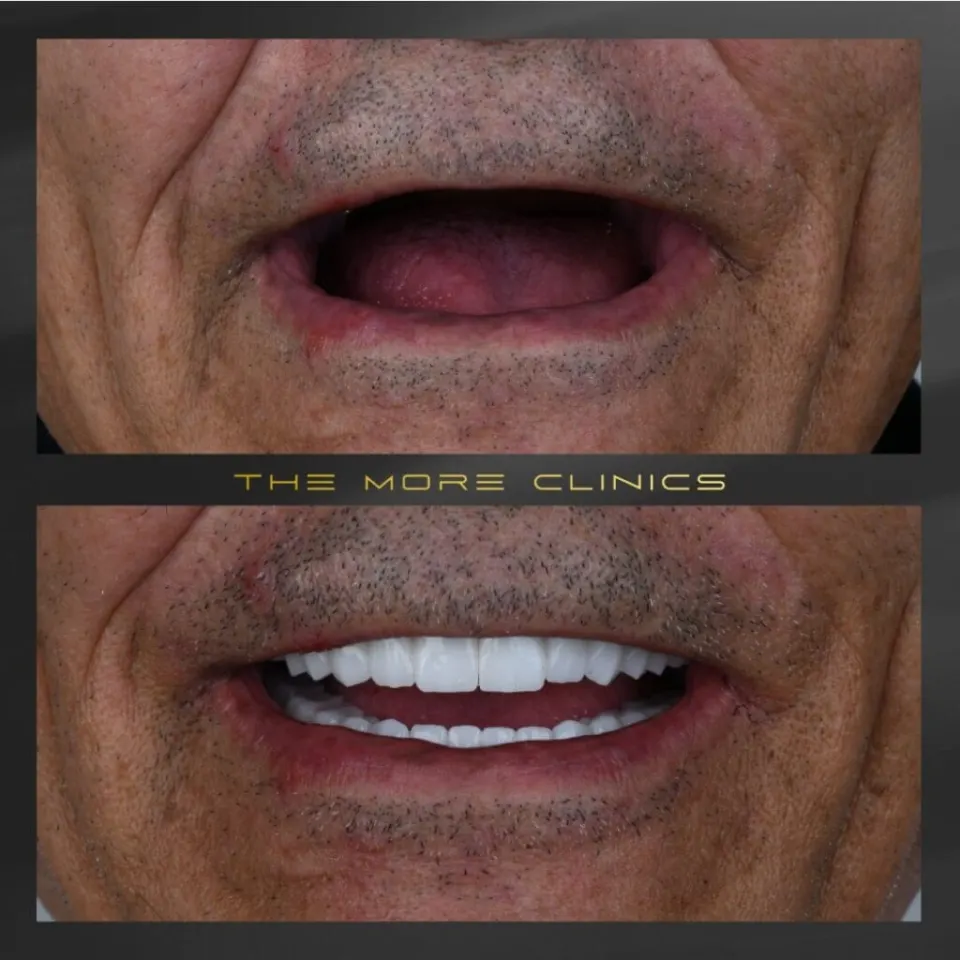
Full smile crown restoration — before and after
A full smile restoration — typically 8–16 crowns covering the upper and sometimes lower arch — produces the most dramatic before and after results. These cases typically address severe discolouration, multiple damaged teeth, or worn-down teeth from grinding.
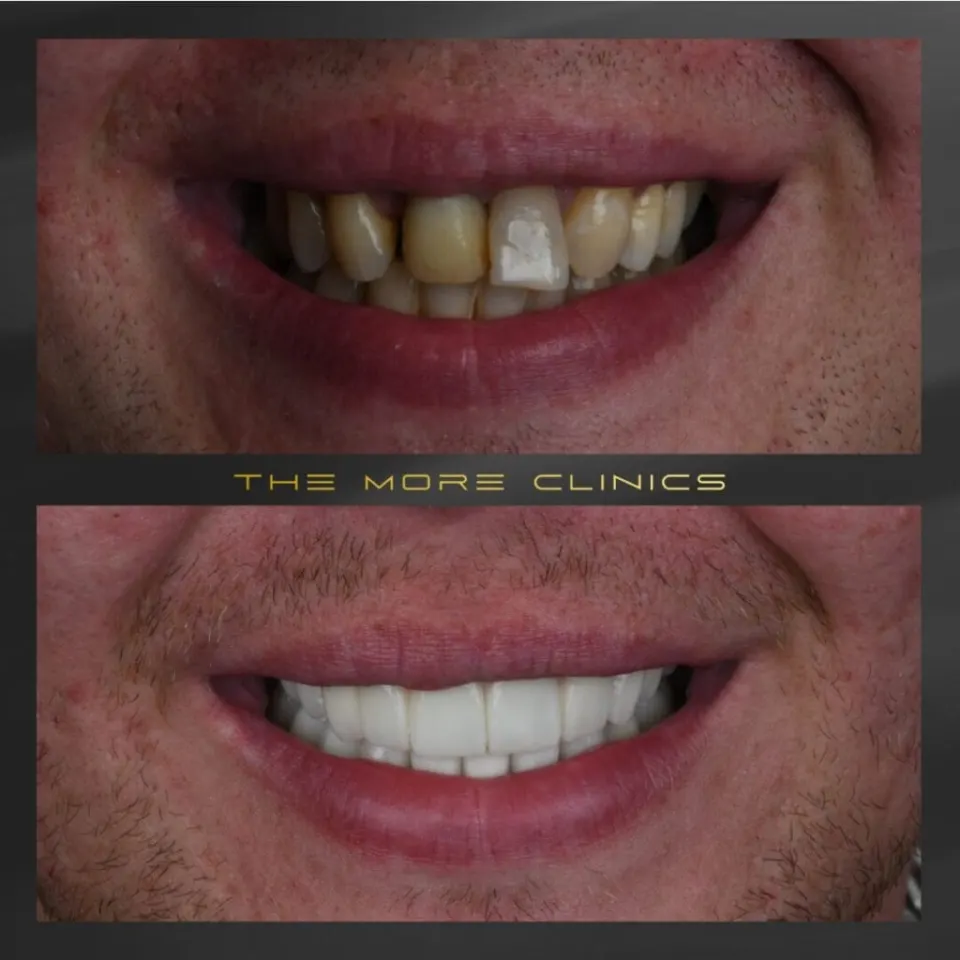
Full arch restoration — 12 zirconia crowns before after
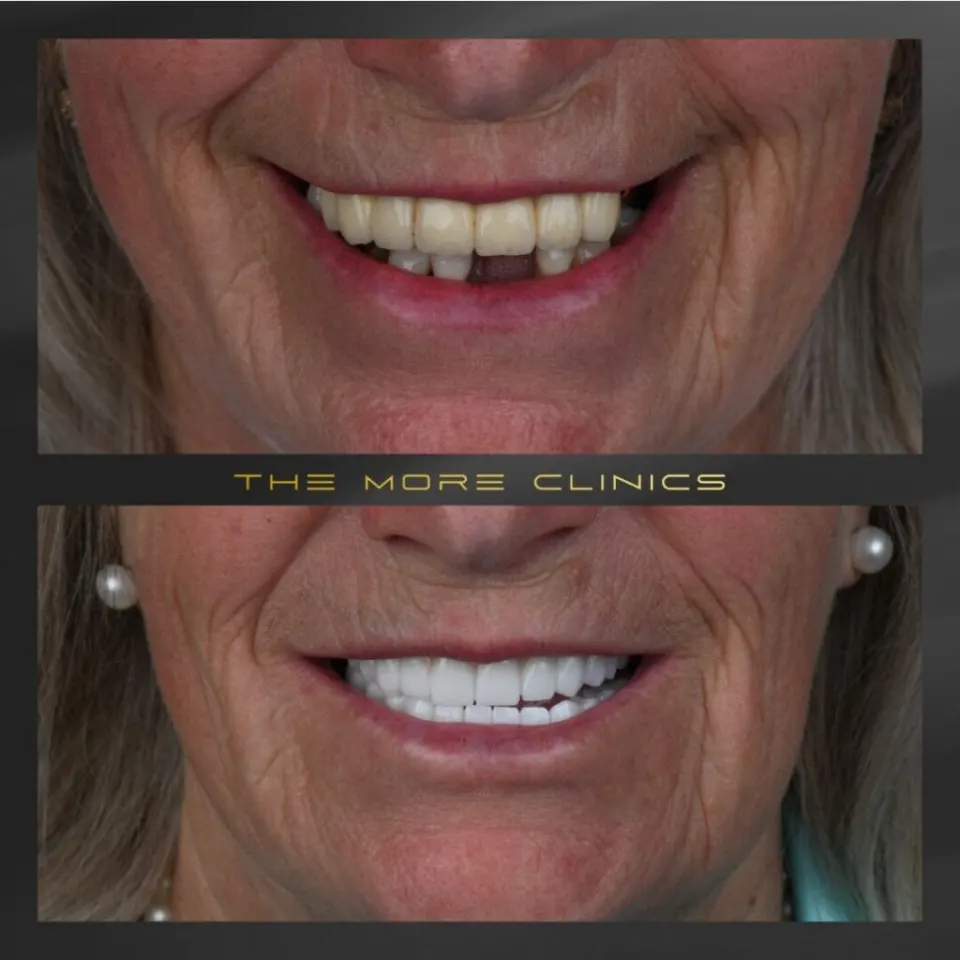
Implants + crowns — full mouth restoration before after
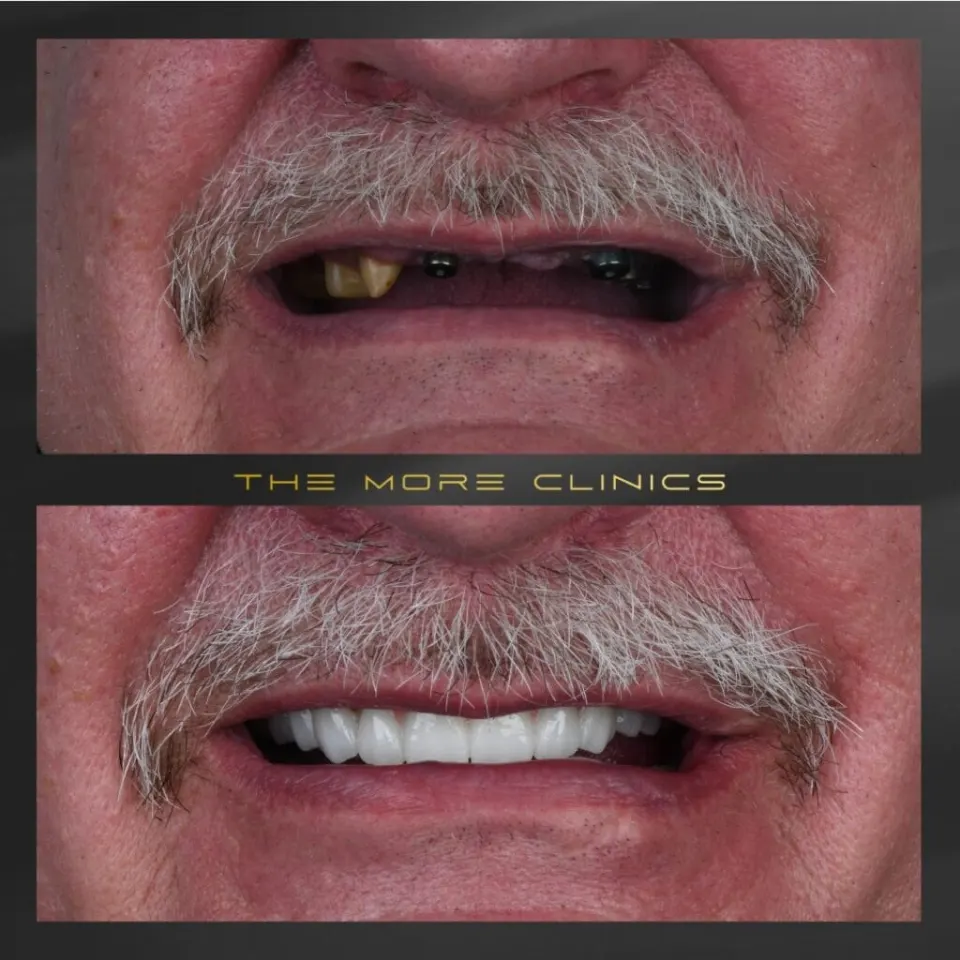
Crown on implant — before and after
When a tooth is missing, a dental implant replaces the root and a crown sits on top. The before and after result replaces the gap entirely — the crown is indistinguishable from a natural tooth in the final result. The dental implant itself takes 3–6 months to integrate with the bone before the crown is placed.
Missing tooth replaced with implant + zirconia crown before after
What dental crowns fix — and what they cannot
| Problem | Crown appropriate? | Alternative if not |
|---|---|---|
| Severely damaged or cracked tooth | ✓ Yes | — |
| Tooth after root canal treatment | ✓ Yes — standard | — |
| Missing tooth (with implant) | ✓ Yes | Dental Bridge |
| Heavily restored tooth (large fillings) | ✓ Yes | Inlay / onlay |
| Cosmetic improvement on intact tooth | ✗ Veneer better | Porcelain veneer, composite bonding |
| Minor chip or stain | ✗ Too invasive | Composite bonding |
| Misalignment / crowding | ✗ Orthodontics first | Invisalign, braces |
Crown materials — what the before and after results actually reflect
The dramatic difference in before and after photos is determined by two things: the clinical problem being solved, and the crown material chosen. Understanding the material helps you interpret what you are seeing.
| Material | What before/after looks like | Best for | Antalya cost |
|---|---|---|---|
| Zirconia | Bright white, uniform, very clean result | Back + front, full smile | £150–£220 |
| E-Max | Natural-looking, translucent, blends with adjacent teeth | Front teeth, natural look | £180–£280 |
| PFM | Good result; potential grey gum line over time | Back teeth, budget cases | £120–£180 |
| Gold | Gold colour — not cosmetic, purely functional | Molars, durability priority | £200–£350 |
How to read dental crown before and after photos — what to look for
Before and after photos are the most important research tool when choosing a clinic — and the easiest to mislead with. Here is what separates genuine useful before and afters from marketing images:
Positive signs:
- Same patient, same angle, same lighting in before and after — different angles make any result look better
- Gum line is healthy and pink in the after photo — no grey margin line indicating metal substructure
- Crown shape is natural — proportional teeth, not uniformly rectangular
- Similar cases to yours are shown — not only dramatic transformations on severely damaged teeth
- Lip retractors used in both photos — consistent visibility of all teeth
Warning signs:
- Before photos taken in dim lighting, after photos in bright studio light — makes any result look better
- Only dramatic transformations shown — severe before, perfect after — without moderate cases
- Stock photos mixed with patient photos
- No before photos showing the actual prepared teeth (stumps) — shows transparency about the procedure
- All after photos showing the same extreme Hollywood white — no natural shade options shown
Dental crowns Turkey cost — at a glance
For detailed cost breakdown by material, same-day options and full procedure guide, see our Dental Crowns Antalya Cost & Guide 2026. Summary:
| Crown type | Antalya (per tooth) | UK (per tooth) | Saving |
|---|---|---|---|
| Zirconia crown | £150–£220 | £600–£1,200 | 70–80% |
| E-Max all-ceramic | £180–£280 | £700–£1,500 | 70–80% |
| PFM crown | £120–£180 | £500–£900 | 65–75% |
Frequently asked questions
What do dental crowns look like before and after?
Before crown placement, teeth are typically damaged, discoloured, cracked or heavily restored. After crown placement, the teeth are uniform in shape and colour, structurally restored, and — with a good shade selection — indistinguishable from natural teeth in the final result. The degree of transformation depends on the starting condition: severely damaged teeth show the most dramatic before and after contrast.
How long after crown placement do before and after photos reflect the final result?
Immediately — unlike veneers or implants, there is no swelling or settling period for crowns. The crown is placed and the result is visible immediately. The gum tissue around the crown margin may take 2–4 weeks to fully settle. Before and after photos taken at the day of fitting are representative of the long-term result.
Do dental crowns look natural in before and after photos?
With E-Max (lithium disilicate) or high-translucency zirconia, yes — the result can be extremely natural-looking. With standard monolithic zirconia in a bright shade, the result is clean and white but can look distinctly dental rather than natural. The shade selected at consultation determines how natural the result appears. Ask your clinic to show before and after photos in both natural and Hollywood white shades.
What is the difference between crown before and after photos vs veneer before and after?
Veneer before and after photos typically show colour and shape improvement on structurally intact teeth — the change is cosmetic. Crown before and after photos often show a more dramatic structural transformation — severely damaged or missing teeth restored. Both can achieve excellent aesthetic results. The key clinical difference is how much natural tooth structure is removed: veneers preserve most of the tooth; crowns reduce all surfaces.
Can I see before and after photos for my specific problem?
Yes — ask The More Clinics to share before and after photos of cases similar to your own starting situation. We maintain a case library organised by problem type (damaged teeth, discolouration, missing teeth, post-root-canal restoration) and can share relevant examples during your free consultation.
How much do dental crowns cost in Turkey?
Zirconia crowns cost £150–£220 per tooth in Antalya, Turkey in 2026. E-Max all-ceramic crowns cost £180–£280. PFM crowns £120–£180. A full arch of 10 zirconia crowns costs approximately £1,500–£2,200 all-inclusive — compared to £6,000–£12,000 for the same in the UK. Full breakdown: Dental Crowns Antalya Cost Guide 2026 →
The Last Word from The More Clinics
The before and after results on this page are from our own patients at The More Clinics in Antalya. Every photograph is taken with consistent lighting and angle to give an honest representation of the outcome. We share difficult cases alongside straightforward ones — because what matters is whether a clinic can achieve a natural, functional result from your specific starting point.
A free consultation includes a review of your X-rays and photographs, a specific material recommendation for your teeth, and a clear explanation of what your before and after result can realistically look like — before you commit to anything.
Book a Free Consultation → WhatsApp Us →
Medical disclaimer: This guide is for informational and educational purposes only. Individual results vary depending on the condition of existing teeth, crown material selected and clinical technique. Consult a qualified dentist for an assessment specific to your circumstances before booking dental treatment.
This article provides general information and does not replace an individual medical assessment, diagnosis or treatment advice. Discuss decisions about your health and treatment with your treating clinician.