Veneers Aftercare Tips for Long-Lasting Results
Talk to our team
In this article 8 sections
Getting veneers is an investment in your smile — and how you care for them decides whether they last 5 years or 15. The good news: veneer aftercare is simple, but a few specific habits genuinely matter (and one or two common ones, like using whitening toothpaste, quietly damage them). This dental veneers aftercare tips guide covers the first days after fitting, your daily routine, what to avoid, the right products, and the differences between caring for porcelain and composite veneers.
Brush twice daily with a soft brush and non-abrasive fluoride toothpaste (never whitening toothpaste), floss gently, avoid biting hard objects, wear a night guard if you grind, rinse after staining food/drinks, and see your dentist every 6 months. Do this and porcelain veneers routinely last 10–15 years.
The first few days after getting veneers
The first week is when veneers are most vulnerable — the bond is still settling. What to expect and do:
- Mild sensitivity is normal: some sensitivity to hot and cold in the first few days is expected and usually settles on its own. A desensitising toothpaste and room-temperature drinks help.
- Wait for numbness to wear off before eating, then start with soft foods.
- Avoid hard and sticky foods for the first week: no ice, hard candy, popcorn kernels, caramel, chewing gum or crusty bread — these can dislodge a veneer or chip it while the bond fully sets.
- Avoid very hot or very cold foods for the first few days while sensitivity settles.
- Be gentle around the gums; mild tenderness there is normal and fades within days.
Your daily veneers care routine
Once the veneers are fully bonded, everyday care is straightforward — but the details matter:
- Brush twice a day with a soft-bristled toothbrush and gentle, circular motions (not hard horizontal scrubbing, which can harm the gumline).
- Use a non-abrasive fluoride toothpaste — ideally one labelled low-RDA (Relative Dentine Abrasivity, below ~70). Avoid whitening or baking-soda toothpastes: they can't brighten veneers and their abrasives scratch the surface over time.
- Floss once a day, gently, at the veneer margins. Waxed or PTFE floss slides through tight contacts without catching. A water flosser is an excellent, gentle alternative.
- Use an alcohol-free mouthwash to reduce bacteria while protecting the bonding.
- Pay attention to the gumline of each veneered tooth, where plaque and early gum recession can start.
What to avoid
- Never use your teeth as tools — opening packages, biting nails, chewing pens.
- Don't bite directly into hard foods with your front (veneered) teeth. Whole raw carrots, apples, crusty bread and nuts aren't banned — just cut them up or bite with your back teeth.
- Avoid ice and very hard/sticky sweets (hard candy, taffy, caramel) that can chip or pull at veneers.
- Limit smoking and excess alcohol — both stain veneers (and the bonding) and raise gum-disease risk.
Night guards & teeth grinding — the biggest threat
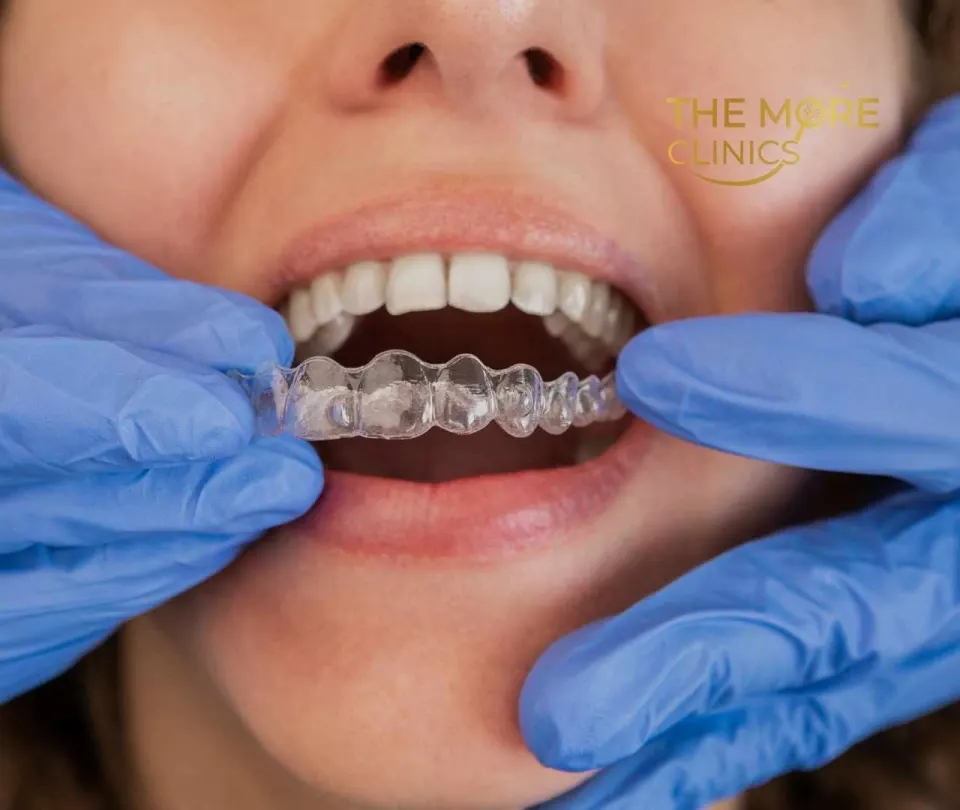
If there's one thing that quietly destroys veneers, it's bruxism (grinding or clenching, often at night without realising it). The forces generated can crack, chip or fracture even the strongest porcelain. If you grind or clench — even mildly — a custom night guard (occlusal splint) is one of the best investments you can make: it's a thin, fitted appliance worn during sleep that spreads the forces and shields your veneers.
Tell your dentist if you grind, or if your partner notices it. Care for the guard by rinsing it in cool water and brushing it gently with mild soap (not toothpaste, which is too abrasive).
Preventing staining
Here's the nuance most people miss: porcelain itself barely stains — but the bonding resin at the margins, and the natural tooth at the gumline, can discolour over time, creating contrast. Composite veneers stain more readily throughout because the resin is more porous. To keep them bright:
- Limit staining foods and drinks: coffee, tea, red wine, berries, beetroot, tomato-based sauces.
- When you do have them, rinse with water immediately afterwards (rather than waiting to brush), or use a straw for dark drinks.
- Keep up professional cleanings — they remove surface stains from the margins.
- Remember: whitening won't work on veneers — porcelain can't be bleached, so prevention is everything.
Porcelain vs composite — aftercare differences
| Porcelain veneers | Composite veneers | |
|---|---|---|
| Staining | Very resistant (margins can stain) | More porous — stains faster |
| Typical lifespan | 10–15 years+ | 5–7 years (up to ~10 with great care) |
| Repair if chipped | Usually needs replacing | Often repairable chairside |
| Care priority | Protect from grinding/impact | Diligent stain prevention + polishing |
The core routine — soft brush, non-abrasive toothpaste, gentle flossing, night guard if needed — is the same for both. The difference is emphasis: with composite, stain prevention and regular professional polishing carry more urgency; with porcelain, protecting against grinding and impact matters most.
Veneers Aftercare Tips — Frequently Asked Questions
How soon can I eat after getting veneers?
Once the numbness wears off. Start with soft foods and avoid hard or sticky items for the first week while the bond fully sets.
What toothpaste should I use with veneers?
A non-abrasive fluoride toothpaste (ideally low-RDA). Avoid whitening or baking-soda toothpastes — they can't whiten veneers and their abrasives scratch and dull the surface.
Do veneers stain over time?
Porcelain resists staining, but the bonding at the margins and the natural teeth around them can discolour, and composite veneers stain more readily. Limit coffee, tea and red wine, and rinse with water afterwards.
Can I whiten my veneers later?
No — veneers can't be whitened (porcelain can't be bleached). If you want a whiter smile, it's worth whitening your natural teeth before getting veneers, so the shade is matched. After veneers, prevention is the way to keep them bright.
What happens if a veneer chips?
Contact your dentist promptly. Minor composite damage is often repaired chairside; more significant porcelain damage may need the veneer replaced.
Do I still need to brush and floss with veneers?
Absolutely — more than ever. The veneer won't decay, but the natural tooth underneath and at the gumline can. Good hygiene is what makes veneers last.
How long do veneers last with good care?
Porcelain veneers routinely last 10–15 years or more, composite around 5–7 (up to ~10 with excellent care). Consistent gentle care and regular check-ups are what get you to the top of those ranges.
The Last Word from The More Clinics
Veneer aftercare isn't complicated — it's mostly the good habits you already know, done consistently, plus a few veneer-specific ones: skip whitening toothpaste, protect against grinding, rinse after staining drinks, and keep brushing and flossing the natural teeth underneath. Get those right and your veneers stay bright and intact for many years.
If you're considering veneers or have questions about caring for a smile makeover, our dental team is happy to help — a WhatsApp consultation is free and without obligation.
Get a Free Consultation → WhatsApp Us →
Related: Types of veneers · Dental veneers Turkey · Composite veneers · Teeth whitening
 Written by The More Editorial Team and Medically Reviewed by Dr. Onur Ademhan, specialist in Oral and Maxillofacial Surgery and Implantology. See Editorial Process. Last Updated: [23 August 2026]
Medical disclaimer: This guide is for general informational purposes only and does not replace personal dental advice. Follow your own dentist's specific aftercare instructions, which take precedence over general guidance. If a veneer chips, loosens, or you have persistent pain, contact your dentist.
This article provides general information and does not replace an individual medical assessment, diagnosis or treatment advice. Discuss decisions about your health and treatment with your treating clinician.