Dental Bridge Cost 2026: Types, UK vs Turkey Price Guide
Talk to our team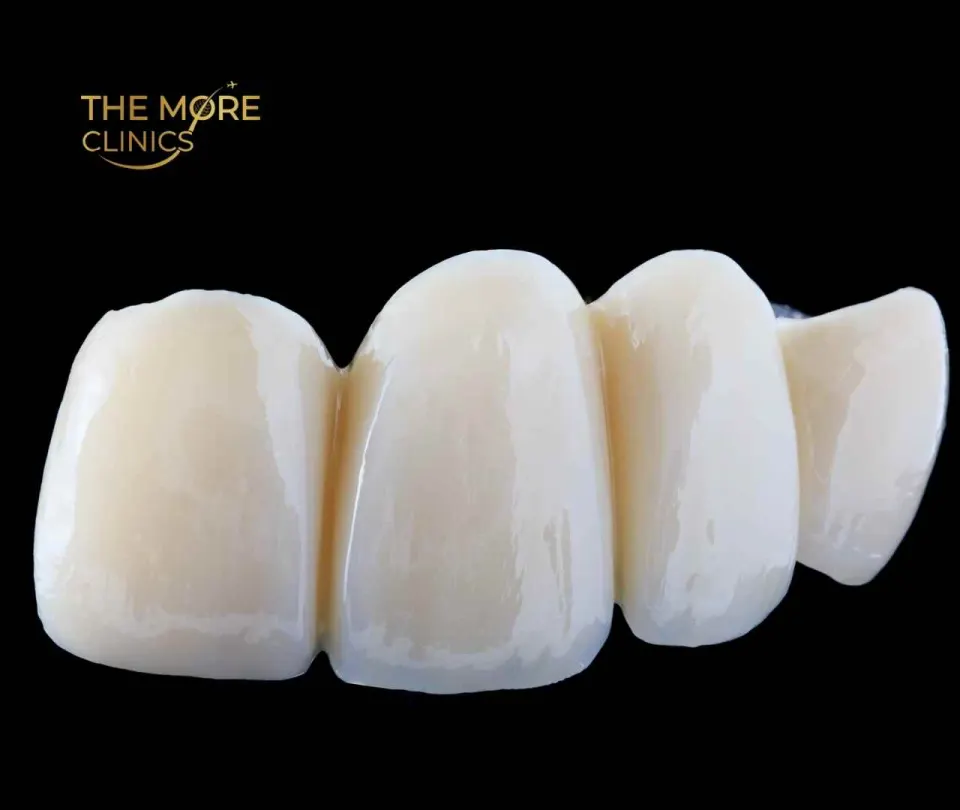
In this article 14 sections
A dental bridge replaces one or more missing teeth by anchoring an artificial tooth (pontic) to the teeth or implants on either side of the gap. The average cost of a dental bridge in the UK ranges from £1,500 to £5,000 depending on the type and number of teeth involved. In Turkey, the same bridge costs £300–£1,500 all-inclusive — a saving of 60–75%.
This guide covers all four bridge types, what each costs in the UK, USA and Turkey, what the price difference includes and what it does not, and when a bridge is the right choice versus a dental implant.
| Traditional bridge (3-unit) — Turkey | £300 – £800 |
| Traditional bridge (3-unit) — UK | £1,500 – £3,800 |
| Maryland bridge — Turkey | £200 – £600 |
| Implant-supported bridge — Turkey | £1,000 – £3,000 |
| Saving vs UK | 60 – 75% |
| Lifespan | 5–15 years (traditional) | 20+ years (implant-supported) |
| Stay in Turkey needed? | 5–7 days for traditional bridge | 2 visits for implant-supported |
Types of dental bridges — and what each costs
1. Traditional dental bridge
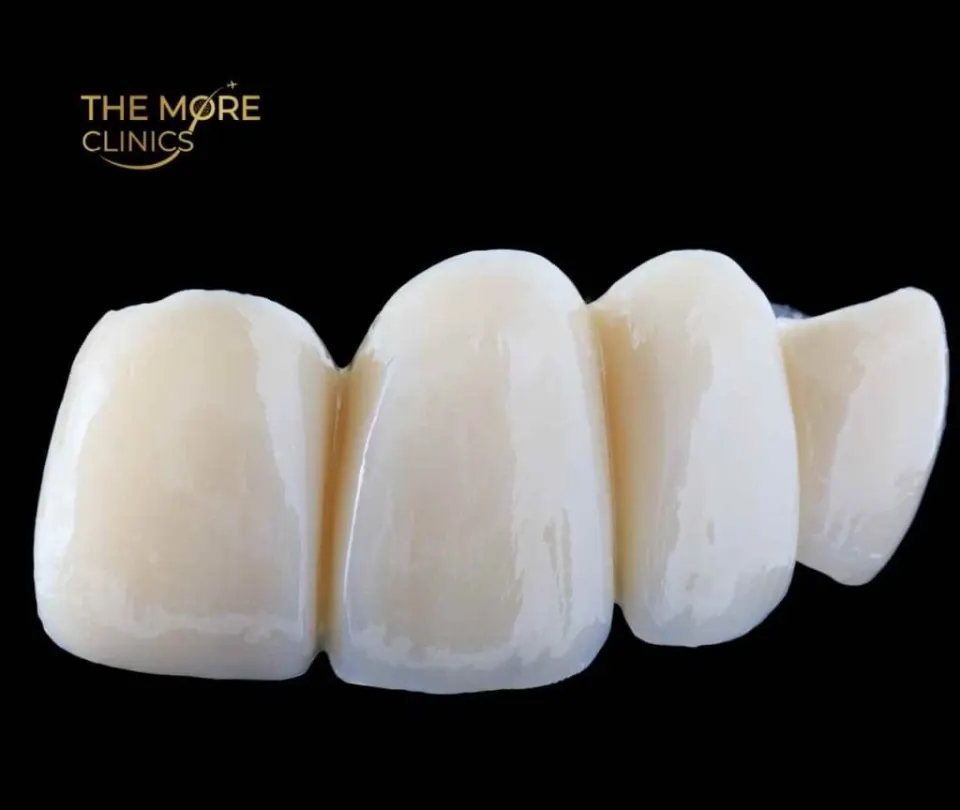
The traditional bridge is the most common type. A pontic (false tooth) is held in place by dental crowns cemented onto the two teeth on either side of the gap — called abutment teeth. Those abutment teeth must be prepared (reduced) to accommodate the crowns, which is irreversible.
Best for: A single missing tooth with two healthy natural teeth on either side of the gap.
Material options: Zirconia (most common in Turkey — strong, white, natural-looking), E-Max ceramic (best aesthetics for front teeth), PFM — porcelain-fused-to-metal (older standard, lower cost but grey margin line can appear over time).
2. Cantilever dental bridge
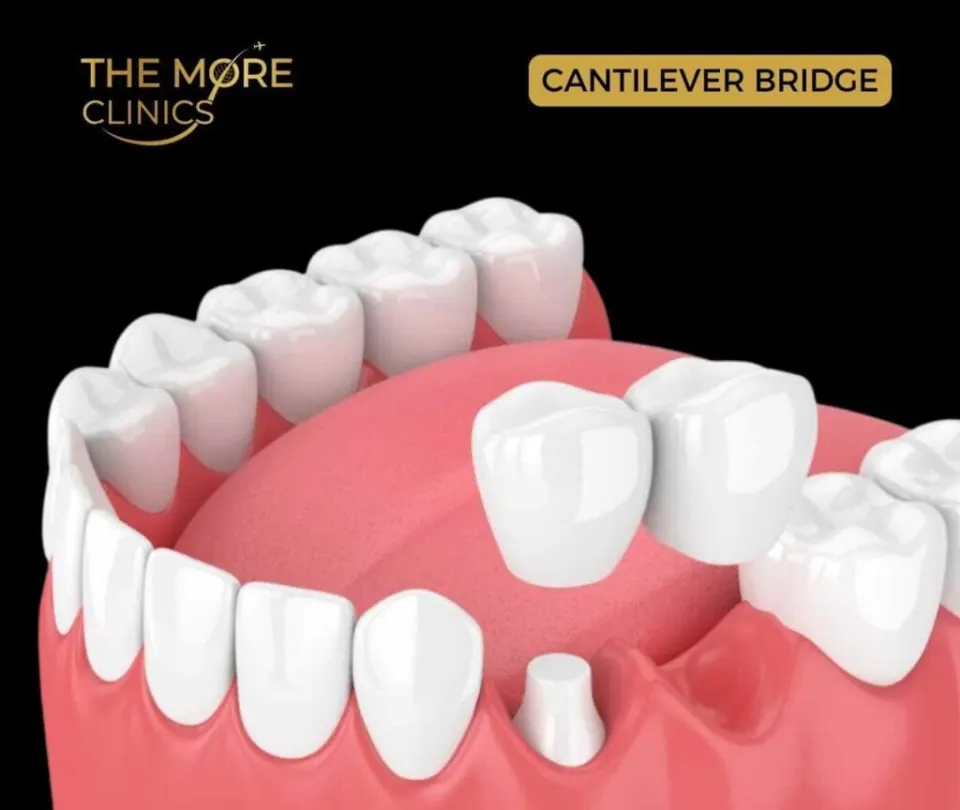
A cantilever bridge uses only one abutment tooth instead of two. The pontic is anchored on one side only. This makes it appropriate for smaller gaps where only one adjacent tooth is available, but it is not suitable for areas under heavy bite force — particularly back molars — as the single anchor point creates significant leverage stress on the supporting tooth.
Best for: Gaps at the front or side of the mouth where only one natural tooth is adjacent and bite force is moderate.
3. Maryland dental bridge
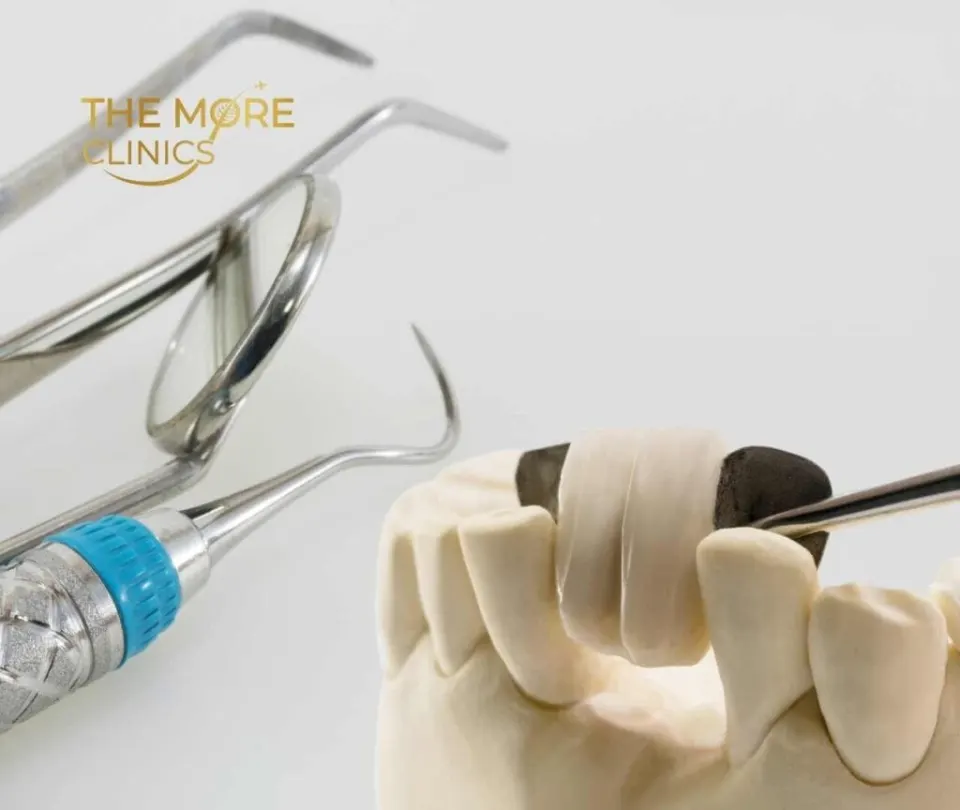
A Maryland bridge uses a metal or porcelain framework bonded to the backs of adjacent teeth — no crowns, no preparation of the adjacent teeth. It is the most conservative bridge option as the abutment teeth are not reduced. The limitation is that the bond strength is lower than crown-retained bridges, making it less suitable for areas under significant chewing force.
Best for: Front teeth gaps where minimal invasiveness is preferred and bite forces are lower. Good option for younger patients where preserving tooth structure is a priority.
4. Implant-supported dental bridge
An implant-supported bridge uses dental implants as abutments instead of natural teeth. Implants are placed surgically into the jawbone and allowed to integrate (3–6 months), after which the bridge is attached. No natural teeth are altered. This is the strongest, most durable and most functional bridge type — and the most expensive.
Best for: Multiple consecutive missing teeth, patients who want the most durable long-term solution, patients where adjacent natural teeth are not strong enough to support a conventional bridge.
Dental bridge cost — full comparison 2026
All prices in GBP (£) as primary currency. USD equivalents shown for reference. Turkey dental bridge prices are all-inclusive (bridge fabrication, fitting, temporary bridge, and standard aftercare).
| Bridge type | 🇹🇷 Turkey | 🇬🇧 UK | 🇺🇸 USA | Saving vs UK |
|---|---|---|---|---|
| Traditional (3-unit) | £300 – £800 | £1,500 – £3,800 | $2,000 – $5,000 | 65–75% |
| Cantilever | £300 – £800 | £1,500 – £3,800 | $2,000 – $5,000 | 65–75% |
| Maryland (bonded) | £200 – £600 | £1,200 – £2,000 | $1,500 – $2,500 | 65–75% |
| Implant-supported | £1,000 – £3,000 | £4,000 – £12,000 | $5,000 – $15,000 | 70–80% |
What affects dental bridge cost?
| Factor | Lower cost | Higher cost |
|---|---|---|
| Number of teeth in bridge | 3-unit (1 pontic) | 5+ unit (multiple pontics) |
| Crown material | PFM (metal-porcelain) | Zirconia or E-Max ceramic |
| Abutment type | Natural teeth (traditional/Maryland) | Implants (implant-supported) |
| Additional treatment | No additional work needed | Bone graft, gum treatment, root canal |
| Location | Turkey, Eastern Europe | UK, USA, Switzerland |
Front teeth bridge cost — specific breakdown
Front tooth bridges are among the most commonly requested — a gap at the front of the mouth affects appearance immediately and significantly. The front teeth bridge cost differs from back teeth bridges in one important way: aesthetics matter more than strength, making E-Max ceramic or layered zirconia the preferred materials over monolithic zirconia or PFM.
| Front teeth bridge type | Turkey cost | UK cost | Material recommendation |
|---|---|---|---|
| Traditional 3-unit front bridge | £350 – £700 | £1,600 – £3,500 | E-Max — best translucency |
| Maryland front bridge | £200 – £500 | £1,200 – £2,000 | Porcelain framework — no visible metal |
| Implant-supported front bridge | £1,200 – £2,500 | £4,000 – £10,000 | Best long-term — no adjacent tooth reduction |
Dental bridge vs implant — which is right for you?
A bridge and an implant solve the same problem — a missing tooth — by completely different mechanisms. The right choice depends on your existing teeth, bone health, budget, and how long you want the result to last.
| Factor | Dental bridge | Dental implant |
|---|---|---|
| Adjacent teeth affected? | Yes — reduced for crowns | No — standalone |
| Jawbone preserved? | No — bone loss continues | Yes — implant stimulates bone |
| Treatment time | 5–7 days (one trip) | 3–6 months (two trips) |
| Lifespan | 5–15 years | 20+ years (lifetime if maintained) |
| Surgery required? | No | Yes — implant placement |
| Turkey cost | £300 – £800 | £600 – £1,200 |
| Choose if... | Quick solution, adjacent teeth are being crowned anyway, budget priority | Long-term best outcome, preserve adjacent teeth, healthy bone available |
How long does a dental bridge last?
The lifespan of a dental bridge depends primarily on the material, the patient's oral hygiene, and their bite force:
| Bridge type / material | Average lifespan | Main failure cause |
|---|---|---|
| Traditional — PFM | 10–15 years | Porcelain chipping, secondary decay under crown |
| Traditional — Zirconia | 15–25 years | Secondary decay at margins, abutment tooth failure |
| Maryland bridge | 5–10 years | De-bonding of framework from abutment teeth |
| Implant-supported | 20–30+ years | Crown wear (replaceable) — implant itself rarely fails |
The most common cause of bridge failure is secondary decay developing under the crown at the abutment teeth — not the bridge structure itself. Daily flossing under the pontic using a floss threader or water flosser is the most important long-term maintenance habit.
Dental bridge cost by country — 2026
| Country | Traditional 3-unit bridge | Notes |
|---|---|---|
| 🇹🇷 Turkey (all-incl.) | £300 – £800 | Includes hotel + transfers + follow-up |
| 🇬🇧 United Kingdom | £1,500 – £3,800 | Private only — NHS rarely covers bridges |
| 🇺🇸 United States | $2,000 – $5,000 | Insurance may cover 50% — check your policy |
| 🇩🇪 Germany | €1,800 – €4,500 | GKV covers basic bridge subsidy only |
| 🇳🇬 Nigeria | ₦300,000 – ₦800,000 | Private clinic pricing — varies widely |
| 🇬🇭 Ghana | GH₵8,000 – GH₵20,000 | Private clinic pricing — varies widely |
Dental bridge in Turkey — what the trip looks like
For a traditional or Maryland bridge, most patients complete the full treatment in a single trip of 5–7 days. Day 1: consultation and X-rays. Day 2: abutment teeth preparation, impressions, temporary bridge fitted. Days 3–5: lab fabrication. Day 5–6: permanent bridge fitted and adjusted. Day 6–7: final check and departure.
Implant-supported bridges require two trips: the first for implant placement (1–2 days), then a 3–6 month healing period at home, followed by a second trip for the bridge fitting (3–5 days).
Frequently asked questions
How much does a dental bridge cost in the UK?
A traditional 3-unit dental bridge costs £1,500–£3,800 at a UK private dentist in 2026. The NHS rarely funds bridges — they are classified as a Band 3 treatment at £306.80 NHS charge but availability on the NHS is extremely limited. Implant-supported bridges cost £4,000–£12,000 privately in the UK.
How much does a dental bridge cost in Turkey?
A traditional 3-unit bridge costs £300–£800 all-inclusive in Turkey in 2026. Maryland bridges cost £200–£600. Implant-supported bridges cost £1,000–£3,000 for the full treatment across both visits. Turkey all-inclusive prices include the bridge, temporary crown, hotel accommodation, VIP transfers and follow-up — saving 60–75% compared to UK private rates.
What is the average cost of a dental bridge?
The global average cost of a traditional 3-unit dental bridge ranges from £300 (Turkey, all-inclusive) to £3,800 (UK private) to $5,000 (USA). The material (zirconia, E-Max, PFM) and the number of teeth being bridged are the two biggest variables. Implant-supported bridges add significantly to the cost due to the surgical implant component.
How much does a front teeth bridge cost?
A front teeth traditional bridge (3-unit) costs £350–£700 in Turkey and £1,600–£3,500 in the UK. Front teeth bridges should use E-Max ceramic or high-translucency zirconia for the best aesthetic result — these materials closely mimic the translucency of natural enamel and avoid the grey margin line associated with PFM bridges.
Is a dental bridge or implant better value?
For long-term value, an implant is almost always the better clinical choice — it preserves the adjacent teeth, maintains jawbone density, and lasts 20+ years versus 5–15 years for a bridge. The upfront cost is higher (£600–£1,200 in Turkey vs £300–£800 for a bridge) but the total lifetime cost is lower. A bridge is the better choice when speed matters, when the adjacent teeth need crowning anyway, or when implant surgery is not appropriate due to bone loss.
Does a dental bridge require removing the adjacent teeth?
Not removing — reducing. For a traditional or cantilever bridge, the adjacent abutment teeth are prepared (reduced) circumferentially to accept the crown portion of the bridge. This is irreversible. For a Maryland bridge, the adjacent teeth are not significantly altered — only the backs are etched for bonding. For an implant-supported bridge, adjacent teeth are not touched at all.
How long do dental bridges last?
Traditional PFM bridges: 10–15 years. Zirconia bridges: 15–25 years. Maryland bridges: 5–10 years (de-bonding is the main failure mode). Implant-supported bridges: 20–30+ years — the implant itself rarely fails; the crown on top is replaceable. The most important factor in bridge longevity is cleaning under the pontic daily with a floss threader or water flosser to prevent secondary decay at the abutment teeth.
Can I get a dental bridge on the NHS?
In theory yes — bridges are Band 3 on the NHS at £306.80. In practice, NHS bridge provision is extremely limited and waiting times are long. Most UK patients access bridges privately or travel abroad. If your missing tooth was the result of an accident or trauma, you may have a stronger case for NHS bridge provision — check with your NHS dentist.
The Last Word from The More Clinics
A dental bridge is one of the most cost-effective ways to restore a missing tooth — particularly when the adjacent teeth require crowning regardless, or when the timeline of an implant does not suit your circumstances. The price difference between Turkey and the UK is significant: a full treatment that costs £3,800 in London costs £500–£700 in Antalya, all-inclusive.
At The More Clinics, every bridge case begins with an honest assessment: which bridge type is appropriate for your gap, whether the adjacent teeth are strong enough to serve as abutments, and whether an implant might be a better long-term investment for your specific situation. We recommend the least invasive option that achieves your goals — not the most expensive one.
A free consultation by video call or WhatsApp gives you a specific bridge recommendation, realistic cost, and an honest comparison of your options — before you commit to anything.
Book a Free Consultation → WhatsApp Us →
Medical disclaimer: This guide is for informational and educational purposes only. Bridge suitability depends on individual dental anatomy and must be confirmed at clinical examination. Consult a qualified dentist before booking any dental treatment abroad.
This article provides general information and does not replace an individual medical assessment, diagnosis or treatment advice. Discuss decisions about your health and treatment with your treating clinician.