Breast Reduction Scars: What They Look Like & the Healing Timeline
Talk to our team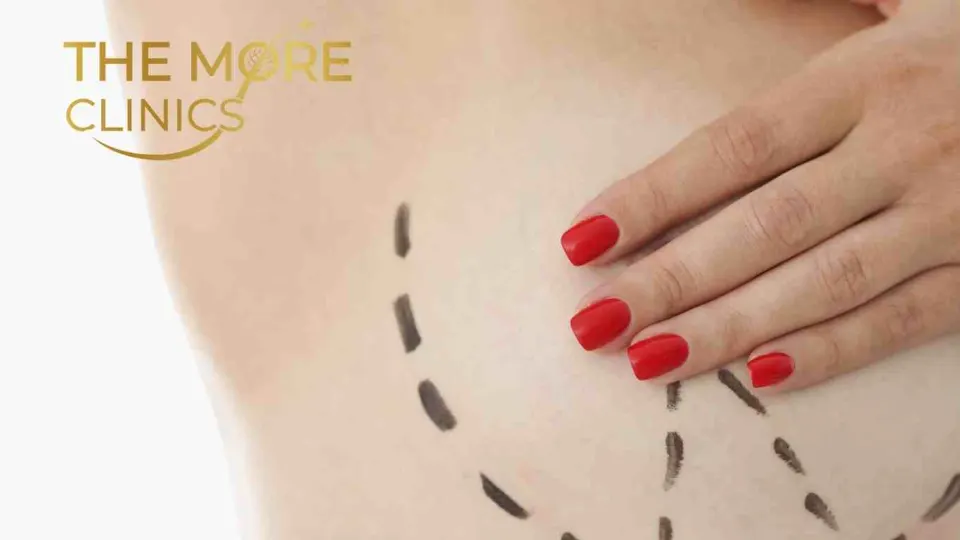
In this article 5 sections
If you're considering a breast reduction — or you've just had one and you're staring at red, raised lines wondering if that's normal — this page is for you. Scars are the honest trade-off of this operation, and the single most reassuring thing to understand is that they change enormously over time.
What looks alarming at six weeks looks completely different at six months. Below you'll find an interactive timeline: choose where you are in your healing and see exactly what's normal at that stage, and what to do about it. Then there's a straightforward guide to caring for your scars, and the warning signs that mean you should check in with a doctor.
Why the middle months can look worse before better
This trips up a lot of people, so it's worth saying plainly: scar healing is not a straight line from bad to good. Scars go through three phases — a brief inflammatory phase in the first week, a proliferative phase from around weeks one to six when they look their reddest and most raised, and then a long remodeling phase from about two months all the way out to twenty-four months, when they gradually flatten, lighten and settle.
The redness usually fades first, then the flattening and lightening follow. So if you're a couple of months in and feeling disheartened, that's often the hardest-looking stretch — and it genuinely does improve from there with patience and care.
How to care for your scars (and give them the best chance)
You can't change your genetics or skin type, but scar care demonstrably improves how scars settle — and it's simple. The three things that matter most:
- Silicone. Silicone sheets or gel are the most evidence-backed scar treatment. Start only once your incisions are fully closed and your surgeon has cleared you — usually a few weeks after surgery. Starting too early, on an open incision, can do more harm than good.
- Massage. Gentle scar massage, usually from around three to four weeks (once healed and cleared), softens the tissue and reduces firmness. Firm, circular motions with a plain moisturiser are all you need — nothing fancy.
- Sun protection. This is the one people neglect and regret. UV light darkens a healing scar and makes it stand out permanently, so keep new scars out of the sun entirely, and use high-SPF once they're fully closed. Protect them for the whole first year at least.
Alongside those: keep incisions clean and dry early on, wear your supportive or compression bra as instructed (usually four to six weeks), don't smoke (it markedly impairs healing), and avoid straining the incisions with heavy lifting while they're fresh. Consistency beats intensity — a little care every day for months does far more than anything dramatic.
What affects how your scars turn out
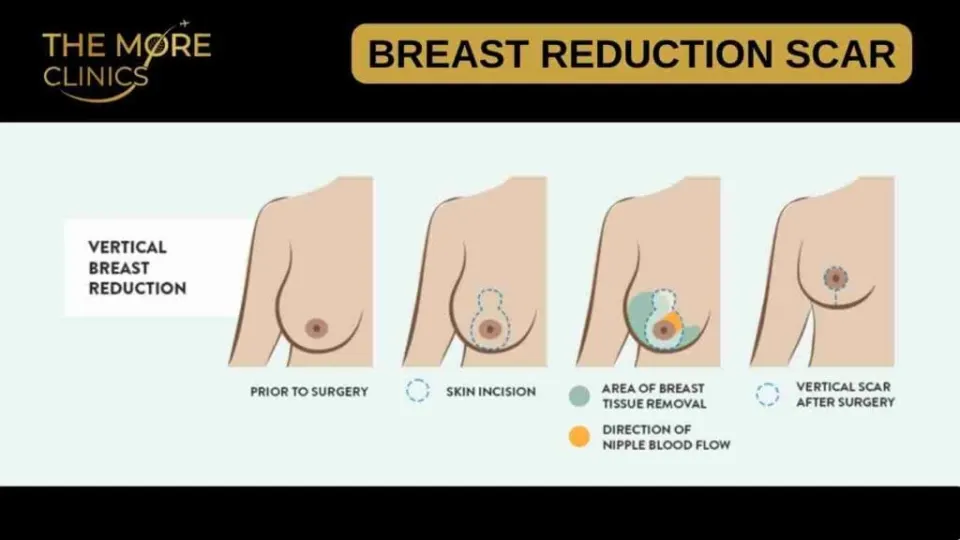
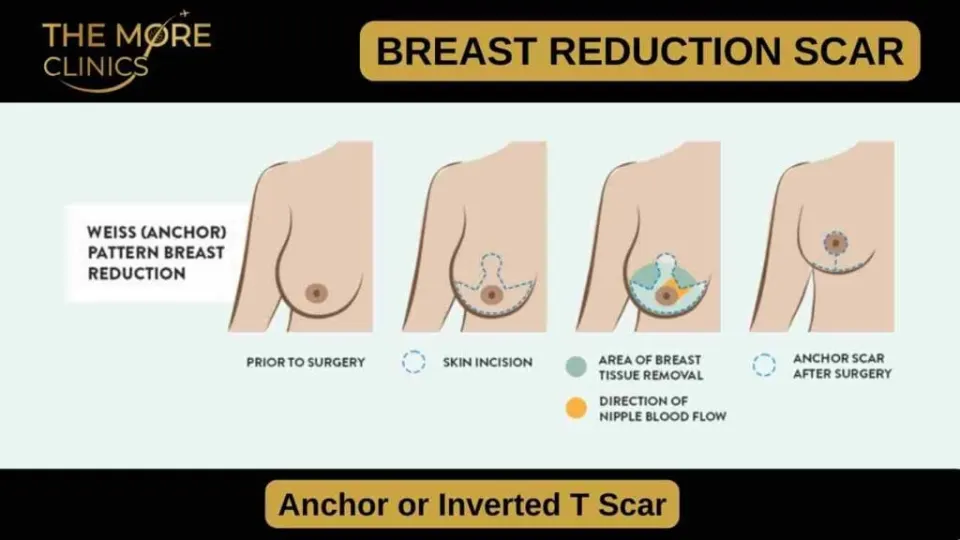
Two people having the same operation can heal quite differently, and it helps to know why so you have realistic expectations. The incision technique matters — an anchor (inverted-T) pattern used for larger reductions leaves more scarring than a vertical (lollipop) pattern, though your surgeon chooses based on what your reduction actually needs, not on scarring alone.
Beyond that, your skin type plays a big role: darker skin tones can develop more prominent or raised scars, and some people are simply more prone to thick or raised scarring genetically. Your own diligence with aftercare, and keeping the scars out of the sun, make a real, visible difference too. No surgeon can guarantee a specific scar outcome — but a good one places the incisions as discreetly as possible and gives you a proper scar-care plan.
Most scar healing is uneventful, but check in with a doctor if you notice: excessive or worsening redness, discharge or oozing from the incision, fever, worsening rather than improving pain, or a scar that becomes increasingly thick, raised and hard (which can indicate a keloid or hypertrophic scar — treatable, especially if caught early).
If you're recovering after treatment abroad, ask your clinic what remote follow-up they offer, and arrange a local check-up if anything concerns you. When in doubt, get it looked at — it's always better to ask.
Considering a breast reduction?
See our full breast reduction guide for costs, techniques and recovery — or send us a photo for an honest assessment, including a frank conversation about the scars.
Breast Reduction Guide → WhatsApp Us →Frequently asked questions
Do breast reduction scars ever go away completely?
No — they fade significantly over 12–24 months into thin, pale lines, but they don't disappear entirely. With good care most become far less noticeable than patients fear in the early weeks, and they typically sit where a bra or bikini covers them.
When can I start using silicone and massage?
Only once your incisions are fully closed and your surgeon clears you — usually a few weeks after surgery for silicone, and around 3–4 weeks for gentle massage. Starting on an open incision can do harm, so wait for the go-ahead.
My scars look worse at 2 months than at 2 weeks — is that normal?
Yes, this is common. The middle months can look worse before they look better as the scar remodels. Redness settles first, then flattening and lightening follow. Keep up your scar care — it genuinely improves from here.
What scar pattern will I have?
Usually an anchor (inverted-T) for larger reductions or a lollipop (vertical) for moderate ones — sometimes just around the areola. Your surgeon chooses based on how much tissue needs removing, and explains your expected pattern beforehand.
Can a bad scar be improved later?
Yes. If a scar is still thick or raised after about a year, options like laser treatment or minor scar revision can improve it. Raise it at a check-up — hypertrophic and keloid scars are more treatable when addressed earlier.
The Last Word
Scars are the honest cost of a breast reduction — but they're a fading, discreet cost, not the frightening permanent marks the early weeks suggest. Understanding the timeline is genuinely reassuring: what looks alarming at six weeks becomes a pale, thin line you'll barely think about by the following year.
Care for them well, protect them from the sun, be patient through the middle months, and keep realistic expectations. If you're weighing up the operation itself, our full breast reduction guide covers the costs, techniques and recovery — and we're always happy to talk through the scars honestly before you decide.
Breast Reduction Guide → WhatsApp Us →
Medical disclaimer: This page is for general information only and is not a substitute for your surgeon's advice. Scar healing timelines and outcomes vary by individual, technique, skin type and genetics; no specific scar result can be guaranteed. Always follow your own surgeon's scar-care instructions and seek medical advice for any concern.
SOURCES:
Breast Reduction Scars, Cleveland Clinic
Breast Reduction: What to Expect from Scarring, Healthline
Vertical Scar Reduction Mammaplasty: A 15-Year Experience Including a Review of 250 Consecutive Cases, F. Lista, Jamil Ahmad
HOW THE MORE CLINICS KEEP THE CONTENT UP TO DATE:
Our dedicated medical and editorial teams work tirelessly to stay informed about the ever-evolving world of health news. By rigorously tracking the latest research, clinical guidelines, and significant developments across various medical fields, they ensure that our content remains accurate, relevant, and up-to-date.
This includes reviewing peer-reviewed studies, consulting with healthcare professionals, and monitoring advancements in medical technology. Their meticulous efforts and attention to detail allow us to provide you with trustworthy, reliable information that you can depend on to make informed decisions about your health and well-being.
However, we still insist on getting a healthcare professional's opinion before you make any decision about your health. Consulting with a qualified expert ensures that the choices you make are informed, safe, and tailored to your individual needs.
Last Updated: 11 September 2026
Written by The More Editorial Team and Medically Reviewed by Op. Dr. İsmail Gökhan Bacak, specialist in Plastic, Reconstructive and Aesthetic Surgery. See our Editorial Process.
This article provides general information and does not replace an individual medical assessment, diagnosis or treatment advice. Discuss decisions about your health and treatment with your treating clinician.