
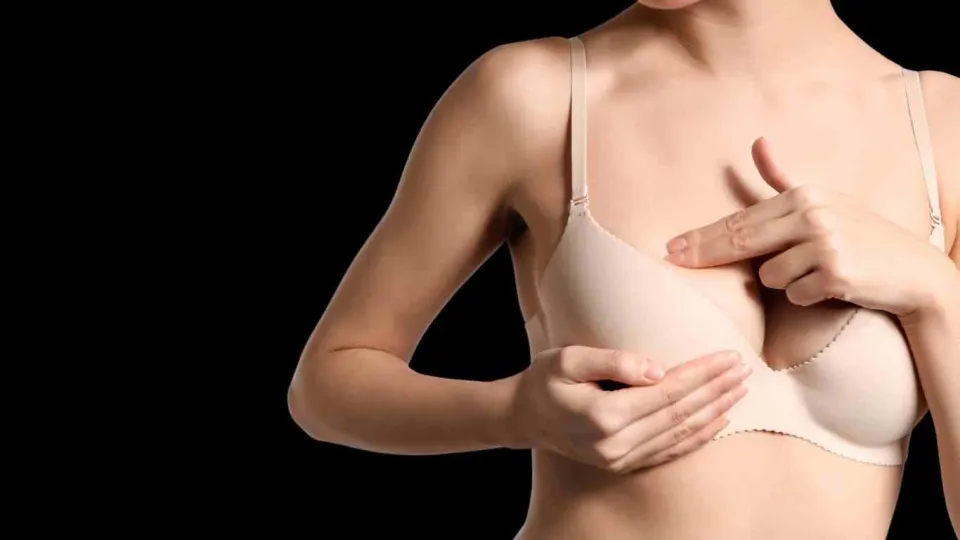
For women living with disproportionately large breasts, a reduction is rarely about vanity — it's about the back and neck pain, the grooves the bra straps leave in your shoulders, the rashes underneath, the sport you've given up on, and the simple frustration of never finding clothes that fit. Breast reduction Turkey is one of the most reliably satisfying operations in plastic surgery precisely because it fixes a real, daily problem.
And Turkey has become one of the most popular places to have it, at roughly half to a third of UK or US prices. This guide walks through everything honestly: what it costs, the techniques, who it suits, what recovery is really like, and the truth about the scars — because that last part is the one thing you shouldn't gloss over.
| 🇹🇷 Turkey (all-inclusive) | $3,200 – $5,000 |
| 🇬🇧 UK | £7,000 – £13,950 |
| 🇺🇸 USA | $8,000 – $13,000 |
| Typical saving | 50–75%, usually all-inclusive |
What breast reduction actually does
Breast reduction — reduction mammoplasty, if you want the medical name — removes excess breast tissue, fat and skin, then reshapes what remains and repositions the nipple so you end up with a smaller, firmer, more proportionate bust.
It's genuinely a two-in-one operation: it reduces size, and because the breast is lifted and reshaped in the process, it lifts as well. That's why women who have it so often describe the same thing afterwards — not just that they look different, but that a weight has literally been taken off them.
Most notice the back, neck and shoulder pain start to ease within days, once the load their body was carrying is gone. The rashes and chafing under the breast fold settle because heat and moisture are no longer trapped there. Exercise becomes comfortable again. It's a physical relief as much as a cosmetic change, and for many patients that relief is the whole point.

The techniques — and the scars they leave
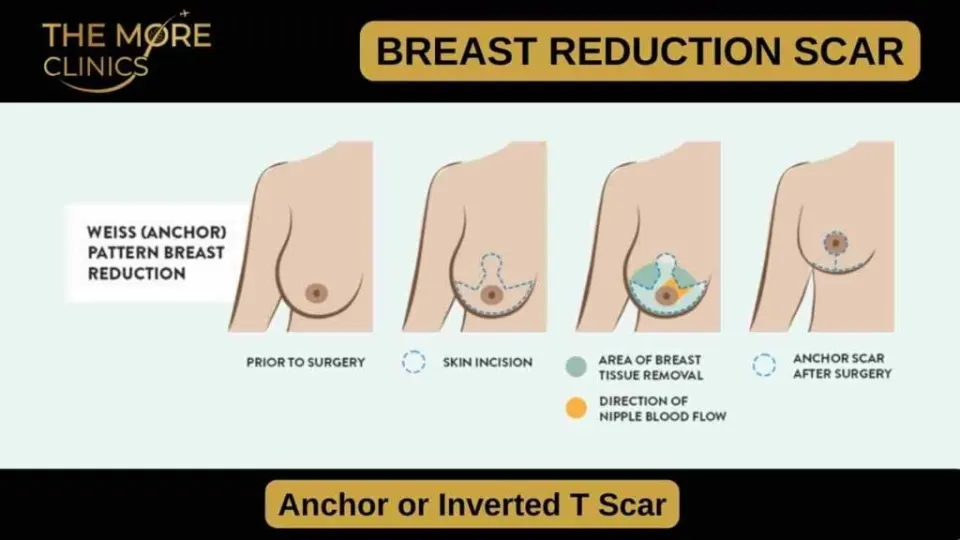
There are three main approaches, and which one is right for you comes down to how much tissue needs to come out and how much lift your breasts need. It's not a menu you pick from; your surgeon recommends based on your anatomy and goals. But you should understand them, because the technique determines your scar — and the scar is the real trade-off of this operation.
The anchor (inverted-T) technique is the workhorse for larger reductions. It uses an incision around the areola, straight down to the breast fold, and along the fold itself — forming an anchor shape. It allows the most tissue removal and reshaping, and it's what most significant reductions need. The vertical (lollipop) technique skips the incision along the fold, leaving a scar around the areola and a single vertical line down to it; it suits moderate reductions and leaves less scarring.
And liposuction-only reduction, which leaves only tiny scars, is an option in a small number of cases — mild reductions where the breast is mostly fatty tissue and little skin needs removing. Throughout, a good surgeon uses pedicle-preservation techniques to keep the nipple connected to its blood and nerve supply, which protects sensation and, in many cases, the potential to breastfeed.
What it costs in Turkey — and why it's so much less
An all-inclusive breast reduction in Turkey typically costs between $3,200 and $5,000, or roughly €2,700 to €3,800. The same operation done privately in the UK usually runs £7,000 to £13,950, and in the US $8,000 to $13,000 — so you're looking at a saving of somewhere between 50 and 75 percent, even after you've factored in flights and a hotel.
If a breast lift refinement is added on, expect the Turkish figure to rise to around $3,800–$5,800. The exact price depends mainly on how much tissue needs removing and the complexity of your case, so a headline "from" price only tells you so much; a proper quote follows a photo assessment.
It's worth being straightforward about why the gap is so large, because a saving this size makes people understandably suspicious. It isn't that the surgery is somehow lesser. Turkey has a very high volume of plastic surgery, which means experienced, frequently-operating surgeons, and its lower operating costs and favourable exchange rate account for the rest.
The all-inclusive packages typically bundle in the surgeon's fee, anaesthesia, the hospital stay, post-operative garments, your hotel and transfers — so the number you're quoted is close to the number you'll actually spend.
What you do need to do is read that quote carefully: ask exactly what's included, and what situations would cost extra (an additional night in hospital, treatment of an unexpected issue, extra tests). A trustworthy clinic gives you an itemised list in writing without being chased for it. And treat a quote that's dramatically cheaper than everyone else's as a reason to ask more questions, not fewer — with an operation this involved, the corner being cut is usually one you can't see.
One more thing worth knowing on cost: because breast reduction is often medically indicated rather than purely cosmetic, some patients qualify for NHS or insurance coverage at home when a functional problem (like documented chronic pain) is on record. That doesn't usually extend to elective surgery done abroad, but it's worth understanding your options at home before you decide — for some women the maths works out differently than they expect.
Are you a good candidate?
Most women troubled by large breasts are suitable, but a few things genuinely matter for a safe operation and a result you'll be happy with. Surgeons generally look for someone in good general health with fully developed breasts, whose weight has been stable for at least a year — because significant weight change afterwards can alter the result.
It helps to be a non-smoker, or willing to stop for around six weeks before and after, since smoking markedly impairs healing and raises the risk of wound and scar problems.
If you're planning pregnancies, many surgeons suggest waiting until you've finished, since pregnancy can change breast size and shape again, though it isn't a strict rule. And most importantly, you want realistic expectations — about the scars, about the final size (which is a discussion with your surgeon, balancing your wishes against what's anatomically sound), and about a recovery measured in weeks.
If your main goal is relief from physical symptoms, this operation delivers it reliably; if you understand and accept the scar trade-off, you're very likely to be glad you had it.
Choosing your surgeon and clinic
Because the result depends so heavily on the surgeon's judgement — how much to remove, where to place the nipple, how to minimise the scar — this is not a decision to make on price alone. The things worth verifying are straightforward: a board-certified plastic surgeon with a documented track record in breast reduction specifically (ask how many they do), an accredited hospital, a real before-and-after gallery that includes healed scars rather than only flattering angles, and a clear written quote with a revision policy.
Ask to speak with the surgeon, not only a coordinator, and get honest answers on candidacy — a good surgeon will sometimes tell you a smaller reduction or a different approach is safer, and that honesty is exactly what you want. Our breast surgery content is reviewed by Op. Dr. İsmail Gökhan Bacak, a specialist in Plastic, Reconstructive and Aesthetic Surgery.
Frequently asked questions - breast reduction Turkey
How much does breast reduction cost in Turkey?
Typically $3,200–$5,000 (€2,700–€3,800) all-inclusive, versus £7,000–£13,950 in the UK or $8,000–$13,000 in the US — a saving of 50–75%. Adding a lift refinement raises it to around $3,800–$5,800. The exact figure depends on how much tissue is removed.
Will I have bad scars?
Breast reduction leaves permanent scars — usually an anchor or lollipop shape. They're red and raised at first, then fade and flatten over 6–12 months without disappearing entirely. They typically sit where a bra or bikini covers them. Skin type and genetics affect how they settle.
How long is recovery, and how long do I stay in Turkey?
Plan around 7–10 days in Turkey. Light activity resumes in 2–3 weeks, strenuous exercise at 4–6 weeks, with swelling settling over 2–3 months and the final shape and scars maturing over several more.
Will it get rid of my back and neck pain?
For most women, yes — relief from back, neck and shoulder pain is often noticed within days of surgery, once the weight is gone, and it's the single biggest reason many seek the operation. Individual results vary.
Can I still breastfeed afterwards?
Some women can, but it can't be guaranteed — it depends on the technique and whether key ducts and nerves are preserved. If breastfeeding matters to you, tell your surgeon, as it may influence the approach. Many surgeons suggest completing childbearing first where possible.
Which technique will I need?
It depends on how much tissue needs removing and how much lift you need — anchor (inverted-T) for larger reductions, vertical (lollipop) for moderate, and occasionally liposuction-only for mild, fatty cases. Your surgeon recommends based on your anatomy.
The Last Word from The More Clinics
Breast reduction is one of the few operations that solves a genuine physical problem and delivers a cosmetic improvement at the same time — which is why patient satisfaction is consistently high. Turkey makes it accessible at 50–75% below UK and US prices, with experienced surgeons and all-inclusive convenience.
The two things that matter most are choosing a board-certified surgeon with a real breast-reduction track record, and going in with clear, honest expectations — especially about the scars, which are the deliberate trade for the relief and the reshaping. Share your symptoms and photos with us and we'll give you a straight assessment and a clear quote — and tell you honestly if a different approach would suit you better.
Free Assessment → WhatsApp Us →
Related: Breast reduction scars & timeline · Liposuction · All plastic surgery
Medical disclaimer: This page is for general information only. Prices are indicative 2026 ranges that vary by the amount of tissue removed, technique, clinic and individual case, confirmed only after assessment. Breast reduction leaves permanent scars and carries surgical risks; results, scar healing and the ability to breastfeed vary by individual. Choose accredited clinics and board-certified surgeons.

Written by The More Editorial Team and Medically Reviewed by Op. Dr. İsmail Gökhan Bacak, specialist in Plastic, Reconstructive and Aesthetic Surgery.