Upturned Nose (Celestial Nose): Shape, Aesthetics, Surgical Options
Talk to our team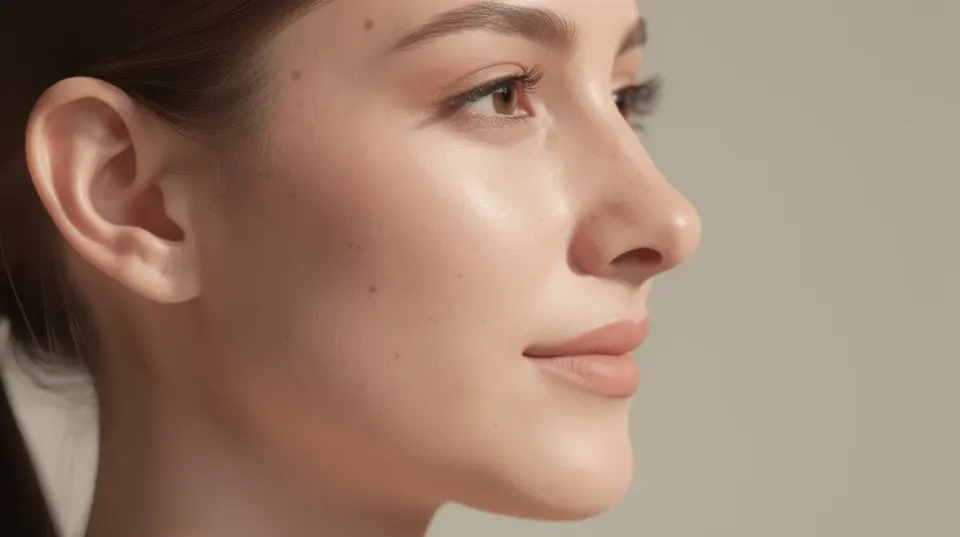
In this article 18 sections
An upturned nose or celestial nose has a nasal tip that angles upward, creating a shorter-looking nose with visible nostrils from the front. Whether you were born with one, developed one after a previous rhinoplasty, or simply want to understand this nose type better, this guide covers everything from anatomy and aesthetics to surgical correction and recovery.
Key Takeaways
- An upturned nose is defined by elevated nasal tip rotation and a wider nasolabial angle (the angle between the columella and upper lip). The ideal nasolabial angle for women is generally 100–110 degrees, while men tend toward 90–100 degrees.
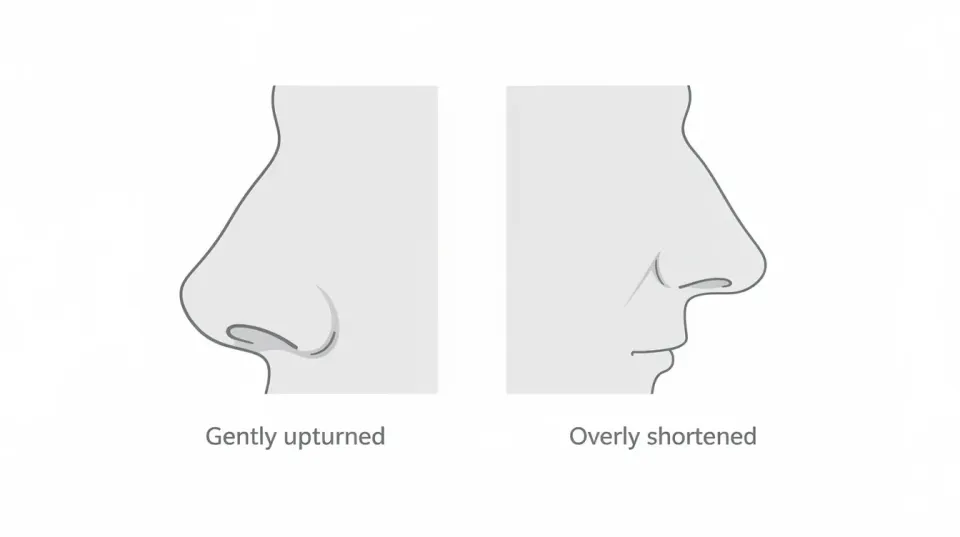
- A slightly upturned tip is often associated with a youthful appearance and femininity, but an excessively upturned nose (sometimes called a piggy nose or pig nose) can disrupt facial harmony and create excessive nostril show.
- Rhinoplasty can create a subtly upturned nose or correct an overly upturned nose. Non-surgical options like fillers and Botox offer temporary adjustments, but structural changes require surgical rhinoplasty.
- Both aesthetic concerns and breathing problems should be evaluated together, as aggressive tip work can affect breathing if nasal structure is compromised.
- The More Clinics helps international patients compare verified rhinoplasty surgeons across destinations like Turkey, Hungary, and Mexico, with AI doctor matching, cost calculators, and 12-month complication protection.
What Is an Upturned Nose? (Definition & Key Anatomy)
An upturned nose (celestial nose) has a nasal tip that rotates nose upward, shortening nasal length and making the nostrils more visible from the front. The nose often appears compact or short in length, and the bridge of an upturned nose typically has a gentle inward curve or concave appearance, giving it that characteristic curve many people recognize.
Surgeons quantify nasal tip rotation using the nasolabial angle, the angle formed between the columella (the tissue between the nostrils) and the upper lip. Normative ranges sit around 90–100 degrees for men and 95–110 degrees for women, depending on ethnicity and facial proportions. When the nasal tip angle climbs significantly above these ranges, the upturned appearance becomes more pronounced. The ideal upturned nose angles are roughly 95–105 degrees for women seeking a soft, balanced result.
The key anatomy behind this nose shape includes:
- Lower lateral cartilages (tip cartilages): These shape the nasal tip and control how much it projects or rotates.
- Nasal septum: The caudal segment supports tip projection; a naturally short caudal septum often creates an upturned tip.
- Nasal dorsum (bridge): A shorter nasal bridge relative to tip height reinforces the upturned appearance.
Common labels you may encounter online include "celestial nose" or "Barbie nose" for a softly upturned, refined appearance, and "pug nose" or piggy nose for an over rotated tip with strong nostril show. These are aesthetic labels, not medical diagnoses. Related Post: Aquiline Nose Meaning, Treatment
Traits, Genetics & Natural Variations of Upturned Noses
An upturned nose can be a completely natural, hereditary facial feature. Genetics can influence the shape of an upturned nose through inherited bone structure, septal cartilage length, ligament strength, and skin thickness. Certain gene mutations can also cause an upturned nose as part of broader craniofacial variations.
Typical anatomical traits include shorter nasal length, an elevated nasal tip, a wide nasolabial angle, visible nostrils on frontal view, and a gentle concave curve along the nasal dorsum. These noses are relatively common in some Northern European and East Asian ancestries, though they appear across every ethnic group.
A slight upturned tip can make the face appear younger by resembling children's facial proportions, which is one reason this nose type is so often described as "youthful." However, how an upturned nose looks depends heavily on other facial features: chin projection, lip volume, cheekbone prominence, and face length all change perception. A turned up nose may look perfectly harmonious on a shorter, rounder face but can appear less natural on a very long facial profile.
Over decades, natural aging weakens cartilage and ligaments, usually causing the nose tip to droop. Aging can weaken nasal cartilage, affecting nose shape gradually. Paradoxically, scar contracture from previous nasal surgery can pull the tip upward over time, making the nose look more upturned as years pass.
Causes of an Upturned Nose: From Genetics to Surgery
An upturned nose may be present from birth or acquired later through trauma, surgery, or rare developmental conditions. An upturned nose can result from genetics or previous rhinoplasty, and several distinct pathways explain how this nose shape develops.
Genetics and birth defects. Most upturned noses are simply normal anatomical variants. Some rare genetic syndromes and birth defects can include a short nose with an upturned tip alongside other facial or skeletal findings, typically detected in childhood.
Injuries. Nasal trauma can lead to an upturned nose appearance. A strong frontal impact from a car accident, sports collision, or a broken nose can push nasal bones and cartilage upward, shortening the nose and rotating the tip. Untreated fractures during teenage years can heal in a permanently rotated position, leaving a pug-like nose shape.
Primary rhinoplasty. Previous rhinoplasty can cause an upturned nose appearance when surgeons over-resect the nasal septum, aggressively trim tip cartilages, or over-shorten the caudal septum during the first surgery. Sometimes the result appears immediately; other times, scars contract over 6–18 months and gradually pull the tip upward.
Revision rhinoplasty and scar contracture. Each previous surgery introduces more scar tissue, which tends to contract. In multi-revision cases, this cumulative scarring can further foreshorten the nose and create a short nose or excessively upturned nose that is harder to correct later.
Is an Upturned Nose Attractive? Facial Harmony vs. Single Features
Is an upturned nose considered attractive? The honest answer is that the perceptions of nose shapes are largely social and cultural rather than objective. Attractiveness is influenced by factors beyond nose shape, including facial symmetry and facial proportions.
That said, an upturned nose is culturally viewed as a feminine feature in many Western beauty trends. It is often preferred in beauty standards for women seeking a feminine look. An upturned nose is also linked to positive personality traits like friendliness and optimism in popular perception. Media influences perceptions of desirable nose shapes through character portrayals, filters, and celebrity culture, reinforcing these associations.
Trends regarding nose shapes have changed over time, often shifting toward natural features. Interestingly, slightly less upturned noses are preferred in many regions according to a multinational study, suggesting cultural variation matters. Men often look more balanced with a straighter nasal dorsum and a nasal tip angle around 90–95 degrees, while many women request a slightly upturned aesthetic in the 100–110 degree range for facial aesthetics.
Experienced surgeons evaluate the nose alongside the chin, jawline, lips, and forehead for facial balance. Sometimes a mild chin augmentation or lip adjustment improves facial harmony more than aggressively changing the nasal tip. A holistic view of facial features always produces better outcomes than fixating on a single measurement.
Functional Aspects: Can an Upturned Nose Affect Breathing?
Most naturally upturned noses do not affect breathing. The internal nasal valve, nasal septum, and turbinates are the primary determinants of airflow, and a slightly upturned tip alone rarely compromises them.
However, excessive surgical rotation or structural weakness can narrow the internal valve and cause problems. When too much cartilage is removed or the nasal structure is poorly reconstructed, the lateral wall can collapse during deep inhalation, leading to nasal congestion, noisy breathing, or the need to sleep with the mouth open. These breathing problems are more common after aggressive rhinoplasty than with naturally upturned noses.
Functional rhinoplasty addresses both aesthetics and airflow using advanced techniques such as spreader grafts (to widen the internal valve) and alar batten grafts (to strengthen the lateral wall). A procedure addresses both tip refinement and airway preservation when performed by a reconstructive surgeon or an experienced rhinoplasty surgeon who prioritizes function. On The More Clinics platform, patients can filter for surgeons with documented experience in combined functional and cosmetic surgery.
Surgical Options: Rhinoplasty to Create or Correct an Upturned Nose
Surgical rhinoplasty, commonly called a nose job, can either add a gentle upturn to a droopy tip or reduce an overly upturned nose. Both goals require precise control of tip rotation, nasal tip projection, and nasal bridge proportions.
Creating a softly upturned nose: For patients with a droopy or long nose, surgeons use conservative nasal tip rotation techniques, refine the tip cartilages, and may use a septal extension graft to stabilize the new position. The open technique is preferred for significant nasal tip rotation because it gives the surgeon direct visibility of the nasal structure. The goal is a refined appearance with natural results, not an overdone "surgical" look.
Correcting an over-upturned nose (upturned nose correction): Revision surgery for an excessively upturned nose often involves releasing internal scar tissue, lengthening the nose with cartilage grafts sourced from septum, ear, or rib, and carefully derotating the tip to reduce nostril exposure. This upturned nose rhinoplasty is among the most technically demanding facial procedures in nose rhinoplasty.
Key procedural details:
| Detail | Typical Range |
|---|---|
| Surgery duration | 2–3 hours |
| Anesthesia | General |
| Splint removal | 5–7 days |
| Initial recovery | 7–14 days |
| Final tip definition | 6–12 months |
Cartilage grafts are used to support the nasal tip in both creation and correction scenarios, ensuring the nose shape holds up over years rather than shifting with scar contracture.
Cartilage Grafts, Techniques & Preventing the "Piggy Nose" Look
Without strong internal cartilage support, tip position drifts over time. Sutures alone cannot reliably hold a rotated or derotated tip for decades. Structural grafting is what separates durable results from short-lived ones.
Common grafts used in upturned nose rhinoplasty include:
- Septal extension graft: Attaches directly to the caudal septum, controlling both tip rotation and nasal tip projection. Studies show these outperform columellar strut grafts for long-term tip stability.
- Columellar strut: Placed between the medial crura of the lower lateral cartilages for modest projection and tip unification.
- Spreader grafts: Widen the internal valve to preserve breathing.
- Alar batten grafts: Reinforce the lateral nasal wall against collapse.
Material sources: Septal cartilage is the first choice. When depleted (common after previous rhinoplasty), ear cartilage provides softer contouring material. Rib cartilage is reserved for major reconstruction after multiple prior procedures or significant trauma, offering abundant material but carrying a small risk of warping and donor-site discomfort.
Preventing the piggy nose look requires conservative rotation targets, intraoperative measurement of the nasolabial angle, and checking nostril show from the frontal view. An experienced surgeon builds slightly more support than immediately needed to resist future droop without creating over-rotation. Planning for long-term scar behavior and aging is a hallmark of an experienced rhinoplasty surgeon, and this surgical technique question should be high on any patient's list when comparing doctors.
Non-Surgical & Minimally Invasive Options (Fillers, Botox, Makeup)
Non-surgical approaches cannot permanently change bone or cartilage, but they can subtly alter how an upturned nose appears or help patients decide whether they want a nose surgery.
Nonsurgical rhinoplasty with fillers: Hyaluronic acid fillers can raise a low nasal bridge to make an upturned tip look less dramatic, smooth post-surgical irregularities, or balance the facial profile. Results typically last 9–18 months. While overall patient satisfaction is high (approximately 99% in large reviews), serious complications such as vascular occlusion occur in roughly 0.27% of cases, making injector expertise critical.
Botox for dynamic tip movement: In cases where the nose only looks upturned when smiling due to overactive muscles pulling the tip of the nose upward, small Botox injections can reduce this dynamic lift for 3–4 months.
Makeup and styling: Contouring along the nasofacial grooves can visually lengthen a short nose and reduce the upturned appearance. Highlighting cheekbones or emphasizing eyes and lips shifts attention away from visible nostrils.
Safety matters: fillers and Botox near the nose carry rare but serious risks. Always seek board-certified doctors with verified credentials and documented safety protocols.
Am I a Good Candidate for Upturned Nose Rhinoplasty?
Candidacy depends on anatomy, age, health, expectations, and whether your concerns are purely aesthetic or also involve breathing.
Age and development: Patients should typically be at least 16–18 years old so that facial growth and nose shape are largely complete before cosmetic surgery.
Health and lifestyle: A good candidate is in good general health, does not smoke (or stops several weeks before and after surgery), and discloses conditions like bleeding disorders or autoimmune disease. For rib cartilage harvest, chest health is also evaluated.
Psychological readiness: Realistic expectations are essential. Digital imaging and 3D rendering can preview likely outcomes, but results vary with skin thickness and how healing progresses. Perfection is not achievable, and understanding this upfront prevents disappointment.
Revision candidates: Patients with previous surgery, or even multiple prior procedures, can often still benefit from revision rhinoplasty, but they should know that septal cartilage may be depleted, scar tissue is denser, and outcomes are less predictable.
The More Clinics' doctor-matching tool and patient advocates help users compare rhinoplasty surgeons across Turkey, Hungary, Poland, and Mexico, review before-and-after photos for similar nose types, and get unbiased guidance on whether they are a good candidate.
Related Post: Scarless Nose Job - Closed Technique
Planning Surgery Abroad with The More Clinics
If you are considering upturned nose rhinoplasty abroad, here is a practical framework for making the decision in 2026.
Cost differences are significant. Nose surgery in the UK or Germany typically ranges from €6,000–€12,000, while comparable procedures in Istanbul, Antalya, or Budapest often cost 50–70% less, even with graft-heavy tip work. However, complex revision cases using rib cartilage will add to the cost everywhere.
How the platform works: The More Clinics directory includes 4,800+ verified doctors across 127 countries. Patients can use the cost calculator for aesthetic surgery, check multi-source reviews aggregated from Google, Trustpilot, and RealSelf, and shortlist surgeons who frequently perform upturned tip and other facial procedures.
Logistical tips for rhinoplasty abroad:
- Plan a 7–10 day stay near the clinic for cast removal and early check-ups
- Book a hotel with head elevated sleeping arrangements (extra pillows)
- Purchase travel insurance that includes medical coverage
- Pack essentials: neck pillow, nasal saline spray, soft button-up shirts, and sunscreen
Finding the right surgeon is more important than finding the cheapest price, especially for delicate tip work where millimeters matter.
Contact us to book a Free Consultation and Get Free Treatment Assistance.
Related Post: Medical Tourism Turkey Packages and Guide.
Recovery, Risks & Long-Term Results
Recovery from rhinoplasty typically takes 1–2 weeks for daily activities, but the full journey to your final nose shape is much longer.
Timeline at a glance:
| Phase | What to Expect |
|---|---|
| First 48 hours | Swelling, discomfort, nasal packing or splints in place, head elevated |
| Days 5–7 | External splints are usually removed after 5–7 days |
| Week 1 | Bruising around the eyes is common in the first week |
| Weeks 2–4 | Return to non-strenuous work; avoid sports and heavy lifting |
| Months 1–3 | Swelling can persist for several months post-surgery; tip definition gradually improves |
| Months 6–12 | Final results may take 6–12 months to fully appear, especially in thick-skinned patients |
Key aftercare instructions: Sleep with your head elevated for the first two weeks, avoid blowing your nose, skip heavy lifting for at least four weeks, apply sun protection for six months, and attend all follow-up visits (in person or via video if surgery was abroad).
Risks specific to upturned nose work:
- Over-rotation creating a piggy nose or pig nose appearance
- Under-correction where the tip still droops
- Asymmetry of nostrils or tip
- Persistent breathing issues from valve collapse
- Graft complications including warping, visibility, or stiffness
- Need for revision surgery (rhinoplasty revision rates range from roughly 5–15% across practices)
Structural changes from nose rhinoplasty are long-lasting, but natural aging, trauma, and major weight changes can subtly shift facial features over decades. Choosing an experienced, structurally focused surgeon who uses robust structural grafting and plans for scar behavior offers the best protection for durable, natural results.

FAQ: Upturned Nose & Rhinoplasty
Is it normal for my nose tip to look more upturned right after rhinoplasty?
Yes. In the first weeks after surgery, swelling around the columella and upper lip often makes the tip look more upturned than intended. Many surgeons intentionally over-rotate by a few degrees to compensate for natural settling over 6–12 months as healing progresses. Wait at least 12 months before considering revision rhinoplasty for an apparently over-upturned result, unless serious functional problems arise.
Can exercises, nose clips, or taping change an upturned nose without surgery?
There is no scientific evidence that nose exercises or clips can permanently change cartilage or bone shape in adults. Taping may temporarily influence swelling during early post-operative healing but does not structurally lengthen or derotate a nose. Be cautious of online products promising permanent reshaping without surgery.
How long should I stay abroad after an upturned nose rhinoplasty?
Plan for 7–10 days near the clinic for primary rhinoplasty, covering splint removal and initial check-ups. Complex revision surgery or cases requiring rib cartilage grafting may need 10–14 days before flying home. The More Clinics care team can help plan flights and accommodation around surgeon-recommended timelines.
Can an upturned nose be corrected if I have already had more than one nose surgery?
Multi-revision rhinoplasty is challenging but often still possible. Surgeons may need ear cartilage or rib cartilage because septal cartilage from previous rhinoplasty is already depleted. Scar tissue and thinner skin increase difficulty and may limit how much improvement is achievable. Seek highly specialized revision surgeons and compare experience and outcomes carefully through platforms like The More Clinics.
How do I balance my budget and safety when choosing a country for upturned nose surgery?
Prioritize surgeon experience, complication management, and clinic accreditation over the lowest possible cost. Compare total treatment packages (surgery, anesthesia, hospital, hotel, transfers) in at least two countries using objective tools like The More Clinics cost calculators. Complication protection and independent patient advocacy reduce financial and medical risk if results differ from expectations. Ultrasonic rhinoplasty and other advanced techniques may cost more but can offer greater precision for delicate tip work with the right surgeon.
This article provides general information and does not replace an individual medical assessment, diagnosis or treatment advice. Discuss decisions about your health and treatment with your treating clinician.