Periodontitis: Causes, Symptoms, and Treatment
Talk to our team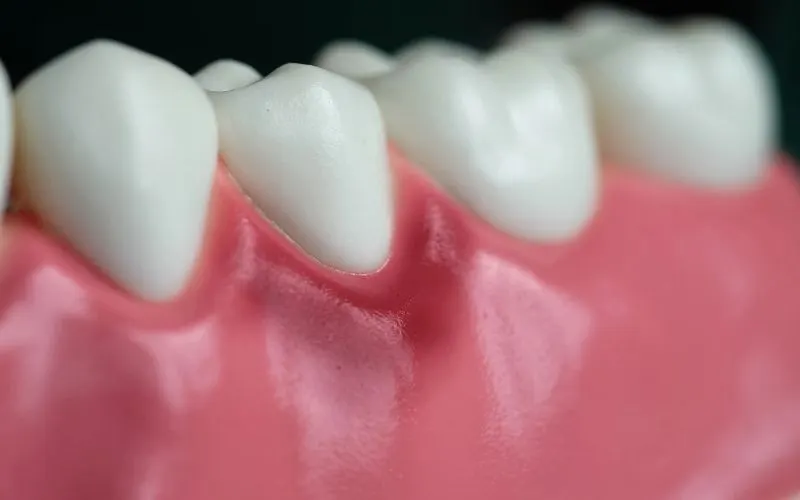
In this article 16 sections
Periodontitis is the advanced stage of gum disease — a bacterial infection that has spread beyond the gums to destroy the bone and ligaments that hold teeth in place. Unlike gingivitis, which is confined to the gums and fully reversible, periodontitis causes permanent structural damage. With appropriate treatment and consistent maintenance, however, most patients with periodontitis keep their teeth for life.
This is part of our complete periodontal disease series. For the full overview: Gum Disease: Symptoms, Stages & Complete Guide →
| Is periodontitis reversible? | No — bone and ligament damage is permanent |
| Is it manageable? | Yes — with treatment and 3–4 month maintenance |
| Stages | Early → Moderate → Advanced |
| Main treatment | Scaling and root planing (deep cleaning) |
| Can you treat it at home? | Home care supports — cannot substitute professional treatment |
| Difference from gingivitis | Gingivitis = gums only, reversible. Periodontitis = bone involved, permanent. |
What is periodontitis?
Periodontitis is a serious gum infection that damages the soft tissue and destroys the bone supporting teeth. It begins as gingivitis — inflammation of the gums caused by bacterial plaque — and progresses when that inflammation is left untreated. The bacteria and the body's inflammatory response to them cause progressive destruction of the periodontal ligament and alveolar bone.
The consequence of unchecked periodontitis is tooth loss — periodontitis is the leading cause of tooth loss in adults worldwide, ahead of tooth decay. Beyond the mouth, periodontal bacteria entering the bloodstream are linked to cardiovascular disease, worsened diabetic control, and premature birth. For the full systemic picture: Periodontal Disease Guide →
Periodontitis vs gingivitis — key differences
| Factor | Gingivitis | Periodontitis |
|---|---|---|
| Tissues affected | Gums only | Gums + bone + ligaments |
| Bone loss | None | Yes — progressive |
| Reversible? | Yes ✓ | No — managed only |
| Pocket depth | ≤3mm (normal) | 4mm+ (pathological) |
| Loose teeth | No | In advanced stages — yes |
| Pain | Usually none | Often none until advanced |
| Treatment | Professional clean + home care | Scaling, surgery, long-term maintenance |
For full detail on gingivitis: Gingivitis Guide — The Early Stage of Periodontal Disease →
Stages of periodontitis
Periodontitis is classified by the American Academy of Periodontology (AAP) and the European Federation of Periodontology (EFP) into four stages of severity and three grades of progression rate.
| Stage | Bone loss | Pocket depth | Key features | Tooth loss risk |
|---|---|---|---|---|
| Stage I — Initial | Coronal third (<15%) | ≤4mm | Bleeding on probing, mild attachment loss | Low |
| Stage II — Moderate | Coronal third (15–33%) | ≤5mm | Recession, furcation class I/II | Moderate |
| Stage III — Severe | Extending to mid/apical third | ≥6mm | Tooth mobility, furcation class III, vertical bone loss | High |
| Stage IV — Very Severe | Extending to mid/apical third | ≥6mm | Masticatory dysfunction, ≥20 remaining teeth, bite collapse | Very high |
Symptoms of periodontitis
Periodontitis is frequently called a "silent disease" — it progresses without pain until advanced stages. These are the symptoms to watch for:
- Bleeding gums — when brushing, flossing or eating. The most common and earliest sign. Why gums bleed and how to stop it →
- Persistent bad breath — caused by the bacterial toxins in periodontal pockets. Does not resolve with mouthwash.
- Gum recession — gums pulling away from teeth, making them appear longer. Exposes sensitive root surfaces.
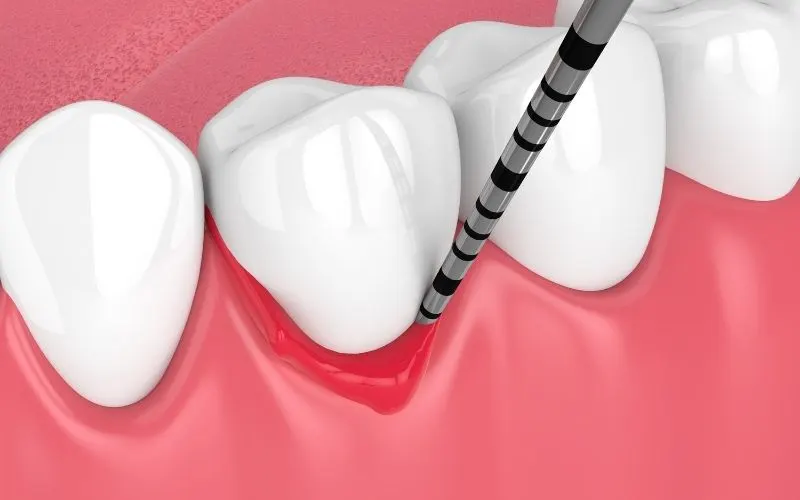
- Deep pockets — spaces between gums and teeth deeper than 3mm, measured with a periodontal probe at dental examination.
- Loose or shifting teeth — as bone support is lost, teeth become mobile. A change in bite or tooth position.
- Pus — between teeth and gums. Indicates active infection.
- Tooth sensitivity — exposed roots are sensitive to temperature and pressure.
- Tooth loss — in advanced, untreated periodontitis.
Causes and risk factors
The primary cause is bacterial plaque that has been allowed to accumulate and harden into tartar below the gum line. Once tartar forms in periodontal pockets, it cannot be removed by brushing or flossing — only by professional instrumentation. The bacteria produce toxins that trigger chronic inflammation, which progressively destroys the surrounding structures.
Risk factors that accelerate periodontitis
| Risk factor | Effect | Modifiable? |
|---|---|---|
| Smoking / tobacco | Strongest modifiable risk. Masks bleeding, reduces healing, accelerates bone loss dramatically. | Yes |
| Diabetes | Bidirectional — worsens periodontitis AND worsened by it. Controlling glucose improves periodontal outcomes. | Partially |
| Genetics | Up to 30% of the population carries genetic variants that increase inflammatory response to periodontal bacteria. | No |
| Medications | Hundreds cause dry mouth; some (calcium channel blockers, phenytoin, cyclosporine) cause gum overgrowth. | Partially |
| Stress | Elevates cortisol → impairs immune response → allows bacterial overgrowth. | Yes |
| Hormonal changes | Pregnancy, menopause and puberty increase gingival sensitivity to bacterial challenge. | No |
Periodontitis treatment options
Treatment is determined by the stage and grade of periodontitis. The primary goal at all stages is to eliminate or reduce the bacterial load, stop the inflammatory response, and stabilise the remaining bone and attachment.
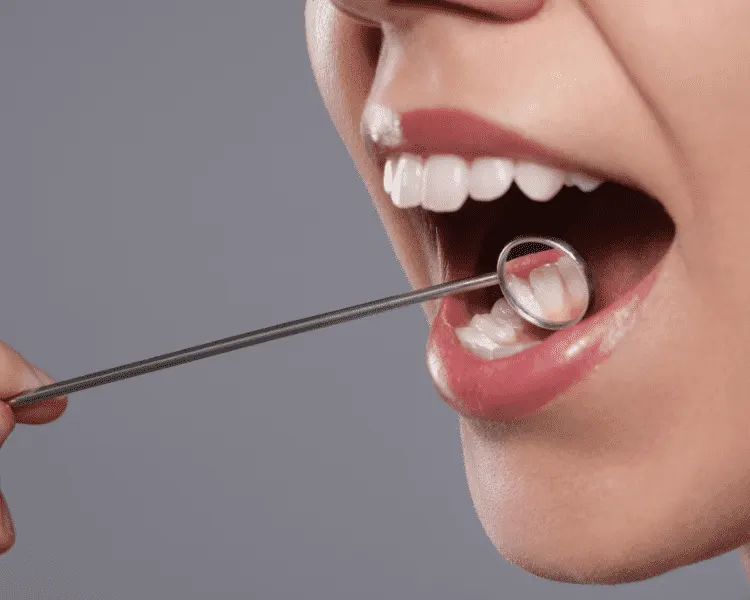
Stage I–II: Scaling and root planing (deep cleaning)
The primary non-surgical treatment for periodontitis. Scaling removes plaque and tartar from above and below the gum line. Root planing smooths the root surfaces to remove bacteria and create a clean surface for the gum to reattach. Performed under local anaesthesia, usually in quadrants over multiple appointments. Most Stage I–II cases are managed successfully with scaling and root planing alone, combined with improved home care and regular 3–4 month maintenance.
Stage III–IV: Periodontal surgery
Pocket reduction surgery (flap surgery) — when pockets are too deep for effective scaling, the gum is folded back to allow direct access to roots and bone. The area is cleaned thoroughly under direct vision and the gum repositioned. Pocket depth is reduced, making long-term maintenance more effective.
Osseous surgery — reshaping of the supporting bone to eliminate pockets and create a more even bone architecture. Combined with flap access in most cases.
LANAP (laser periodontal therapy) — minimally invasive laser treatment that selectively removes diseased tissue without cutting. No sutures, faster recovery, comparable outcomes to traditional surgery for appropriate cases.
Regenerative procedures
Bone grafting — when periodontitis has caused significant bone loss, a bone graft can regenerate lost volume. Bone grafts use autogenous bone, processed donor bone, or synthetic materials to provide a scaffold for new bone growth. Often combined with guided tissue regeneration membranes.
Gum grafting — when gum recession has exposed root surfaces, a gum graft restores gum coverage, reduces sensitivity, protects the root, and improves appearance.
Maintenance phase — the most important stage
After active treatment, periodontitis patients require ongoing professional maintenance every 3–4 months — not the standard 6-month recall. At each maintenance visit, pocket depths are reassessed, calculus is removed, and any areas of recurrence are identified early. Patients who skip maintenance appointments have dramatically higher rates of disease recurrence and tooth loss. Maintenance is lifelong.
Periodontitis at home treatment — what works and what does not
Home care is essential for supporting professional treatment — but it cannot substitute for it in periodontitis. The bacteria in deep periodontal pockets are inaccessible to brushing or flossing.
What helps at home:
- Brush twice daily — electric toothbrush significantly more effective than manual. Angle bristles at 45° to the gum line. Minimum 2 minutes.
- Floss daily — or use interdental brushes where gaps allow. Most periodontal disease starts between teeth.
- Chlorhexidine mouthwash — prescribed by your dentist for short-term bacterial load reduction. Not for indefinite use — causes staining and alters taste over time.
- Smoking cessation — the single most impactful change a smoker with periodontitis can make. Healing is significantly impaired in active smokers.
- Blood sugar control — for diabetic patients, improving HbA1c directly improves periodontal treatment outcomes.
- Water flosser (oral irrigator) — useful adjunct for flushing bacteria from pockets. Does not remove calculus but reduces bacterial load between professional visits.
What does not work: Oil pulling, coconut oil, herbal rinses and similar home remedies have no clinical evidence supporting their use as treatments for periodontitis. They may provide mild antibacterial benefit at gingivitis level but do not address established periodontal disease.
Is periodontitis reversible?
No — and this is the critical distinction between gingivitis and periodontitis. Once bone and ligament destruction has occurred, that tissue does not regenerate spontaneously. Regenerative procedures (bone grafting, guided tissue regeneration) can partially restore lost structure in selected cases, but complete reversal to the pre-disease state is not achievable.
What is achievable with treatment:
- Complete cessation of active bone loss
- Reduction of pocket depths to maintainable levels
- Resolution of inflammation and bleeding
- Stabilisation of mobile teeth in many cases
- Long-term tooth retention in the majority of patients
Periodontitis that is diagnosed and treated at Stage I–II has an excellent long-term prognosis. Stage III–IV requires more intensive treatment but still offers good outcomes with committed maintenance. Untreated periodontitis progresses inevitably to tooth loss.
Periodontitis and missing teeth — what comes next
When periodontitis has caused tooth loss, or when teeth are extracted due to insufficient bone support, replacement options depend on the degree of remaining bone. Dental implants — placed after periodontal disease is fully stabilised — are the gold standard replacement for teeth lost to periodontitis.
For patients where bone loss is significant, bone grafting may be needed before implant placement. For patients with severe upper jaw bone loss, zygomatic implants bypass the jaw entirely. For full options: Missing Teeth Replacement Options 2026 → | Dental Implants with Bone Loss → | Dental Implants Turkey Cost Guide →
Frequently asked questions — periodontitis
Is periodontitis reversible?
No — periodontitis causes permanent bone and ligament destruction that cannot be fully reversed. Gingivitis (the stage before periodontitis) is fully reversible with professional cleaning and improved home care. Once bone loss has begun, treatment halts the progression and stabilises the condition — but the lost bone does not return without regenerative procedures, and even those achieve partial rather than complete restoration.
What are the stages of periodontitis?
The 2018 AAP/EFP classification defines four stages: Stage I (initial — mild attachment loss, pockets ≤4mm, low tooth loss risk), Stage II (moderate — moderate attachment loss, pockets ≤5mm), Stage III (severe — significant bone loss, pockets ≥6mm, high tooth loss risk, tooth mobility), Stage IV (very severe — masticatory dysfunction, bite collapse, ≥20 teeth remaining). Each stage is also graded A, B or C for rate of progression.
What is the difference between periodontitis and gingivitis?
Gingivitis affects only the gum tissue — no bone loss, fully reversible with professional cleaning and improved hygiene. Periodontitis is the progression of gingivitis to involve the bone and periodontal ligament — bone loss is permanent and the condition requires ongoing professional management. Gingivitis is characterised by bleeding, redness and swelling without pocket depths above 3mm or bone changes on X-ray. Periodontitis shows pocket depths of 4mm+, radiographic bone loss, and often gum recession. For full detail: Gingivitis Guide →
What happens if periodontitis is left untreated?
Untreated periodontitis progresses through the stages — bone and ligament destruction continues, pockets deepen, teeth become progressively more mobile, and eventually tooth loss occurs. Beyond tooth loss, untreated periodontitis is associated with increased cardiovascular disease risk, worsened diabetic control, premature birth, and respiratory infections. There is no stable plateau — untreated periodontitis progresses.
Can periodontitis be treated at home?
No — periodontitis requires professional treatment. Home care (brushing, flossing, mouthwash) is essential as a maintenance tool between professional treatments but cannot substitute for scaling, root planing and surgery where needed. The bacteria in deep periodontal pockets are below the reach of home care instruments. A patient with established periodontitis who only improves home care without professional treatment will continue to experience bone loss.
How long does periodontitis treatment take?
Non-surgical scaling and root planing is typically completed over 2–4 appointments across 2–4 weeks, followed by a reassessment 6–8 weeks later. Where surgery is needed, additional appointments follow. The maintenance phase begins after active treatment and continues indefinitely at 3–4 month intervals. Total active treatment: typically 2–4 months. Maintenance: lifelong.
Can I get dental implants if I have periodontitis?
Yes — but the periodontitis must be fully treated and stable first. Active gum disease is a contraindication for implant placement. The same bacteria that cause periodontitis can cause peri-implantitis (infection around the implant), leading to implant failure. The correct sequence is: treat periodontitis → achieve stability → place implants → restore with crowns. For detail: Dental Implants Turkey Guide → | Implants with Bone Loss →
Does periodontitis cause bad breath?
Yes — persistent bad breath (halitosis) that does not resolve with mouthwash is one of the hallmarks of periodontitis. It is caused by the volatile sulphur compounds produced by the anaerobic bacteria in deep periodontal pockets. Treating the periodontitis resolves this type of bad breath; mouthwash temporarily masks but does not treat the underlying cause. For bleeding gum guidance: How to Stop Bleeding Gums →
What is the best toothbrush for periodontitis?
An oscillating-rotating electric toothbrush (Oral-B type) or sonic toothbrush is significantly more effective than manual brushing for plaque removal at the gum line — the area most critical for periodontitis management. Use a soft-bristled head. Pressure sensors on electric toothbrushes prevent the overbrushing that can worsen recession. Replace the head every 3 months. No toothbrush removes calculus — that requires professional instrumentation.
The Last Word from The More Clinics
Periodontitis is not a sentence to tooth loss — it is a condition that, with appropriate treatment and committed maintenance, most patients manage successfully for life. The earlier it is treated, the less invasive the treatment and the better the long-term outcome. The keys are consistent 3–4 month professional maintenance and a willingness to address modifiable risk factors — particularly smoking and blood sugar control.
A free consultation assesses your current periodontal condition and gives you an honest, staged treatment plan — before you commit to anything.
Book a Free Consultation → WhatsApp Us →
This article medically reviewed by Dr. Mehmet Can Kılınçaslan, specialist in Periodontology and Implantology, with extensive experience managing all stages of periodontitis — from initial scaling and root planing to advanced surgical and regenerative procedures.
Medical disclaimer: This guide is for informational and educational purposes only. Periodontitis management requires individualised professional assessment. Consult a qualified periodontist for evaluation and treatment specific to your condition.
This article provides general information and does not replace an individual medical assessment, diagnosis or treatment advice. Discuss decisions about your health and treatment with your treating clinician.