Dental Bone Graft for Dental Implant: All You Need to Know
Talk to our team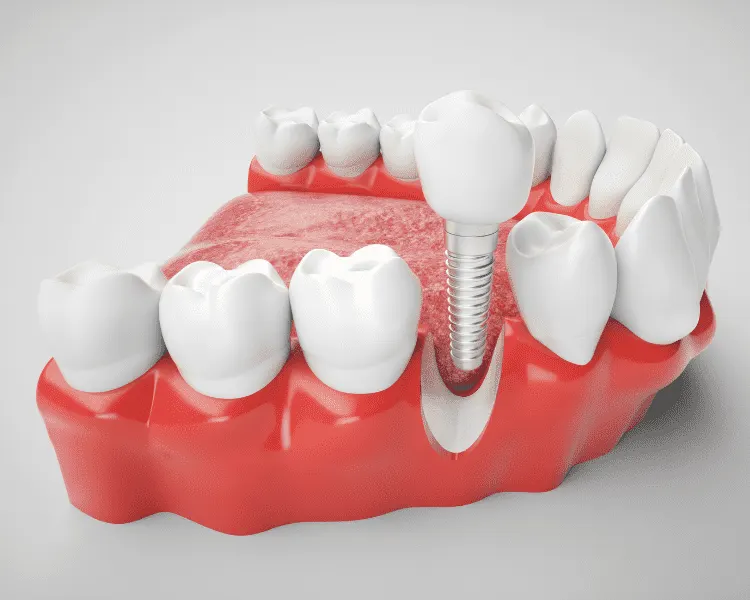
In this article 7 sections
A dental bone graft rebuilds jawbone that has been lost — usually so a dental implant has enough solid bone to anchor into. Around a third to half of implant patients need one. This guide covers the real cost by graft type (socket, ridge augmentation, sinus lift), how Turkey compares to the UK and USA, healing times, success rates — and importantly, the alternatives that can sometimes avoid a tooth bone graft altogether.
| Socket preservation (Turkey) | → from ~$150 |
| Full graft / ridge augmentation (Turkey) | → ~$300 – $800 |
| Sinus lift (Turkey) | → higher — added to graft |
| Same in UK / USA | → £350–£3,000 / $500–$5,000 |
| Healing before implant | → 3–4 months (simple), 6–9 (sinus/complex) |
What is a dental bone graft — and who needs one?
A bone graft is a minor surgical procedure that transplants bone material into an area of bone loss, stimulating your body to grow new, solid bone. It's needed because the jawbone shrinks (resorbs) after a tooth is lost — measurably within 6–12 months — and an implant needs enough bone volume and density to anchor securely.
You may need one if you've had missing teeth for a while, have bone loss in the jaw, or need to rebuild the ridge before implants. The materials used are autografts (your own bone — the gold standard, but needs a second site), allografts (donor bone), xenografts (bovine), and synthetic alloplasts, often with a collagen membrane or PRP to speed healing.
Types of bone graft surgery
- Socket preservation (socket graft): placed right after an extraction to stop the socket collapsing — the cheapest option, and doing it early can make a bigger graft unnecessary later.
- Ridge augmentation: rebuilds the width or height of a resorbed ridge so implants can be placed — takes 45–90 minutes.
- Sinus lift (sinus augmentation): adds bone in the upper back jaw by lifting the sinus membrane, when there isn't enough height for implants under the sinus — takes about an hour.
- Simultaneous grafting: a small graft placed at the same time as the implant, to fill gaps and support stability.
Dental bone graft cost by type & country
Cost depends mainly on the type and size of graft, the material, and the country. The honest picture:
| Graft type | 🇹🇷 Turkey | 🇬🇧 UK | 🇺🇸 USA |
|---|---|---|---|
| Socket preservation | from ~$150 | £200–£500 | $250–$1,000 |
| Ridge augmentation | ~$300–$800 | £400–£2,500 | $500–$3,000 |
| Sinus lift (per side) | lower vs West | £800–£2,500 | $1,500–$5,000 |
Turkey saves roughly 60–70% for the same graft type and materials. Often the graft is bundled into an implant package — and if done at the same time as an extraction, socket preservation is sometimes included. The lower price reflects economics, not quality: Turkish clinics use the same biocompatible materials (including premium brands) with reported success rates above 90%, up to 99% at leading facilities.
Healing time, success rates & recovery
The graft needs time to mature into solid bone before an implant goes in: typically 3–4 months for a simple graft, and 6–9 months for a sinus lift or larger reconstruction. Recovery from the procedure itself is milder than most expect — it's done under local anesthesia, swelling peaks at 48–72 hours, and ordinary painkillers manage it.
Success rates are high: sinus lifts achieve 90–95%, ridge augmentation over 95% in experienced hands. This healing period is why bone grafting adds time to the overall implant journey — worth planning for if you're travelling.
Alternatives that can sometimes avoid a bone graft
A graft isn't always the only route. Depending on your bone and case, an experienced surgeon may avoid or reduce grafting with:
| Alternative | When it can avoid a graft |
|---|---|
| Early implant / socket preservation | Implant within 2–3 months of extraction, before bone shrinks |
| Short implants | Mild-moderate loss — fit within existing bone |
| All-on-4 | Full arch — angled implants use available bone, often graftless |
| Nerve lateralization | Severe lower back jaw loss — moves the nerve instead of grafting |
| Zygomatic implants | Severe upper jaw loss — anchor in the cheekbone, no sinus graft |
Which route is right depends entirely on your CT scan. A good oral and maxillofacial surgeon will tell you honestly whether you truly need a graft or whether one of these avoids it.
Dental Bone Graft — Frequently Asked Questions
How much does a dental bone graft cost?
By type: socket preservation is cheapest (from ~$150 in Turkey, $250–$1,000 in the USA), ridge augmentation ~$300–$800 in Turkey ($500–$3,000 in the USA/£400–£2,500 UK), and a sinus lift more. Turkey is roughly 60–70% cheaper for the same procedure and materials.
Is a bone graft painful?
No — it's done under local anesthesia so you feel nothing during it. Afterwards there's mild discomfort and swelling that peaks at 48–72 hours and is easily managed with standard painkillers, similar to a simple extraction.
How long does a bone graft take to heal?
A simple graft takes 3–4 months to mature before an implant can be placed; a sinus lift or larger reconstruction takes 6–9 months. Your 3D CT scan helps predict the exact timeline.
Can I get implants without a bone graft?
Sometimes. Placing an implant soon after extraction, short implants, All-on-4, nerve lateralization or zygomatic implants can all avoid grafting in the right cases. It depends on your bone — a CT scan decides.
Do I really need a bone graft?
Roughly a third to half of implant patients do. The only way to know for sure is a 3D CT scan showing your bone volume. A good surgeon won't graft unnecessarily — ask for an honest assessment and the alternatives.
What are the risks?
It's generally very safe. Possible risks include infection, graft not integrating, and temporary swelling — all uncommon with proper technique and aftercare. Choosing an experienced surgeon and following post-op instructions minimises them.
The Last Word from The More Clinics
A bone graft is often the step that makes implants possible where bone has been lost — and in Turkey it costs a fraction of UK/US prices with the same materials and high success rates. But the smartest move is to find out whether you truly need one: sometimes good timing, or an alternative like All-on-4, nerve lateralization or zygomatic implants, avoids it entirely. That decision should come from a CT scan and an honest surgeon, not a guess.
Send us your recent panoramic X-ray or CT for a free assessment — we'll tell you honestly whether a graft is needed, which type, and what it would cost as part of your implant plan.
Get a Free Consultation → WhatsApp Us →
Related: Implants with bone loss · Sinus lift · Nerve lateralization · Zygomatic implants · All-on-4 · Dental implants guide
 Written by The More Editorial Team and Medically Reviewed by Dr. Onur Ademhan, specialist in Oral and Maxillofacial Surgery and Implantology. See Editorial Process. Last Updated: [20 August 2026]
Medical disclaimer: This guide is for informational purposes only and does not replace a personal consultation. Whether a bone graft is needed, which type, cost, healing and suitability depend on individual CT-based assessment by a qualified dentist or oral and maxillofacial surgeon. Prices are indicative. Consult a specialist before any treatment decision.
This article provides general information and does not replace an individual medical assessment, diagnosis or treatment advice. Discuss decisions about your health and treatment with your treating clinician.