Oral & Maxillofacial Surgeon: What They Do & When You Need One
Talk to our team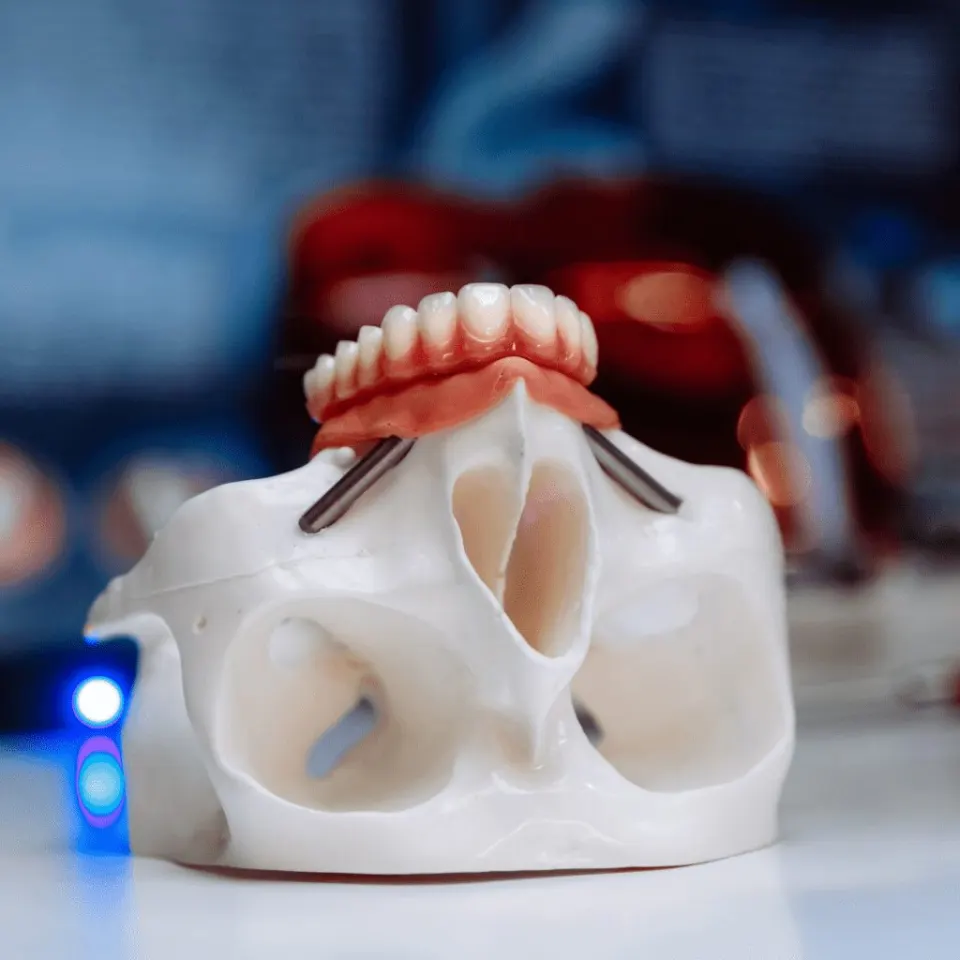
In this article 7 sections
An oral and maxillofacial surgeon (OMFS) is the specialist who bridges dentistry and surgery — the one who handles the complex problems of the mouth, jaws and face that a general dentist refers on. If you've been told you need surgery for your wisdom teeth, jaw, implants or a facial injury, this is the specialist involved. This guide explains clearly what an OMFS does, how they differ from an oral surgeon and a dentist, when you need one, and how to choose a good one.
An oral and maxillofacial surgeon (OMFS) is a specialist trained in both dentistry and surgery who diagnoses and operates on conditions of the mouth, jaws, and face — wisdom teeth, dental implants, corrective jaw surgery, facial trauma, cysts and tumours. They handle the complex surgical cases that go beyond what a general dentist or even a standard "oral surgeon" treats.
What does an oral and maxillofacial surgeon do?
An OMFS is uniquely trained in both dentistry and medicine, which lets them manage everything from a routine surgical extraction to major reconstruction. The core areas:
- Complex tooth extractions & wisdom teeth: impacted wisdom teeth buried in the jawbone, and difficult extractions a general dentist refers on.
- Dental implants — especially complex cases: placing implants, and the advanced techniques for patients with too little bone — bone loss, bone grafting, zygomatic implants, nerve lateralization and All-on-4.
- Corrective jaw surgery (orthognathic): repositioning misaligned jaws to fix the bite, facial balance and breathing — see orthognathic surgery.
- Facial trauma reconstruction: repairing fractured facial bones and soft-tissue injuries after accidents.
- Oral pathology: diagnosing and treating cysts, tumours and other abnormal growths — including biopsies and removal.
- TMJ disorders: managing temporomandibular joint problems, from conservative treatment to surgery when needed.
OMFS vs oral surgeon vs dentist — what's the difference?
These terms are often used loosely, which causes confusion. The clearest way to see it:
| Role | Training | Handles |
|---|---|---|
| General dentist | Dental degree | Fillings, crowns, cleanings, simple extractions |
| Oral surgeon | Dental + surgical training | Surgical extractions, implants, minor oral surgery |
| Oral & maxillofacial surgeon (OMFS) | Dental and medical/surgical training | All of the above plus jaw surgery, facial trauma, pathology, reconstruction |
Are dentists oral surgeons? No — every OMFS starts as a dentist, but not every dentist is a surgeon. The OMFS is the most highly trained of the three, qualified in both dentistry and medicine, which is why the most complex mouth, jaw and facial cases go to them. "OMFS" and "maxillofacial surgeon" refer to the same specialist.
When do you need an oral and maxillofacial surgeon?
Your dentist will usually refer you, but you likely need an OMFS if you have:
- Impacted or difficult wisdom teeth
- Missing teeth with complex bone loss, where standard implants aren't straightforward
- A misaligned jaw, severe over/underbite, or facial asymmetry affecting bite or breathing
- A facial injury with possible bone fracture
- A cyst, lump or lesion in the mouth or jaw that needs assessment or biopsy
- Persistent TMJ problems not resolving with conservative care
How to choose a good oral and maxillofacial surgeon
Because these procedures are surgical and often complex, the surgeon matters more than almost anything else. What to check:
- Dual qualification: genuine training in both dentistry and surgery — not just a dentist doing occasional surgery.
- Case experience in your specific problem: a surgeon who does jaw surgery regularly, or complex implants regularly, not once in a while.
- Proper planning: CT/CBCT-based 3D planning for implants and jaw surgery, not a decision from a photo.
- Honest assessment: a good surgeon tells you when a simpler option is better — and is upfront about risks.
- Accredited facility: the surgery is done in a properly equipped, accredited setting.
Oral & Maxillofacial Surgery at The More Clinics, Antalya
At The More Clinics in Antalya, complex oral and maxillofacial cases are led by Dr. Onur Ademhan, specialist in Oral and Maxillofacial Surgery and Implantology. This covers the full range — from standard and complex dental implants to zygomatic implants, nerve lateralization and corrective jaw surgery — with CT-based planning and honest assessment of the best option for your case. International patients receive the same specialist care at a fraction of UK/US prices.
Frequently Asked Questions
What is an oral and maxillofacial surgeon?
A specialist trained in both dentistry and surgery who diagnoses and operates on conditions of the mouth, jaws and face — including wisdom teeth, dental implants, jaw surgery, facial trauma and oral pathology. It's the most highly trained of the dental-surgical roles.
What's the difference between an oral surgeon and a maxillofacial surgeon?
An oral surgeon focuses on surgery within the mouth — extractions, implants, minor oral surgery. A maxillofacial surgeon (OMFS) is trained in both dentistry and medicine and additionally handles the jaws and face: corrective jaw surgery, facial trauma and reconstruction. All OMFS are oral surgeons, but not all oral surgeons have full maxillofacial training.
Are dentists oral surgeons?
No. Every OMFS begins as a dentist, but general dentists are not surgeons. A dentist handles routine care (fillings, crowns, simple extractions) and refers surgical and complex cases to an oral or maxillofacial surgeon.
When should I see a maxillofacial surgeon?
For impacted wisdom teeth, complex implants (especially with bone loss), jaw misalignment, facial injuries, oral cysts or lumps, or persistent TMJ problems. Your dentist usually refers you, but a direct specialist opinion is worth seeking for complex cases.
Does OMFS mean the same as maxillofacial surgeon?
Yes — OMFS stands for Oral and Maxillofacial Surgeon. The terms refer to the same specialist.
The Last Word from The More Clinics
An oral and maxillofacial surgeon is the specialist for the mouth, jaw and facial cases that go beyond routine dentistry — and for many patients told their case is "too complex," a specialist opinion is exactly what opens up options. If you're dealing with complex implants, jaw alignment, wisdom teeth or a facial concern, an experienced OMFS is the right person to assess it.
You're welcome to send a recent X-ray or CT for a free, honest opinion — a WhatsApp consultation is confidential and costs nothing.
Get a Free Consultation → WhatsApp Us →
Related: Dental implants guide · Zygomatic implants · Nerve lateralization · Jaw surgery · Bone loss & implants · TMJ disorder
 Written by The More Editorial Team and Medically Reviewed by Dr. Onur Ademhan, specialist in Oral and Maxillofacial Surgery and Implantology. See Editorial Process. Last Updated: [21 August 2026]
Medical disclaimer: This guide is for general informational purposes only and does not replace a personal consultation. Diagnosis, treatment options and surgical suitability depend on individual assessment by a qualified oral and maxillofacial surgeon.
This article provides general information and does not replace an individual medical assessment, diagnosis or treatment advice. Discuss decisions about your health and treatment with your treating clinician.