Butt Implants Turkey: Cost, Procedure & Complete 2026 Guide
Talk to our team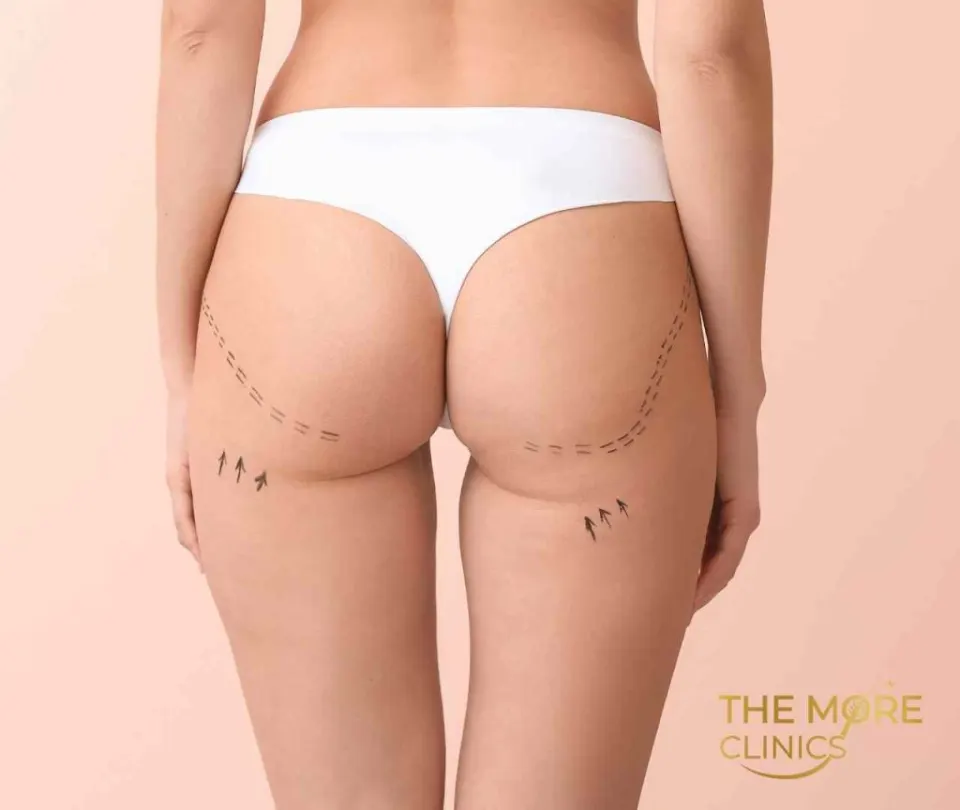
In this article 16 sections
Butt implants — also called gluteal implants or buttock augmentation — are the surgical alternative to a Brazilian Butt Lift (BBL) for patients who want meaningful buttock enhancement but do not have sufficient body fat for fat transfer. Instead of harvesting and injecting your own fat, the surgeon places medical-grade solid silicone implants into the gluteal area through a discreet incision in the natural crease between the buttocks.
Turkey has become a popular destination for butt implant surgery, with internationally trained surgeons, accredited clinics, and competitive prices. This guide covers who butt implants are right for, how they differ from a BBL, what the procedure involves, what it costs in Turkey versus the UK and USA, and what to expect from recovery.
Quick Answer — Butt Implants Turkey 2026
| Turkey cost (all-inclusive) | $3,500 – $6,500 (approx. £2,800 – £5,100) |
| UK cost | £5,000 – £10,000 |
| USA cost | $6,000 – $12,000 |
| Surgery duration | 1.5 – 2.5 hours |
| Anaesthesia | General |
| Hospital stay | 1 night |
| Stay in Turkey | 7 days |
| No sitting directly on buttocks | 2 – 4 weeks |
| Return to desk work | Week 2 – 3 |
| Full recovery | 6 – 8 weeks |
| Results duration | Permanent (10 – 15+ years) |
| Best for | Slim patients without sufficient fat for BBL |
What Are Butt Implants — and Who Are They For?
Gluteal augmentation with implants places solid silicone prostheses into the buttock area to create permanent volume, projection, and shape enhancement. Unlike a BBL (butt lift surgery), which depends entirely on harvesting your own fat, butt implants work independently of body composition — making them the only option for patients who want significant buttock enhancement but carry insufficient donor fat for transfer.
You are likely a good candidate for butt implants if:
- You are naturally slim or lean with low body fat — insufficient for BBL fat transfer
- You want permanent, predictable volume that does not depend on maintaining a specific weight
- You want significant projection and shape enhancement that fat transfer cannot achieve at your current body composition
- You have a flat, square, or underprojected buttock profile
- You are at a stable, healthy weight and in good general health
- You have realistic expectations about shape, feel, and recovery
Butt implants are not right for you if:
- You have sufficient donor fat — in which case a BBL typically produces more natural-feeling results
- You are planning significant further weight loss — implants do not change in size, but surrounding tissue does
- You are not prepared for the specific recovery restrictions (no direct sitting for 2–4 weeks)
Butt Implants vs BBL: Which Is Right for You?
This is the most important decision in buttock augmentation — and the one most influenced by your specific anatomy.
| Factor | Butt Implants | BBL (Brazilian Butt Lift) |
|---|---|---|
| Material | Medical-grade solid silicone | Your own fat (autologous) |
| Requires donor fat | ❌ No | ✅ Yes — sufficient body fat essential |
| Feel | Firmer — implant present | More natural — own tissue |
| Volume predictability | High — exact size chosen | Variable — 30–70% fat survival |
| Simultaneous contouring | No — only adds volume | ✅ Yes — liposuction contours donor areas |
| Permanence | Permanent | Permanent (surviving fat cells) |
| Recovery restriction | No direct sitting 2–4 weeks | No direct sitting 2–3 weeks |
| Surgery duration | 1.5 – 2.5 hours | 2 – 4 hours |
| Revision complexity | Higher if needed | Lower — fat can be re-injected |
| Turkey cost | $3,500 – $6,500 | $2,500 – $4,500 |
| Best for | Slim patients, low body fat | Patients with sufficient donor fat |
The simple rule: If you have enough fat for liposuction-based transfer, a BBL typically produces more natural-feeling results and simultaneously contours your waist and other areas. If you are naturally slim and do not have sufficient donor fat, butt implants are the appropriate path to meaningful buttock enhancement.
You may want to read: Detailed guide of BBL vs Butt Implants
The Procedure: What Actually Happens
Butt implant surgery is performed under general anaesthesia and takes approximately 1.5–2.5 hours.
Step 1: Incision placement
A single small incision is made in the intergluteal fold — the natural crease between the buttocks — where it is hidden from view even in swimwear. This concealed position is one of the key advantages of gluteal implant technique — the scar is essentially invisible in daily life.
Step 2: Implant placement — three approaches
The placement position is determined by your surgeon based on your anatomy, the degree of augmentation desired, and their technical preference:
| Placement | Description | Best for |
|---|---|---|
| Intramuscular | Implant placed within the gluteus maximus muscle | Most common; provides natural-looking result with good coverage; lower implant visibility risk |
| Submuscular | Implant placed beneath the gluteal muscle | Maximum tissue coverage; preferred for very slim patients with minimal soft tissue |
| Subfascial | Implant placed above the muscle but beneath the fascia | Faster recovery than intramuscular; lower complication rates reported in some studies |
Step 3: Closure
The incision is closed in layers. You are positioned face-down for the first stage of recovery. The surgeon applies dressings and a compression garment.
What implants are used:
Medical-grade solid silicone elastomer implants — not the liquid-filled type used in breast augmentation. Solid silicone is specifically engineered for the gluteal environment, which bears substantial mechanical load during daily activity. Sizes typically range from 200–400cc depending on patient anatomy and desired outcome. FDA-approved solid silicone gluteal implants with lifetime warranty are standard at reputable Turkish facilities.
Butt Implants Turkey Cost 2026: Full Breakdown
The cost of butt implants in Turkey ranges from €3,550 to €5,500 in 2026. In USD this is approximately $3,500–$6,500 depending on the facility tier, surgeon seniority, and implant brand.
All prices in USD. UK readers: approximately £0.79 per $1.
Country Comparison — Butt Implants 2026
| Country | Cost (USD) | Local currency | Notes |
|---|---|---|---|
| 🇹🇷 Turkey (all-inclusive) | $3,500 – $6,500 | €3,220 – €5,980 | Surgery + implants + hospital + hotel + transfers + follow-up |
| 🇬🇧 United Kingdom | $6,300 – $12,700 | £5,000 – £10,000 | Procedure only; facility and aftercare often billed separately |
| 🇺🇸 United States | $6,000 – $12,000 | — | Surgeon fee; anaesthesia and facility billed separately |
| 🇨🇦 Canada | $6,000 – $11,000 | CAD $8,160 – $14,960 | Not covered by provincial health plans |
| 🇩🇪 Germany / Europe | $5,500 – $10,000 | €5,060 – €9,200 | Private clinic only |
| 🇦🇺 Australia | $6,000 – $12,000 | AUD $9,120 – $18,240 | Medicare does not cover cosmetic procedures |
What Turkey's All-Inclusive Package Covers
A typical all-inclusive butt implants Turkey package includes: surgery, anaesthesia, pre-operative tests, 1 night hospital stay, 6–7 nights hotel accommodation, VIP airport and clinic transfers, premium solid silicone gluteal implants, compression garment, post-operative medications, dedicated coordinator, and follow-up appointments.
At The More Clinics, your package also includes an English-speaking personal treatment assistant throughout your stay and 12-month remote follow-up support after you return home.
What Affects the Final Price?
| Factor | Lower end | Higher end |
|---|---|---|
| Implant size | 200–250cc | 350–400cc+ |
| Implant brand | Standard silicone | Premium brand (Polytech, Silimed, etc.) |
| Placement technique | Subfascial | Intramuscular or submuscular |
| Surgeon seniority | Experienced specialist | High-volume gluteal augmentation expert |
| Facility tier | Ministry-licensed clinic | JCI-accredited hospital |
| Combined procedures | Standalone | + Liposuction for contouring |
Combining Butt Implants with Liposuction
Many patients choose to combine gluteal implants with liposuction of the waist, flanks, or abdomen — not to harvest fat for transfer, but to create a more contoured overall silhouette that enhances the implant result. This combination is the closest approximation to a BBL result for patients without sufficient fat for transfer. Combined Turkey packages typically cost $5,000–$8,500 all-inclusive.
Recovery: What to Expect Week by Week
Butt implant recovery has one defining feature that distinguishes it from most cosmetic procedures: you cannot sit directly on your buttocks for 2–4 weeks. This restriction exists because direct pressure on the implants during the initial healing phase can displace them before the surrounding tissue has stabilised.
Recovery Timeline
| Stage | What's happening | What to do | What to avoid |
|---|---|---|---|
| Day 0–1 | Surgery complete; 1 night hospital monitoring; compression garment fitted; positioned lying face-down | Rest face-down; short gentle walks encouraged for DVT prevention | Any direct pressure on buttocks; sitting on chairs |
| Day 1–4 | Significant swelling and bruising; tightness and soreness in gluteal area; hotel recovery face-down or on side | Rest; gentle walks; donut pillow for any necessary sitting; cold compresses to surrounding areas | Sitting without donut pillow; any strenuous activity |
| Day 4–7 | Follow-up check; suture inspection; fit-to-fly assessment; swelling stable | Final surgeon check; return flight with donut pillow for the flight home | Flying without donut pillow; long sitting without pillow |
| Week 1–2 | Swelling significant but reducing; soreness manageable; implants settling into position | Desk work from week 2 with donut pillow; gentle daily walks; donut pillow for all sitting | Sitting without donut pillow; driving; lifting |
| Week 2–4 | Swelling reducing noticeably; implants stabilising; first signs of final shape emerging | Most daily activities with modified sitting; light daily movement | Direct sitting without pillow; heavy lifting; exercise |
| Week 4–6 | Direct sitting typically cleared by surgeon assessment; significant improvement | Resume normal sitting with surgeon clearance; light exercise | High-impact exercise; anything putting direct impact on buttocks |
| Week 6–8 | Full activity typically cleared | Full return to exercise; swimming; all activities | — |
| Month 3–6 | Final implant position settled; surrounding tissue fully accommodated; result clear | Assess final result | — |
The No-Sitting Rule — Practical Management
The no-direct-sitting restriction is the most challenging aspect of butt implant recovery — and the one patients are most often unprepared for practically.
What "no direct sitting" means:
- No sitting in a chair, on a sofa, or on a toilet seat in the normal position for the first 2–4 weeks
- When unavoidable sitting is necessary, a donut or BBL pillow — which transfers weight to the thighs rather than the buttocks — must be used
- Lying face-down or on your side is the resting position for weeks 1–2
- Driving is not possible during this period
Practical preparation:
- Buy a donut or BBL pillow before surgery — you will need it from day one for any necessary sitting including the flight home
- Arrange your sleeping position: face-down or side-lying with pillows for support
- Prepare a raised toilet seat attachment if possible — standard toilet height puts significant pressure on the buttocks
- Plan your workstation if returning to desk work before clearance for normal sitting — a standing desk or kneeling chair are useful during the intermediate phase
Implant Position and Longevity: What to Know
How Long Do Butt Implants Last?
Results for gluteal augmentation can endure 10–15 years or more. Solid silicone gluteal implants are not the same as older liquid-filled implants — they do not deflate, rupture, or leak. The primary reason for revision over time is:
- Capsular contracture: The natural scar tissue capsule that forms around any implant can occasionally harden and contract, changing the shape or feel. This is manageable with revision if it occurs.
- Implant malposition: If the implant shifts from its intended position — more common with subfascial than intramuscular placement. Surgical correction addresses this.
- Desire for size change: Some patients choose revision to change implant size over time.
The majority of patients do not require revision for purely technical reasons within the first 10–15 years.
Can Butt Implants Be Combined with Future BBL?
Yes — if a patient gains sufficient body fat after their implant procedure, a fat transfer can be performed around or adjacent to the implants to further enhance shape and softness. This is sometimes done as a staged enhancement several years after the initial implant procedure.
Choosing the Right Surgeon in Turkey
Because gluteal augmentation is technically demanding — and complications like implant displacement or seroma are meaningful risks — surgeon experience with this specific procedure is particularly important.
What to ask:
- How many gluteal augmentation procedures do you perform per year?
- Which placement technique do you use and why is it appropriate for my anatomy?
- What implant brand and size do you recommend, and can I see before-and-after cases with similar starting anatomy?
- What is your revision rate for gluteal implants?
- What happens if I develop a complication after returning home?
Red flags:
- Unusually low prices ($2,500 or less) for butt implants — implant cost alone makes this implausible for legitimate facilities
- No specific surgeon named before booking
- No pre-operative physical assessment of your anatomy before implant size is recommended
- No clear aftercare protocol for international patients after return
At The More Clinics, all surgeons performing gluteal augmentation are independently verified for board certification and procedure-specific case volume before any recommendation is made.
Turkey Butt Implants — Why Turkey?
Cost: Lower operating costs, favourable exchange rates, and high procedure volume allow premium care at lower prices. The saving of 50–70% versus UK or US pricing is real — and the all-inclusive model means the comparison is more straightforward than in Western countries where components are billed separately.
Surgical volume: Turkey's plastic surgery centres — particularly in Istanbul and Antalya — perform gluteal augmentation at high volumes, giving surgeons procedural depth that lower-volume Western practitioners cannot match.
Logistics: All-inclusive butt implants Turkey packages — surgery, hospital, hotel, transfers, coordinator — make the process significantly more manageable for international patients than navigating fragmented private healthcare billing.
How long to stay: Most butt implants Turkey packages recommend 7 days in Turkey: arrival day, consultation and pre-op tests day 2, surgery day 3 with overnight hospital stay, days 4–6 hotel recovery with follow-ups, and final check and departure on day 7. A donut cushion is provided for the return flight.
The Last Word from The More Clinics
Butt implants are a legitimate, permanent solution for patients who want meaningful gluteal enhancement but do not have the body fat for a BBL. They require a specific recovery commitment — particularly the no-direct-sitting restriction — that requires planning and preparation. With the right surgeon, the right facility, and appropriate aftercare, results are long-lasting and satisfaction rates are high.
At The More Clinics, we match patients requesting gluteal augmentation with surgeons who have verified, procedure-specific experience. We confirm implant brand, placement technique rationale, and surgeon case volume before making any recommendation. Your personal treatment assistant coordinates everything from pre-surgery documentation through 12-month remote follow-up.
A free consultation gives you a specific implant recommendation based on your anatomy and goals, an honest assessment of whether butt implants or a BBL is more appropriate for you, and a transparent all-inclusive cost before you commit to anything.
Book a Free Consultation → WhatsApp Us
Frequently Asked Questions — Butt Implants Turkey
How much do butt implants cost in Turkey?
All-inclusive butt implants in Turkey cost $3,500–$6,500 in 2026. This covers surgery, implants, anaesthesia, 1 night hospital stay, hotel accommodation (6–7 nights), airport transfers, compression garment, medications, and follow-up. This compares to £5,000–£10,000 in the UK and $6,000–$12,000 in the USA where these items are typically billed separately.
What is the difference between butt implants and a BBL?
A BBL uses your own fat — harvested via liposuction and transferred to the buttocks. It requires sufficient donor fat, produces a more natural feel, and simultaneously contours the areas where fat is harvested. Butt implants use solid silicone prostheses and do not require donor fat — making them the appropriate option for slim patients. Implants feel slightly firmer than natural tissue but provide predictable, permanent volume.
How long can I not sit after butt implants?
Most surgeons advise avoiding direct sitting on the buttocks for 2–4 weeks. During this period, a donut or BBL pillow must be used for any necessary sitting — transferring weight to the thighs rather than the buttocks. Your surgeon will assess your specific healing at follow-up before clearing you for normal sitting.
Are butt implants in Turkey safe?
Yes — at Ministry of Health-licensed facilities with board-certified plastic surgeons experienced in gluteal augmentation. Turkey performs a high volume of buttock augmentation procedures, with many surgeons accumulating significant procedural experience. Safety depends on surgeon credentials, facility accreditation, appropriate implant selection, and defined aftercare. At The More Clinics, all recommended surgeons are independently verified before any recommendation is made.
How long do butt implants last?
Solid silicone gluteal implants typically last 10–15 years or longer. Unlike older liquid-filled implants, they do not deflate or rupture. The most common reasons for eventual revision are capsular contracture (scar tissue hardening), implant position change, or patient preference for size adjustment.
What size butt implants are right for me?
Implant size — typically 200–400cc — is determined by your existing anatomy, the degree of augmentation desired, and your surgeon's assessment of what will produce a proportionate, natural-looking result. A surgeon who recommends a specific size without examining your anatomy (in person or via detailed photographs) is not conducting an adequate pre-operative assessment.
Can I have a BBL later if I start with butt implants?
Yes. If you gain sufficient body fat over time, fat transfer can be performed around or adjacent to existing implants to further enhance shape and softness. This staged approach is performed by some patients who want maximum enhancement.
When will I see my final butt implant result?
Initial swelling resolves over weeks 4–6. Implants settle into their final position and the surrounding tissue fully accommodates them over months 2–3. Final results are typically clear by month 3–6.
How long do I need to stay in Turkey for butt implants?
7 days: arrival day, pre-operative consultation and tests, surgery with 1 night hospital stay, 3–4 nights hotel recovery with follow-ups, and a final check-up before departure. A donut pillow is essential for the return flight — ensure you have one before leaving for the airport.
What is the difference between intramuscular, submuscular, and subfascial placement?
Intramuscular (implant inside the gluteal muscle) is the most common technique — provides good coverage and natural look. Submuscular (beneath the muscle) offers maximum tissue coverage — preferred for very slim patients. Subfascial (above muscle, beneath fascia) has some evidence for lower complication rates and faster recovery. Your surgeon selects the most appropriate placement based on your anatomy, existing muscle mass, and desired outcome.
Medical disclaimer: This article is for informational and educational purposes only. Butt implant surgery carries risks that vary based on individual health, anatomy, and surgeon technique. Consult a board-certified plastic surgeon for assessment specific to your circumstances.
SOURCES:
Creating the Ideal Buttock (Lifting, Implanting or Fat Grafting), Angelo Cuzalina - Armando Retana
Gluteal Augmentation: A Historical Perspective on Aesthetic Practice, Pubmed
The Latest Trend in Buttock Aesthetics: Brazilian Buttock Lift Reversal and Buttock Reduction, Pubmed
HOW THE MORE CLINICS KEEP THE CONTENT UP TO DATE:
Our dedicated medical and editorial teams work tirelessly to stay informed about the ever-evolving world of health news. By rigorously tracking the latest research, clinical guidelines, and significant developments across various medical fields, they ensure that our content remains accurate, relevant, and up-to-date.
This includes reviewing peer-reviewed studies, consulting with healthcare professionals, and monitoring advancements in medical technology. Their meticulous efforts and attention to detail allow us to provide you with trustworthy, reliable information that you can depend on to make informed decisions about your health and well-being.
However, we still insist on getting a healthcare professional's opinion before you make any decision about your health. Consulting with a qualified expert ensures that the choices you make are informed, safe, and tailored to your individual needs.
Last Updated: [2 September 2026]
Written by The More Editorial Team and Medically Reviewed by Op. Dr. İsmail Gökhan Bacak, specialist in Plastic, Reconstructive and Aesthetic Surgery. See our Editorial Process.
This article provides general information and does not replace an individual medical assessment, diagnosis or treatment advice. Discuss decisions about your health and treatment with your treating clinician.