Breast Lift (Mastopexy): The Complete Guide to Techniques, Recovery & Results
Talk to our team
In this article 12 sections
A breast lift — known medically as mastopexy — is one of the most effective procedures for restoring a firmer, more youthful breast shape after sagging caused by ageing, pregnancy, breastfeeding or weight loss. Unlike a breast augmentation, which adds volume, a lift reshapes and raises the existing breast tissue and repositions the nipple.
This complete, evidence-based guide explains how a breast lift works, the four main surgical techniques, who it's suitable for, what recovery and scarring involve, and how a lift can be combined with implants — so you can understand your options before speaking to a surgeon.
A breast lift (mastopexy) removes excess skin and reshapes breast tissue to raise sagging breasts and reposition the nipple — without necessarily changing size. There are four main techniques (crescent, donut, lollipop and anchor), chosen according to how much sagging (ptosis) you have. Most people return to light activity in 1–2 weeks and heal fully over 4–6 weeks, with scars fading over 6–12 months. A lift can be combined with implants to also add volume.
What is a breast lift (mastopexy)?
A breast lift is a surgical procedure that raises and reshapes sagging breasts by removing excess skin and tightening the surrounding tissue, then repositioning the nipple-areolar complex to a higher, more youthful position. The medical term, mastopexy, describes exactly this: correcting the malposition of the nipple that sits at or below the breast crease (the inframammary fold).
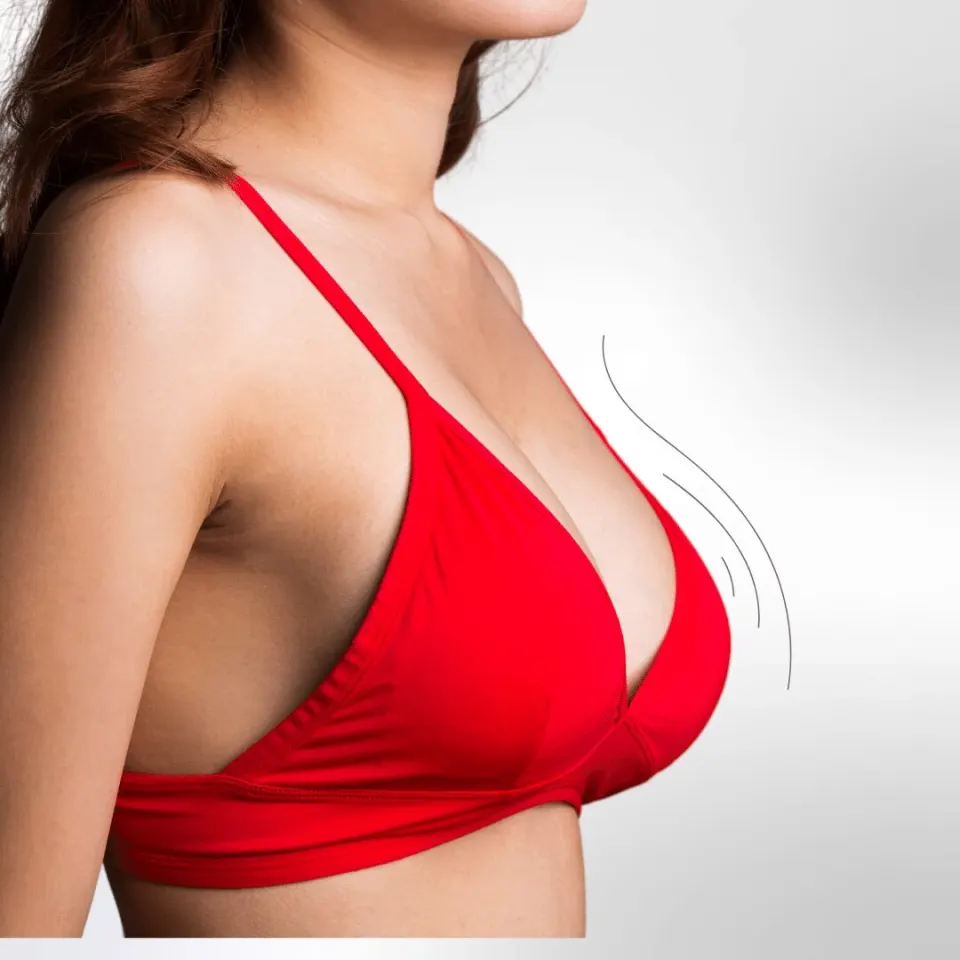
Importantly, a breast lift does not substantially change breast size — it restores shape and position while preserving your existing volume. If you want to add volume as well, a lift can be combined with implants (see below). The right approach is always tailored to your anatomy, the degree of sagging, and how much scarring you're willing to accept.
Understanding breast sagging (ptosis)
Breast sagging is called ptosis, and surgeons grade it by how far the nipple has descended relative to the inframammary fold (the crease under the breast). The degree of ptosis is the single most important factor in choosing the right technique:
- Mild ptosis: the nipple sits at or slightly below the crease — often corrected with a minimal technique.
- Moderate ptosis: the nipple is clearly below the crease — usually needs a vertical (lollipop) technique.
- Severe ptosis: the nipple points downward, well below the crease — typically requires an anchor technique.
Common causes of ptosis include ageing and loss of skin elasticity, pregnancy and breastfeeding, significant weight loss, and gravity over time. Your surgeon assesses your ptosis grade, skin quality and breast volume to recommend the most suitable option.
The four main breast lift techniques
There are four established mastopexy techniques. They differ mainly in the incision pattern — and therefore in how much lift they achieve and how much scarring they leave. More sagging generally requires a more extensive incision:
| Technique | Incision | Best for | Scarring |
|---|---|---|---|
| Crescent | Semi-circle above the areola | Very mild sagging | Minimal, at areolar edge |
| Donut (Benelli) | Circle around the whole areola | Mild sagging; often with implants | Hidden at areolar border |
| Lollipop (vertical) | Around areola + vertical line to crease | Moderate sagging | Visible but fades well |
| Anchor (Wise) | Around areola + vertical + along crease | Severe sagging; often with reduction | Most extensive (inverted-T) |
The crescent lift addresses only very mild ptosis by removing a small crescent of skin above the areola. The donut (or Benelli) lift circles the entire areola, correcting mild sagging and often combined with implants; it can also reduce areolar size.
The lollipop (or vertical) lift adds a vertical incision from the areola to the crease and is one of the most commonly performed lifts, ideal for moderate sagging with good reshaping power. The anchor (or Wise-pattern / inverted-T) lift adds a horizontal incision along the breast crease and is reserved for severe sagging, or when a lift is combined with a breast reduction.
The trade-off to understand: more sagging needs a more extensive incision, which means a bit more scarring — but also more lift and reshaping. A good surgeon chooses the least invasive technique that will actually achieve your goal, based on your anatomy.
Breast lift vs reduction vs augmentation
These procedures are often confused, but they do different things:
- Breast lift (mastopexy): raises and reshapes sagging breasts, repositions the nipple — keeps roughly the same size.
- Breast reduction: removes breast tissue to make large breasts smaller (and usually lifts at the same time). Often chosen for physical symptoms like back and neck pain.
- Breast augmentation: adds volume using implants or fat — makes breasts larger, but doesn't lift significant sagging on its own.
Many patients actually need a combination — for example, a lift to correct sagging plus implants to restore lost upper-pole volume. This is where an experienced surgeon's assessment matters most.
Breast lift with implants
A breast lift can be combined with breast implants in a single procedure, sometimes called an augmentation-mastopexy. The lift corrects sagging and repositions the nipple, while the implant restores or adds volume — particularly useful when the breasts have lost fullness in the upper pole after pregnancy or weight loss.
In these combined procedures, the implant can also help support the reshaped tissue. Whether to combine the two, or stage them, depends on your anatomy and goals, and is a detailed discussion to have with your surgeon.
Are you a good candidate for a breast lift?
You may be a good candidate if:
- Your breasts sag or have lost shape, and the nipples point downward or sit below the breast crease.
- You're bothered by the appearance of sagging after pregnancy, breastfeeding, weight loss or ageing.
- You're in good general health and a non-smoker (or willing to stop — smoking significantly impairs healing; see our smoking and surgery guide).
- You have realistic expectations and understand that a lift involves some scarring.
- Your breast size is stable, and (ideally) you've finished having children — pregnancy after a lift can undo results.
A consultation with an experienced plastic surgeon is the only way to confirm suitability and the best technique for you.
Step-by-Step Breast Lift Procedure
- Consultation: The consultation will involve a thorough discussion of your desired outcomes and the available treatment options. The surgeon will assess your individual needs and provide personalized recommendations to help you achieve your desired results.
- Anesthesia: Breast lift surgery is typically performed under general anesthesia for your comfort.
- Incision Placement: The surgeon will make incisions based on the chosen type of breast lift.
- Reshaping and Lifting: The breast tissue is reshaped, and excess skin is removed to lift the breasts.
- Nipple Repositioning: The nipples are repositioned to achieve a more natural appearance.
- Closing Incisions: The incisions are meticulously closed, and surgical tape or skin adhesives may be applied.
- Recovery and Aftercare: Follow post-operative instructions for a smooth and successful recovery.
Recovery & scarring
Recovery timeline:
- First 1–2 weeks: swelling and bruising are normal; a supportive surgical bra is worn, and most people return to light daily activities and often work.
- 4–6 weeks: full recovery for most; strenuous exercise and heavy lifting are avoided until cleared by your surgeon.
- Ongoing: final breast shape settles over several months as swelling fully resolves.
Scarring: all breast lifts leave some scarring, but surgeons place incisions so scars are hidden as much as possible — at the border of the areola, in the breast crease, and along the natural contours of the breast. Scars are usually raised and pink at first, then fade to fine, pale lines over 6–12 months with proper care. Good scar management (following aftercare, sun protection, and any recommended scar treatments) makes a real difference to the final appearance.
Risks & what to consider
Breast lift is generally safe in experienced hands, but like any surgery it carries risks, including scarring, changes in nipple or breast sensation, asymmetry, and the general risks of surgery and anaesthesia. Changes in sensation are usually temporary but can occasionally be lasting. Results are long-lasting but not permanent — ageing, gravity, weight changes and pregnancy can affect them over time. Choosing an experienced, qualified surgeon and following aftercare closely minimises risks and gives the best, longest-lasting result.
How much does a breast lift cost?
The cost of a breast lift can vary depending on factors such as the extent of correction required, the surgeon's expertise, and the location of the clinic. It is important to note that breast lift surgery may not be covered by insurance if it is done purely for cosmetic purposes. However, some insurance plans may cover certain aspects of the procedure if they are deemed medically necessary.
The average cost of a breast lift in the USA usually ranges from $7,000 to $9,500. The price may vary based on the complexity of the procedure and other factors like anesthesia fees or post-operative treatments.
The average cost of a breast lift in the UK is around £5,000. Prices may vary based on the complexity of the procedure and other factors.
Related: Breast lift Turkey (cost & packages) · Breast lift UK vs Turkey cost
Breast Lift — Frequently Asked Questions
What's the difference between a breast lift and a breast reduction?
A lift raises and reshapes sagging breasts while keeping roughly the same size; a reduction removes tissue to make large breasts smaller (and lifts at the same time). Some patients need both. Your surgeon advises based on your anatomy and goals.
Will a breast lift change my breast size?
Not significantly on its own — a lift reshapes and repositions existing tissue. If you also want more volume, it can be combined with implants; if you want less, with a reduction.
How bad are breast lift scars?
All lifts leave some scarring, but incisions are placed to hide scars at the areolar border, breast crease and natural contours. Scars fade to fine, pale lines over 6–12 months with proper care. The technique used (crescent, donut, lollipop or anchor) determines how extensive the scarring is.
Which breast lift technique will I need?
It depends on your degree of sagging (ptosis): mild sagging may need only a crescent or donut lift, moderate sagging a lollipop lift, and severe sagging an anchor lift. Your surgeon assesses this at consultation.
How long is recovery after a breast lift?
Most people return to light activities and work within 1–2 weeks, with full recovery over 4–6 weeks. Strenuous exercise is avoided until your surgeon clears you.
Can I combine a breast lift with implants?
Yes — a lift can be combined with implants in one procedure (augmentation-mastopexy) to correct sagging and add volume, which is popular after pregnancy or weight loss. Your surgeon advises whether to combine or stage the procedures.
How long do breast lift results last?
Results are long-lasting but not permanent — ageing, gravity, weight changes and pregnancy can affect them. Maintaining a stable weight and finishing having children beforehand helps results last.
Can I breastfeed after a breast lift?
Many people can, but it depends on the technique and whether milk ducts or nipple nerves are affected. Discuss future breastfeeding plans with your surgeon beforehand.
The Last Word from The More Clinics
A breast lift can be genuinely transformative — restoring a firmer, more youthful shape and, for many, real confidence. The key is understanding that the right technique depends on your degree of sagging, and that every lift involves a trade-off between the amount of lift and the amount of scarring.
An honest, experienced surgeon will recommend the least invasive approach that will actually achieve your goals, and set realistic expectations about scars and results. If you'd like to explore a breast lift, our team offers a free, no-pressure assessment. WhatsApp Us →
SOURCES:
John Hopkins Medicine
Breast Lift with and without Implant: A Synopsis and Primer for the Plastic Surgeon (Anna Rose Johnson), Pubmed
New Breast Lift Technique, Journal of Cosmetic Surgery
Mastopexy, Mayo Clinic
HOW THE MORE CLINICS KEEP THE CONTENT UP TO DATE:
Our dedicated medical and editorial teams work tirelessly to stay informed about the ever-evolving world of health news. By rigorously tracking the latest research, clinical guidelines, and significant developments across various medical fields, they ensure that our content remains accurate, relevant, and up-to-date.
This includes reviewing peer-reviewed studies, consulting with healthcare professionals, and monitoring advancements in medical technology. Their meticulous efforts and attention to detail allow us to provide you with trustworthy, reliable information that you can depend on to make informed decisions about your health and well-being.
However, we still insist on getting a healthcare professional's opinion before you make any decision about your health. Consulting with a qualified expert ensures that the choices you make are informed, safe, and tailored to your individual needs.
Last Uptaded at: 26/08/2026
Written by The More Editorial Team and Medically Reviewed by Op. Dr. İsmail Gökhan Bacak, specialist in Plastic, Reconstructive and Aesthetic Surgery. See our Editorial Process.
Medical disclaimer: This guide is for general informational purposes only and does not replace a personal surgical consultation. Suitability for a breast lift, the technique used, and results are determined only after individual assessment by a qualified plastic surgeon. All surgery carries risks; outcomes vary by individual.
This article provides general information and does not replace an individual medical assessment, diagnosis or treatment advice. Discuss decisions about your health and treatment with your treating clinician.