Things You Need to Know Before Visiting Antalya Guide
Talk to our team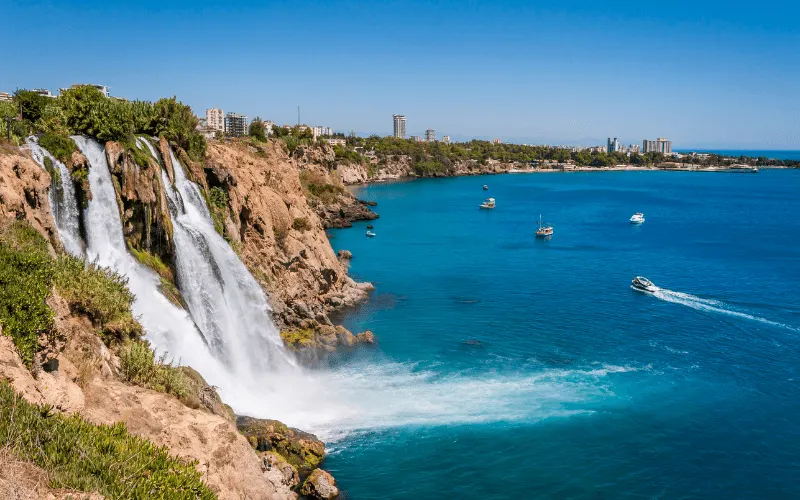
In this article 15 sections
Antalya is the jewel of the Turkish Riviera — a sun-drenched Mediterranean city where ancient Roman ruins meet turquoise coves, palm-lined boulevards and a beautifully preserved old town. Whether you're here for the beaches, the history, the food, or all three, Antalya delivers one of the most rewarding trips in the Mediterranean.
This complete guide walks you through the best things to do, the finest beaches, the atmospheric old town of Kaleiçi, the spectacular ancient sites nearby, where to eat and stay, when to visit, and how to get around — everything you need for an unforgettable Antalya holiday.
| Known as | The gateway to the Turkish Riviera |
| Best for | Beaches, ancient ruins, old town, Mediterranean cuisine |
| Best time to visit | Apr–May & Sep–Nov (20–27°C); Jun–Aug for beaches |
| Flights from Europe | Direct, 2–4 hours |
| Currency | Turkish lira (€/$/£ often accepted) |
| Don't miss | Kaleiçi, Düden Falls, Aspendos, Konyaaltı Beach |
Why visit Antalya
Antalya is the largest city on Turkey's Mediterranean coast and the heart of a region known as the Turkish Riviera — a coastline of over 600 kilometres running past pine-clad mountains that tumble straight into a startlingly blue sea. It's a place where you can explore a 2,000-year-old Roman gate in the morning, swim beneath a waterfall at midday, and dine on fresh fish by a Roman harbour at sunset.
The city blends genuine history and culture with modern resorts, superb food, and some of the best weather in Europe — warm and sunny for much of the year. Whether you want a relaxed beach holiday, a culture-rich exploration of ancient cities, or an active trip of canyons and mountains, Antalya has it — which is exactly why it's one of the most visited destinations in the world.
Kaleiçi — the atmospheric old town
If you see one thing in Antalya, make it Kaleiçi. This beautifully preserved old quarter is a maze of narrow, winding cobbled streets lined with restored Ottoman-era houses, boutique hotels, cafés, artisan shops and hidden courtyards — best explored slowly, on foot, letting yourself get pleasantly lost. Highlights within and around it:
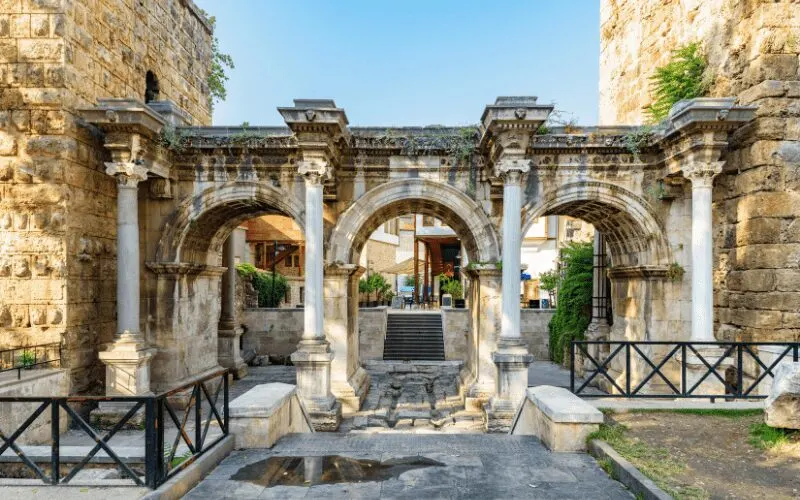
- Hadrian's Gate: a magnificent, ornately carved marble triumphal arch built in 130 AD to honour the Roman Emperor Hadrian — the grand entrance to the old town and one of Antalya's icons.
- The Old Harbour (Roman Harbour): a picturesque marina ringed by restaurants and bars, where old wooden gulets set off on bay cruises — lovely at sunset.
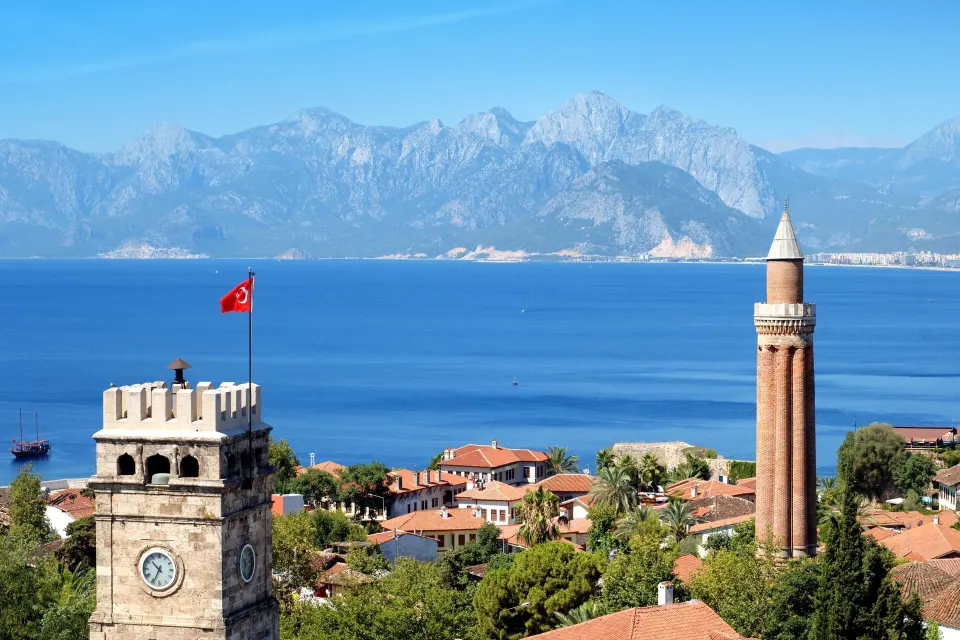
- Yivli Minare (Fluted Minaret): the distinctive fluted, 13th-century Seljuk minaret that's become a symbol of the city.
- Hıdırlık Tower: a 2nd-century Roman tower on the cliff edge with sweeping sea views — a favourite sunset spot.
- Karaalioğlu Park: a large, leafy clifftop park beside Kaleiçi, perfect for a stroll with panoramic Mediterranean views.
Top things to see in the city
- Antalya Museum: one of Turkey's most important and award-winning museums, home to a magnificent collection of statues, sarcophagi and artefacts from the surrounding ancient cities — especially Perge. A must for anyone interested in the region's Roman and Hellenistic past.
- Düden Waterfalls: two spectacular sets of falls. The Upper Düden Falls sit in a shady park where you can walk behind the cascade; the Lower Düden Falls dramatically plunge off a cliff straight into the sea — best seen from a boat trip.
- Tünektepe Cable Car: a scenic cable car climbing to a hilltop terrace with panoramic views over the Gulf of Antalya — memorable at sunset, with a café at the top.
- Antalya Aquarium: home to one of the world's longest tunnel aquariums — a great option for families or a hot afternoon.
- Konyaaltı & the seafront promenade: a long, palm-lined promenade ideal for an evening walk, with cafés, playgrounds and mountain-and-sea views.
Antalya's beaches
Antalya's beaches are a huge part of its appeal, ranging from city beaches to wild coves further along the coast:
- Konyaaltı Beach: the city's famous Blue Flag pebble beach, backed by the dramatic Beydağları mountains. Long, well-organised, with beach clubs, cafés and a tram to the centre — the easiest beach day in the city.
- Lara Beach: a sandy beach east of the centre, home to Antalya's big resort hotels — great for a comfortable, amenity-rich beach holiday.
- Çıralı & Olympos: about 1.5 hours southwest, a beautiful, laid-back stretch of beach beside ancient Olympos ruins and a protected sea-turtle nesting area — a wilder, bohemian alternative.
- Kaputaş Beach: further along the coast, a stunning small cove with vivid turquoise water at the foot of a gorge — one of the most photographed beaches in Turkey.
Best day trips & ancient sites
Antalya is surrounded by some of the finest ancient sites in the Mediterranean, most within easy reach for a day trip:
- Aspendos: about 45 minutes east, home to one of the best-preserved Roman theatres in the world — still used for performances today, and genuinely breathtaking.
- Perge: a vast, atmospheric ancient city just outside Antalya, with a colonnaded street, stadium, agora and Roman baths — the source of many treasures in the Antalya Museum.
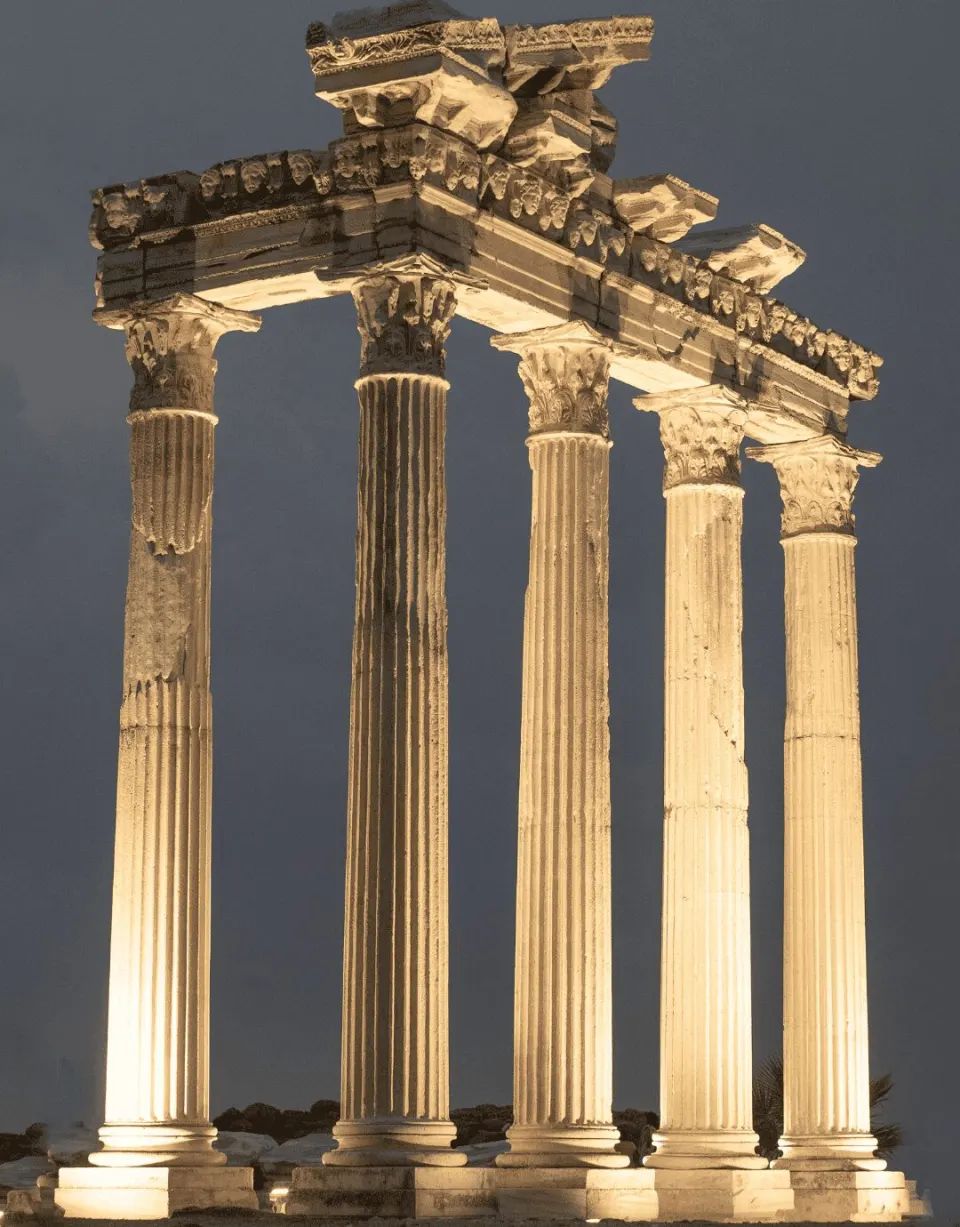
- Side: a charming coastal town about an hour east, where ancient ruins — including a seaside Temple of Apollo — sit right among the shops, restaurants and beaches.
- Olympos & the Chimaera (Yanartaş): ancient ruins in a lush valley near the coast, paired with the natural eternal flames of Mount Chimaera, which glow on the hillside after dark.
- Köprülü Canyon: a national park about 1.5 hours away, the region's rafting capital — a fun, active day of white-water rafting through a dramatic forested gorge.
- Kekova & Demre: a boat trip over the "sunken city" of Kekova, plus Demre with the ancient rock tombs of Myra and the Church of St Nicholas (the original Santa Claus).
- Pamukkale: a longer day trip (around 3 hours), but the surreal white travertine terraces and the ancient city of Hierapolis are a bucket-list sight.
Food & where to eat
Antalya's cuisine is a delicious mix of Mediterranean and Turkish traditions, built on fresh, sun-ripened ingredients. Don't leave without trying:
- Fresh seafood — grilled fish, calamari and sea bass, best enjoyed by the old harbour or along the coast.
- Mezes — the array of small starters (hummus, stuffed vine leaves, smoky aubergine, yoghurt dips) that begin a proper Turkish meal.
- Kebabs & grills — from şiş to the region's own specialities, plus tandır slow-roasted meat.
- Piyaz — an Antalya speciality: a hearty white bean salad with tahini, unique to the region.
- Künefe — a warm dessert of shredded pastry and melted cheese soaked in syrup, topped with pistachio — a local favourite.
- Turkish breakfast — a lavish spread of cheeses, olives, eggs, jams, breads and tea, a must-do at least once.
For atmosphere, dine in Kaleiçi or by the old harbour; for local flavour, seek out the restaurants where Turkish families eat. Turkish tea and coffee are woven into daily life, and street snacks like simit (sesame bread rings), roasted corn and fresh-squeezed pomegranate juice are everywhere. Tipping around 5–10% is customary.
Shopping & nightlife
For shopping, wander Kaleiçi's boutiques for jewellery, ceramics, carpets, spices and Turkish delight, or browse the modern malls (like TerraCity and MarkAntalya) for international brands. Bargaining is expected in the bazaars, less so in fixed-price shops. As for nightlife, Antalya ranges from relaxed harbour-side bars and rooftop lounges in Kaleiçi to the buzzing beach clubs and late-night venues of Lara and Konyaaltı — something for every mood, from a quiet glass of wine to dancing until dawn.
When to visit
Antalya enjoys a Mediterranean climate with over 300 days of sunshine a year:
- Summer (June–September): hot and lively, 30–35°C, with warm seas — peak beach season. Busy and pricier, but the classic Antalya beach holiday.
- Spring (April–May) & autumn (September–November): the sweet spot — pleasant 20–27°C, ideal for sightseeing and ancient sites, fewer crowds, and a sea that stays warm into November.
- Winter (December–March): mild (often 10–15°C) and quiet, with low prices. Not beach weather, but great for culture, city breaks and even skiing at nearby Saklıkent in the mountains.
Where to stay
- Kaleiçi (Old Town): atmospheric boutique hotels in restored houses, steps from the harbour and sights — best for character and walkability.
- Konyaaltı: near the pebble beach and museum, with a tram to the centre — relaxed and scenic.
- Lara: sandy beaches and large resort hotels near the airport — great for all-inclusive comfort.
- Belek: upscale golf-and-spa resorts about 30–40 minutes east — luxurious and restful.
- Side & Kemer: resort towns along the coast, combining beaches with a holiday-village feel.
Getting there & around
Getting there: Antalya Airport (AYT) is one of Turkey's busiest, with direct flights from across Europe (Turkish Airlines, Lufthansa, British Airways, plus low-cost carriers like Ryanair and easyJet) taking roughly 2–4 hours. From the USA/Canada, connect via Istanbul, then a short domestic hop to Antalya.
Getting around: the city is easy to navigate. A modern tram (Antray) connects Konyaaltı, the centre and the museum; buses and dolmuş (shared minibuses) are cheap and cover the city and nearby towns; taxis and ride-hailing apps are widely available (a little pricier late at night). For day trips to distant sites like Pamukkale or Köprülü Canyon, organised tours or car hire are the easiest options.
Travel essentials
- Language: Turkish is official; English is widely spoken in tourist areas, and signage is often bilingual.
- Currency: Turkish lira; many hotels and businesses also accept euro, US dollars and sterling — carry a little of both.
- Visa: a valid passport is required; some nationalities need an e-visa or visa on arrival — check before you travel.
- Electricity: 230V / 50Hz, Type C and Type F plugs (two round pins).
- Dialing code: +90. Emergency: 112 for all services (free to call).
- Getting connected: local SIM cards and eSIMs are easy to buy; most hotels and cafés offer Wi-Fi.
- Safety: Antalya is a very popular, tourist-friendly city; normal travel precautions apply.
Antalya for medical tourism
It's worth knowing that alongside its tourism, Antalya has become a popular destination for medical and dental treatment — it's one of Turkey's main medical tourism hubs, especially for dental implants. Many international visitors combine a holiday with affordable, high-quality treatment (dental work, hair transplants, cosmetic surgery or eye surgery), saving 60–80% versus prices at home, often with all-inclusive packages covering hotel and transfers.
Popular options include a dental clinic in Antalya, hair transplant, plastic surgery and eye treatment. If you're considering it, a good clinic will plan your treatment around your trip so you can still enjoy the city — just follow your doctor's advice on activity, swimming and sun during recovery.
Get a Free Consultation
Thinking of combining your Antalya trip with treatment?
Antalya — Frequently Asked Questions
What is Antalya best known for?
Antalya is the gateway to the Turkish Riviera, famous for its beautiful Mediterranean beaches, the historic old town of Kaleiçi, spectacular ancient Roman sites like Aspendos and Perge, and superb weather with over 300 sunny days a year.
How many days do you need in Antalya?
Four to five days lets you enjoy the old town, a couple of beaches and one or two major day trips (like Aspendos or Side). A week allows a more relaxed pace with time for further excursions such as Köprülü Canyon or Pamukkale.
What are the best things to do in Antalya?
Explore Kaleiçi and Hadrian's Gate, relax on Konyaaltı or Lara beach, see the Düden Waterfalls and the Antalya Museum, take the Tünektepe cable car, and day-trip to the ancient theatre at Aspendos and the ruins of Perge and Side.
When is the best time to visit Antalya?
Spring (April–May) and autumn (September–November) are ideal — warm but not too hot (20–27°C), great for sightseeing, with fewer crowds. June–August is peak beach season (30–35°C), and winter is mild, quiet and cheap.
What food should I try in Antalya?
Fresh seafood by the harbour, a spread of Turkish mezes, kebabs, the local piyaz (white bean salad with tahini), künefe for dessert, and a lavish Turkish breakfast. Don't miss street snacks like simit and fresh pomegranate juice.
What day trips can I take from Antalya?
Top choices include Aspendos (Roman theatre), Perge, Side (seaside ruins), Olympos and the Chimaera flames, Köprülü Canyon (rafting), Kekova (sunken city) and Demre, and — further afield — the white terraces of Pamukkale.
Is Antalya good for a beach holiday?
Very — Konyaaltı (pebble) and Lara (sand) are the main city beaches, while stunning coves like Kaputaş and the laid-back beaches of Çıralı and Olympos are within reach along the coast. The sea is warm from late spring into autumn.
Can I visit Antalya for treatment as well as a holiday?
Yes — Antalya is a popular medical tourism destination, and many visitors combine a holiday with affordable dental, hair, cosmetic or eye treatment. A good clinic plans your treatment around your trip; just follow your doctor's guidance on activity and sun during recovery.
The Last Words from the More Clinics
Few places pack as much into one destination as Antalya: golden beaches and turquoise coves, world-class Roman ruins, a spellbinding old town, mountain canyons, and a food scene that lingers in the memory — all under the Mediterranean sun. Whether you come for a relaxed beach break, a history-rich adventure, or to combine a holiday with high-quality treatment, Antalya rarely disappoints. Pack your bags, and get ready to fall for the jewel of the Turkish Riviera.
Considering treatment during your visit? Explore dental care, hair transplant, plastic surgery and eye treatment in Antalya.
Written by The More Editorial Team. See Editorial Process. Last Updated: [25 August 2026]
Note: Travel details such as flight routes, opening times and prices can change — please check current information before you travel. If combining your trip with medical treatment, always follow your treating doctor's advice on recovery, activity and sun exposure.
This article provides general information and does not replace an individual medical assessment, diagnosis or treatment advice. Discuss decisions about your health and treatment with your treating clinician.