Gynecomastia Surgery Turkey: Cost, Grades & Complete 2026 Guide
Talk to our team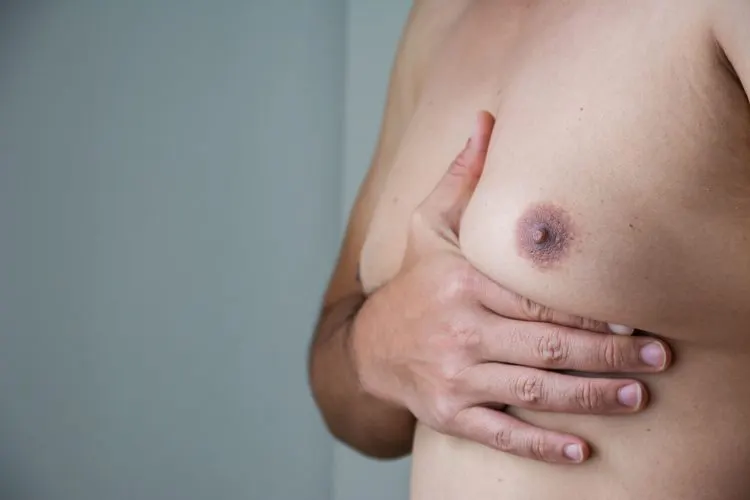
In this article 22 sections
Gynecomastia surgery in Turkey removes excess male breast tissue using liposuction, gland excision, or both to create a flatter chest contour. It is one of the most searched and most under-discussed procedures in male cosmetic surgery — partly because men are less likely to talk openly about it, and partly because the information available online is often vague, outdated, or written to sell a package rather than inform a decision.
This guide covers everything that matters before booking: what gynecomastia actually is, how it is graded, who needs liposuction versus excision versus both, what it costs in Turkey versus the UK and USA, what recovery looks like week by week, and how to identify a qualified surgeon.
What Is Gynecomastia — and What It Is Not
Gynecomastia is a condition characterised by the enlargement of male breast tissue in a way that resembles female breasts, causing both aesthetic and psychological discomfort. Often noticeable from adolescence, it can lead to loss of self-confidence, social withdrawal, and difficulties in clothing choices. This form of breast enlargement does not improve with exercise or diet.
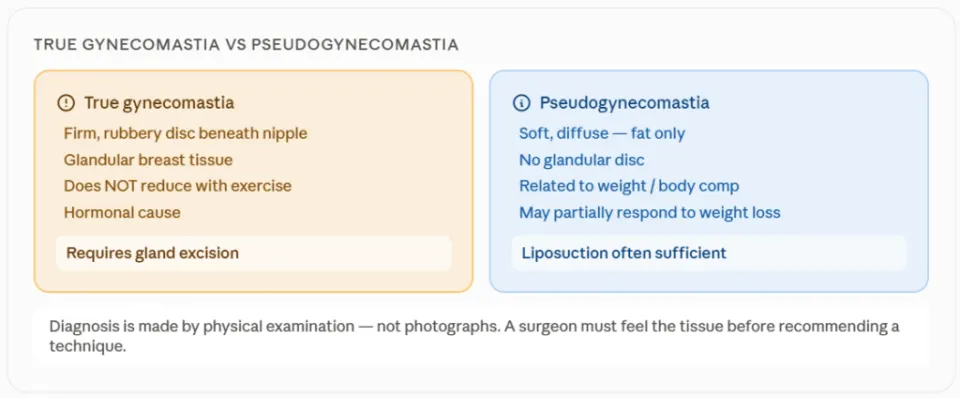
The most important distinction in diagnosing and treating gynecomastia is understanding what type of tissue is involved — because the treatment is different for each.
True gynecomastia vs pseudogynecomastia
What causes gynecomastia?
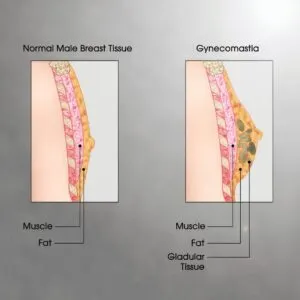
Gynecomastia results from a relative imbalance between oestrogen and testosterone. Common causes include puberty (the most common cause in teenagers — most cases resolve within 6–24 months), medications such as anti-androgens, anabolic steroids, and certain antidepressants, recreational drugs and alcohol, underlying conditions including hypogonadism and liver disease, and natural ageing as testosterone levels decline. In many adult cases no identifiable cause is found.
Important: Any patient presenting with new-onset unilateral gynecomastia should be evaluated by a physician before surgery to exclude underlying pathology. Surgery addresses the tissue consequence, not the cause.
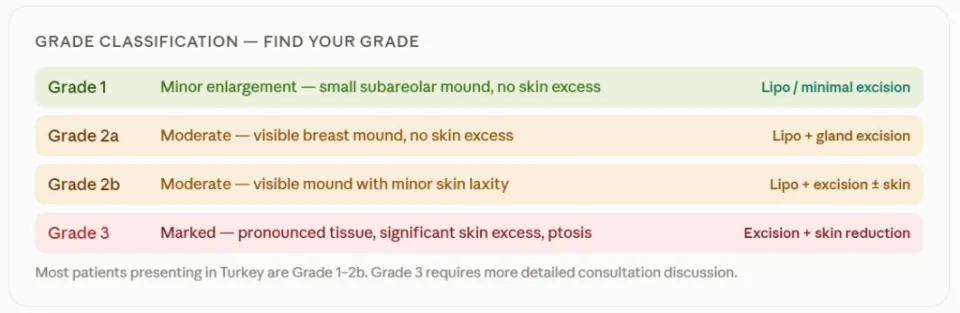
Gynecomastia Grades — Which Type Do You Have?
Surgeons classify gynecomastia by severity using the Simon or Webster grading system. Grade determines the appropriate surgical technique and influences the complexity of the result.
Male Breast Reduction Surgical Techniques — Liposuction, Excision, or Both?
Gynecomastia surgery, also known as male breast reduction surgery, is a medical procedure performed to reduce the size of enlarged breasts in men. This condition, often caused by imbalances in hormone levels, can lead to physical discomfort and psychological distress.
The surgical approach depends entirely on what tissue needs to be addressed. There is no single "gynecomastia technique" — the operation is tailored to each patient's tissue composition and grade.
Liposuction only
Appropriate for pseudogynecomastia (fat only) or Grade 1 true gynecomastia where the glandular component is minimal. Our liposuction Turkey service uses small cannulae to remove fat deposits through tiny 3–5mm access points, leaving essentially invisible scars. Limitation: liposuction cannot remove firm glandular disc tissue — if true glandular gynecomastia is present, liposuction alone produces incomplete results.
Gland excision
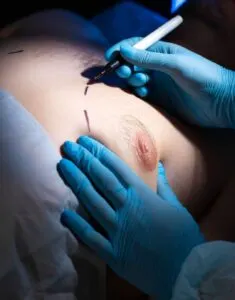
Required for any case with significant glandular tissue. A small incision is made at the lower edge of the areola — positioned within the natural areola border where the scar is essentially invisible. The glandular disc is excised directly.
Combined liposuction + excision
The most common approach for Grade 2 gynecomastia. Liposuction Turkey removes the surrounding fat and contours the chest, while direct excision removes the glandular disc. The combination produces the best overall contour for most patients.
VASER-assisted approach
VASER liposuction Turkey uses ultrasound energy to emulsify both fat and some fibrous glandular tissue more effectively than standard liposuction, and provides better skin retraction post-operatively. Many Turkish clinics now use VASER as their standard technique for gynecomastia, particularly for Grade 1–2a cases.
| Technique | Best for | Scar |
|---|---|---|
| Liposuction only | Pseudogynecomastia, Grade 1 fat | Tiny 3–5mm access points |
| Gland excision only | Pure glandular, minimal fat | Periareolar — hidden in areola border |
| Lipo + excision | Grade 2a/2b | Access points + periareolar |
| VASER + excision | Grade 1–2b, better skin retraction | Access points + periareolar |
Gynecomastia Surgery Turkey Cost 2026: Full Breakdown
In 2026, all-inclusive plastic surgery Turkey packages typically cost $2,500–$4,500 and bundle hospital care, anaesthesia, medications, a compression garment, hotel nights, and airport transfers. Most patients stay 5–7 days.
Country comparison
| Country | Cost | Notes |
|---|---|---|
| 🇹🇷 Turkey (all-inclusive) | $2,500 – $4,500 | Surgery + hospital + hotel + transfers + follow-up |
| 🇬🇧 United Kingdom | $3,800 – $7,600 | £3,000–£6,000. NHS coverage rarely available. |
| 🇺🇸 United States | $4,000 – $8,000 | Major cities can exceed $10,000 |
| 🇨🇦 Canada | $5,000 – $9,000 | Not covered by provincial health plans |
| 🇩🇪 Germany / Europe | $4,500 – $8,500 | Private clinic only |
What Turkey's all-inclusive male reduction surgery package covers
A standard package should cover: surgery, general anaesthesia, 1 or 2 nights hospital monitoring, pre-operative blood tests, hotel accommodation (4–6 nights), VIP airport and clinic transfers, compression garment, post-operative medications, wound dressings, English-speaking personal treatment assistant, follow-up consultation before departure, and 12-month remote support after return home.
What affects the final price of gynecomastia surgery Turkey?
| Factor | Lower end | Higher end |
|---|---|---|
| Technique | Liposuction only | VASER + gland excision |
| Grade | Grade 1 | Grade 2b–3 |
| Skin removal needed | No | Yes — adds complexity |
| Surgeon seniority | Experienced specialist | High-volume male aesthetics specialist |
| Facility |
Ministry-licensed clinic |
Accredited hospital |
Who Is a Good Candidate?
You are likely a good candidate for gynecomastia surgery if you have persistent breast enlargement that has not resolved with time, weight loss, or addressing underlying causes; your condition has been stable for at least 6 months; you are at or near your target weight; you are in good general health; you are a non-smoker or willing to quit; and you have realistic expectations about scars and results.
Patients who have lost significant weight and have excess chest skin alongside gynecomastia may also benefit from a combined approach. See our full guide on body contouring after weight loss Turkey for more detail on staged procedures.
Surgery is not appropriate if: your gynecomastia is of recent onset and a causative medication or condition has not been excluded; you are still in puberty; you are planning significant further weight loss; or you have uncontrolled conditions that impair healing.
Gynecomastia Surgery in Antalya, Turkey: An Affordable and Qualified Choice
For those seeking gynecomastia surgery as an affordable and qualified option, Antalya, Turkey, offers reputable plastic surgery clinics like The More Clinics.
Gynecomasty Surgery cost in Turkey typically range from €3,000 - €4,500.
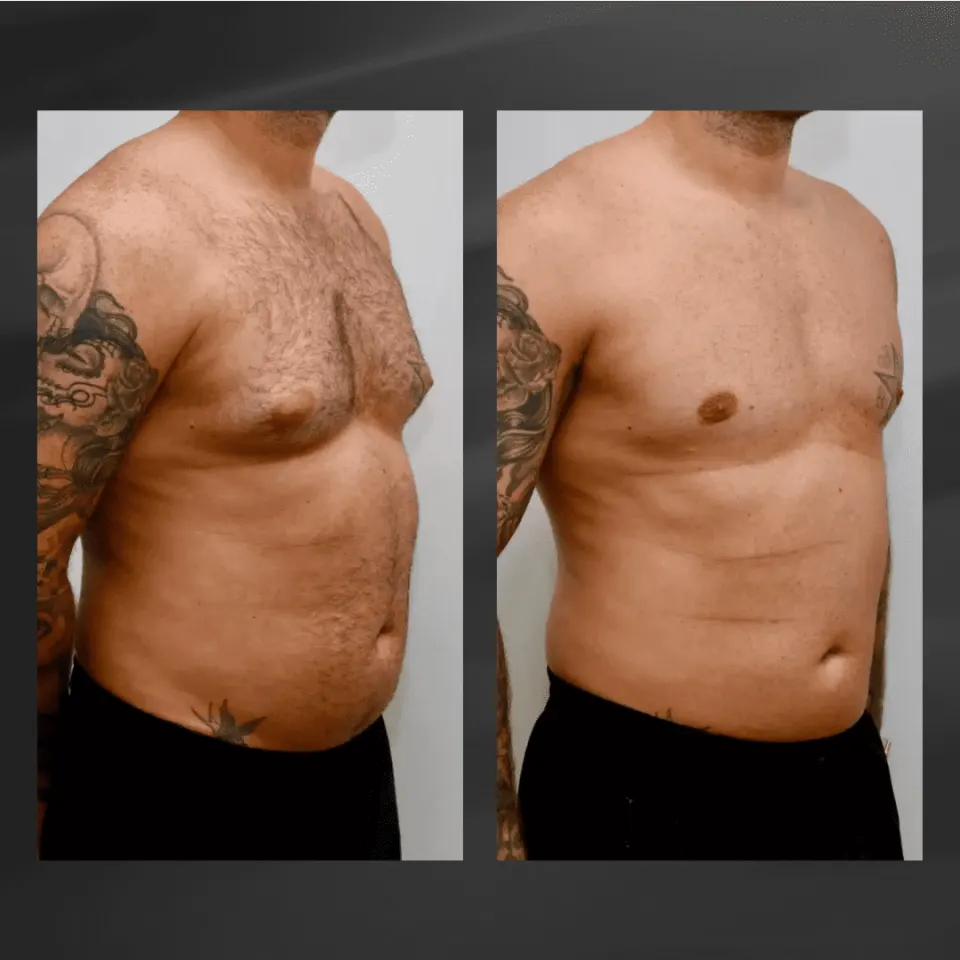
Gynecomasty Surgery Before and After
Seeing before-and-after photos helps potential patients understand the potential results of gynecomastia surgery and provides realistic expectations. Visit our Gynecomasty Surgery Before and After Gallery.
Recovery: Week by Week
Most patients return to desk work within one to two weeks. Compression garments support healing during the first several weeks. Results are visible once swelling subsides. For a detailed comparison of recovery between body contouring procedures, see our liposuction recovery guide.
| Stage | What's happening | What you can do | What to avoid |
|---|---|---|---|
| Day 0–2 | Surgery. 1 night hospital. Compression garment fitted. | Rest. Gentle walking every 2–3 hours. | Raising arms above head. Strenuous movement. |
| Day 3–7 | Swelling peaks days 3–5. Energy returning. Drains removed if used. | Short walks outside. Light self-care. | Driving on prescription medication. Exercise. |
| Week 1–2 | Bruising fading. First glimpse of contour. | Desk work. Drive once off prescription meds. | Upper body exercise. Heavy lifting. |
| Week 2–4 | Swelling ~50% resolved. Chest contour emerging. | Most daily activities. Brisk walks. | Chest exercises. Swimming until healed. |
| Week 6–8 | Full exercise cleared. Swelling ~80% resolved. | All activities including gym and swimming. | Sun on scars without SPF 50 |
| Month 3–6 | Final result fully visible. Scars fading. | All activities unrestricted. | — |
Compression garment
A compression vest is the most important element of gynecomastia recovery. Phase 1 (weeks 1–4): 24 hours per day — removed only to shower. Phase 2 (weeks 4–8): 12 hours per day. Non-compliance with compression wear is the most common cause of prolonged swelling and suboptimal contour. See also our liposuction recovery guide for full compression garment guidance applicable to combined cases.
What nobody tells you about gynecomastia recovery
The chest looks worse before it looks better. Swelling peaks at days 3–5, making the chest appear larger than before surgery. By week 2 the change becomes visible; by week 4–6 most patients see the result they hoped for.
The nipple area is the most sensitive. After gland excision, the nipple and areola are often temporarily numb or hypersensitive. Sensation typically normalises over weeks to months.
Final results take 3–6 months. Most patients see a clear improvement at 6 weeks. The final flattening takes 3–6 months, particularly in VASER cases where skin retraction continues post-operatively.
Gynecomastia Surgery Turkey — Choosing Your Surgeon
Turkey is a popular gynecomastia destination due to high surgical volume and competitive all-inclusive pricing. This concentration of procedural experience is a genuine advantage. For guidance on what to look for when choosing a surgeon in Turkey, see our detailed guide on how to choose your surgeon in Turkey — the same verification criteria apply across all plastic surgery specialities.
What to verify:
- Board certification in plastic and reconstructive surgery (TPCD in Turkey)
- Gynecomastia-specific before-and-after photographs
- Clear explanation of which technique they recommend for your anatomy and why
- Physical examination before any technique is confirmed
- Defined aftercare protocol for international patients after they return home
Red flags — avoid these:
- Recommending a technique before physically examining your tissue
- No named surgeon before booking
- Prices significantly below $2,000 for combined lipo + excision
- No clear aftercare plan for international patients after return home
Gynecomastia in Turkey: The International Patient Timeline
Minimum stay: 5–7 days. Surgery day, 1 night hospital, 3–5 nights hotel recovery, and a final check-up before departure.
Day by day: Day 1 — arrival, hotel, pre-operative consultation and blood tests. Day 2 — surgery (1.5–2.5 hours), 1 night hospital monitoring. Days 3–5 — hotel recovery, drain removal if applicable, wound check. Day 5–6 — follow-up assessment, compression garment check, fit-to-fly clearance. Day 6–7 — departure.
Flying home: Wear your compression garment and compression stockings throughout the flight. Walk every 45–60 minutes. DVT risk is elevated post-surgery. Short-haul at day 5–7; long-haul at day 7–10 with surgeon confirmation.
For patients who combined gynecomastia with abdominal etching Turkey or VASER liposuction Turkey, the stay is typically 7–10 days to accommodate both recovery timelines.
Frequently Asked Questions
How much does gynecomastia surgery cost in Turkey?
All-inclusive gynecomastia surgery Turkey packages cost $2,500–$4,500 in 2026. This includes surgery, anaesthesia, 1 night hospital, hotel (4–6 nights), airport transfers, compression garment, medications, and follow-up. This compares to £3,000–£6,000 in the UK and $4,000–$8,000 in the USA where these components are typically billed separately.
What is the difference between true gynecomastia and pseudogynecomastia?
True gynecomastia involves firm, rubbery glandular tissue beneath the nipple — it requires gland excision. Pseudogynecomastia consists of fat deposits only and can often be treated with liposuction Turkey alone. Your surgeon determines which type you have at physical examination.
Is gynecomastia surgery in Turkey safe?
Yes — at Ministry of Health-licensed facilities with board-certified plastic surgeons. Gynecomastia surgery in Turkey bundles services that are often billed separately in Western markets, resulting in total savings of 50–70% in many cases.
Will gynecomastia come back after surgery?
Glandular tissue that has been excised does not regrow. Fat can return with significant weight gain. The procedure offers a permanent solution when body weight remains stable.
Can gynecomastia be treated with exercise or medication?
True glandular gynecomastia does not improve with exercise or diet. Medical treatment with anti-oestrogens has some evidence for pubertal cases but limited effectiveness in established adult cases. Surgery is the only reliable solution.
How long do I need to wear the compression garment?
Phase 1 (weeks 1–4): 24 hours per day. Phase 2 (weeks 4–8): 12 hours per day. Total compression period is typically 6–8 weeks. See our liposuction recovery guide for full aftercare protocol.
Will there be visible scars after gynecomastia surgery?
For liposuction-only cases: tiny 3–5mm access point scars — essentially invisible. For gland excision: a periareolar incision at the lower edge of the areola, hidden within the natural areola border. All scars fade significantly over 12–18 months.
When can I exercise after gynecomastia surgery?
Light walking from day 1. Lower body cardio at week 3–4. Full gym and upper body exercise at week 6–8. Chest-specific exercises not before week 6.
Does the NHS cover gynecomastia surgery?
The NHS rarely funds gynecomastia surgery. It may be available in exceptional cases with documented significant psychological distress, but access is extremely limited. Most patients fund it privately.
What is the best age for gynecomastia surgery?
Most surgeons recommend waiting until 18–20 for pubertal cases to allow natural resolution. For adult patients, surgery can be performed at any age when the condition is stable.
How do I know if I need liposuction, excision, or both for male breast reduction?
Your surgeon determines this at physical examination. Glandular tissue feels firm and disc-like beneath the nipple; fat is soft and diffuse. A surgeon who recommends a technique without physically examining you is not making an adequate assessment.
Can I combine gynecomastia surgery with other procedures in Turkey?
Yes. Common combinations include gynecomastia with abdominal etching Turkey for a full masculine chest transformation, or with VASER liposuction Turkey for overall body contouring. Combined procedures typically extend the stay to 7–10 days.
Medical disclaimer: This guide is for informational and educational purposes only. Gynecomastia surgery carries risks that vary based on individual health, tissue type, and surgeon technique. New-onset gynecomastia should be evaluated by a physician to exclude underlying causes before surgical treatment is considered. Consult a board-certified surgeon for assessment specific to your circumstances.
The Last Word from The More Clinics
Gynecomastia is one of the most common conditions in male cosmetic surgery — and one of the most under-discussed. Men who have lived with it for years, avoided the pool, changed clothes in cubicles, and worn structured shirts to conceal the outline are often surprised by how straightforward the procedure and recovery actually are.
At The More Clinics, every gynecomastia consultation begins with an honest anatomical assessment — not a package recommendation. We confirm whether your case is true gynecomastia, pseudogynecomastia, or a combination. We explain which technique is appropriate for your grade and anatomy. We recommend surgeons with verified, gynecomastia-specific experience in our plastic surgery Turkey network.
A free consultation takes fifteen minutes and gives you a specific procedure recommendation, realistic outcome expectation, and a transparent all-inclusive cost before you commit to anything.
This article provides general information and does not replace an individual medical assessment, diagnosis or treatment advice. Discuss decisions about your health and treatment with your treating clinician.