Fleur-de-Lis Tummy Tuck in Turkey: Cost, Candidacy & Before and After Results
Talk to our team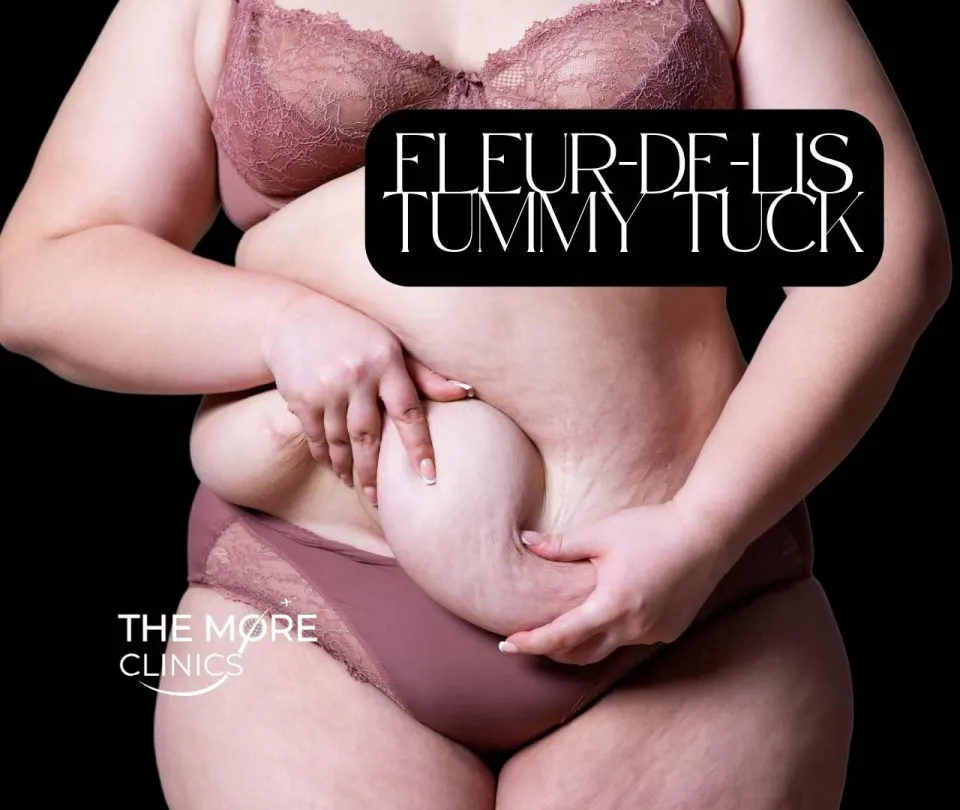
In this article 10 sections
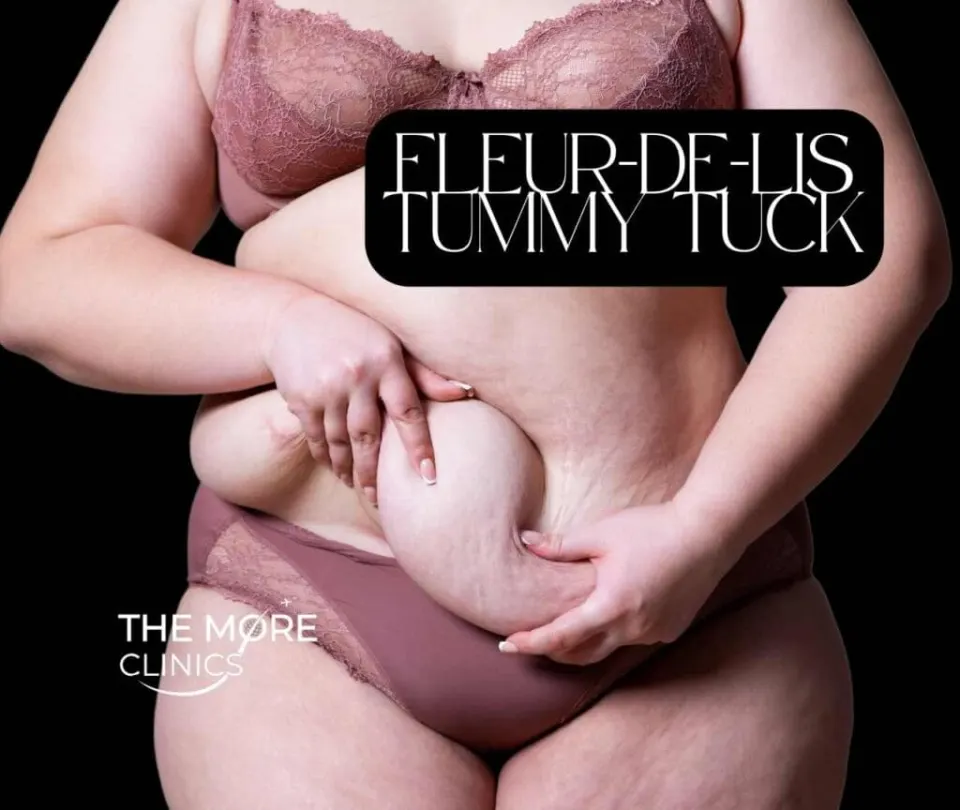
The fleur-de-lis tummy tuck is a specialised body-contouring procedure for people who've lost a great deal of weight and are left with loose skin in both directions — hanging below the navel and bunching above it. Unlike a standard tummy tuck, it removes excess skin vertically as well as horizontally, using an anchor-shaped incision.
In Turkey it costs a fraction of UK or US prices. This is an honest guide: what it costs, whether you're a candidate, how recovery works, and — importantly — a straight look at the scar, because that's the real trade-off with this operation.
| 🇹🇷 Turkey (all-inclusive) | €4,500 – €6,500 |
| 🇬🇧 UK | £8,000 – £12,000+ |
| 🇺🇸 USA | $10,000 – $20,000 |
| Recovery | 4–6 weeks (longer than standard) |
The Pinch Test: A Quick Self-Assessment for Fleur de Lis Abdominoplasty Candidacy?
This is a practical self-assessment used by plastic surgeons to help patients understand whether a standard or fleur de lis technique may be more appropriate for them. It is not a diagnostic tool — only a consultation with a board-certified surgeon can determine your candidacy — but it gives you a starting point.
Step 1: Stand in front of a mirror in good lighting.
Step 2: Place both hands on your abdomen at waist level and gently pinch the skin horizontally — pulling it inward from both sides toward the midline.
Step 3: Observe what happens to the skin above and below your hands.
- If the lower abdomen flattens substantially and the upper abdomen looks reasonably smooth: A standard tummy tuck may achieve your goals.
- If significant loose skin remains visible above the waist even when you pinch horizontally: Horizontal tightening alone may not be enough. This is where the vertical incision of the fleur de lis becomes relevant.
- If skin folds are present in multiple directions — both above and below your hands, and across the waist: You may be a stronger candidate for the fleur de lis approach.
This test is a starting point for understanding your skin laxity pattern. Your surgeon will perform a clinical assessment and use additional criteria — BMI stability, skin quality, muscle separation, overall health — to determine the right approach for your anatomy and goals.
What is a fleur-de-lis tummy tuck?
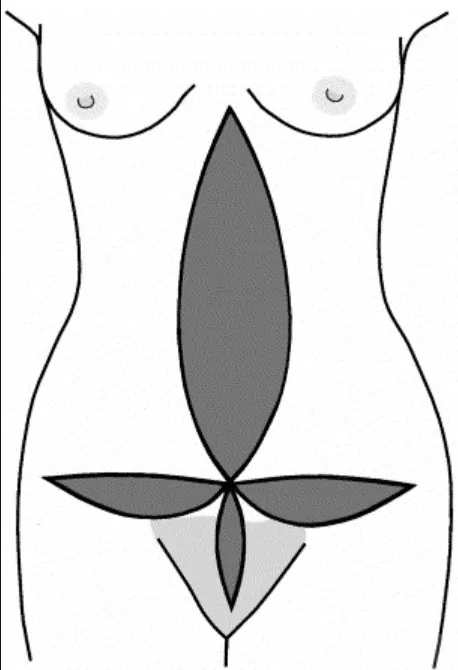
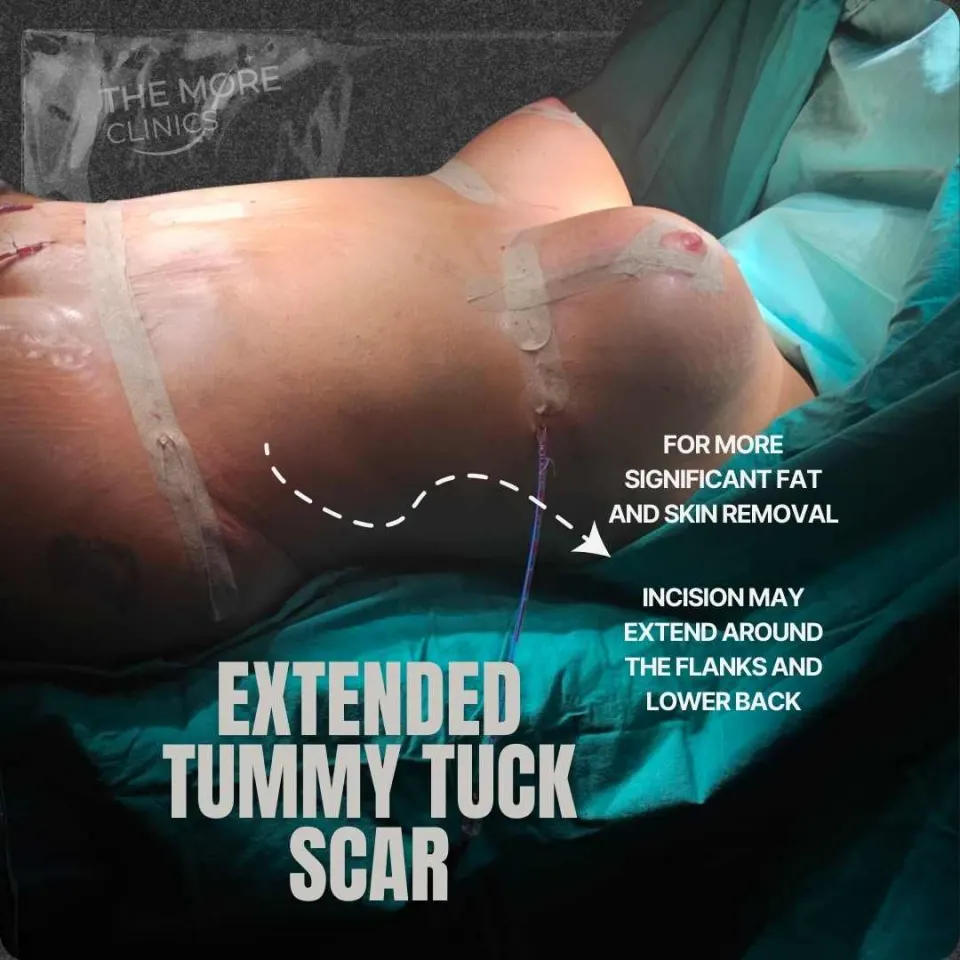
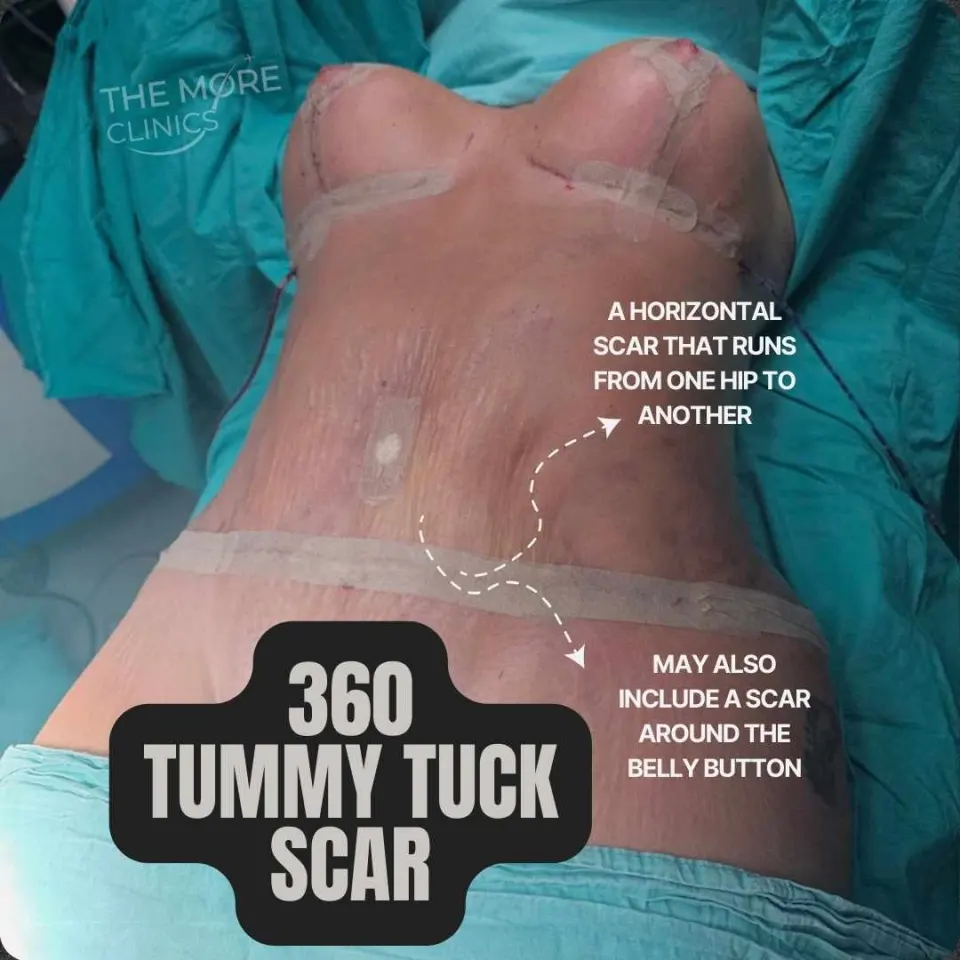
A standard tummy tuck uses a single horizontal incision, low across the abdomen from hip to hip, and removes loose skin between the pubic area and the navel — perfect for the average loosening after pregnancy or moderate weight change. The fleur-de-lis (FDL) goes further. It adds a vertical incision running up the midline, from the pubic area toward the breastbone, so the surgeon can remove excess skin in two directions at once.
The combined incision forms an inverted "T" or anchor shape — which, resembling the lily-shaped fleur-de-lis symbol, gives the procedure its name. This vertical removal is what makes it uniquely suited to major weight loss, where a standard tummy tuck simply can't address the skin bunching across the upper abdomen and flanks.
The Technique Behind the Fleur De Lis Abdominoplasty
Standard tummy tuck procedures typically involve removing skin horizontally, focusing on smoothing excess skin directly below the belly button. A Fleur De Lis Tummy Tuck, however, goes further by incorporating a vertical incision in addition to the horizontal one. This dual-incision approach allows surgeons to eliminate additional skin from the abdomen’s upper and midsection.
The shape of the incisions resembles a fleur-de-lis, the French lily symbol, giving the procedure its name. While the incisions may leave visible scarring, they are strategically placed to ensure discreet healing over time.
Fleur-de-lis vs a standard tummy tuck
| Standard tummy tuck | Fleur-de-lis | |
|---|---|---|
| Incision | Horizontal only (hip to hip) | Horizontal + vertical (anchor / inverted-T) |
| Skin removed | Lower abdomen | Upper + lower abdomen, both directions |
| Best for | Post-pregnancy, moderate laxity | Massive weight loss, laxity above & below navel |
| Scar | One low horizontal line (hidden by underwear) | Anchor shape — vertical scar is visible |
| Recovery | 2–4 weeks | 4–6 weeks |
If your excess skin is only in the lower abdomen, a standard tummy tuck is the better, less scarring choice. The fleur-de-lis is specifically for the two-directional laxity that follows dramatic weight loss.
Are you a candidate?
The fleur-de-lis is a powerful procedure but a targeted one — it's right for a specific situation, not a general "bigger tummy tuck." You're likely a good candidate if you:
- Have lost a large amount of weight — typically 30kg+ (around 80–100+ lbs), often after bariatric surgery or major diet change.
- Have loose skin in both the upper and lower abdomen (this is the key — it's what a standard tuck can't fix).
- Have maintained a stable weight for at least 6 months.
- Have a BMI under 35 and are a non-smoker (or willing to stop, since smoking badly impairs healing).
- Understand and accept the anchor-shaped scar in exchange for significant skin removal.
That last point is the honest heart of the decision — which is why we cover the scar plainly below.
Before & after
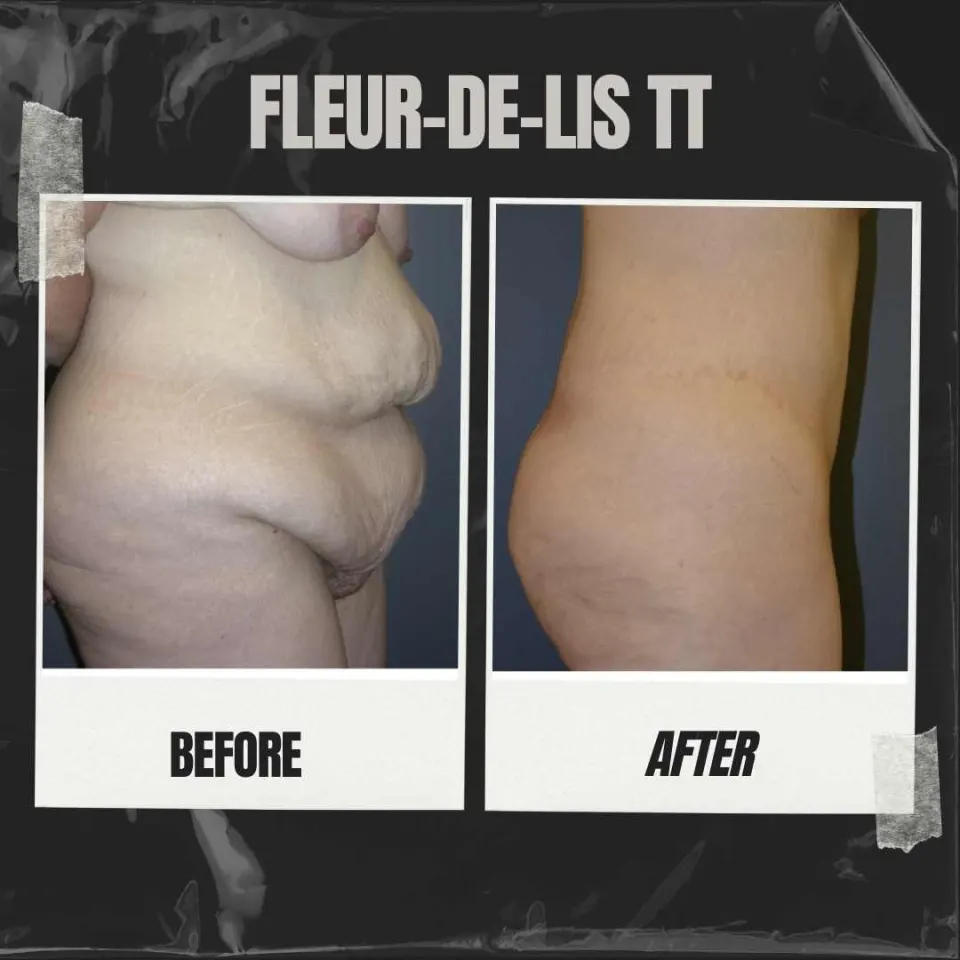
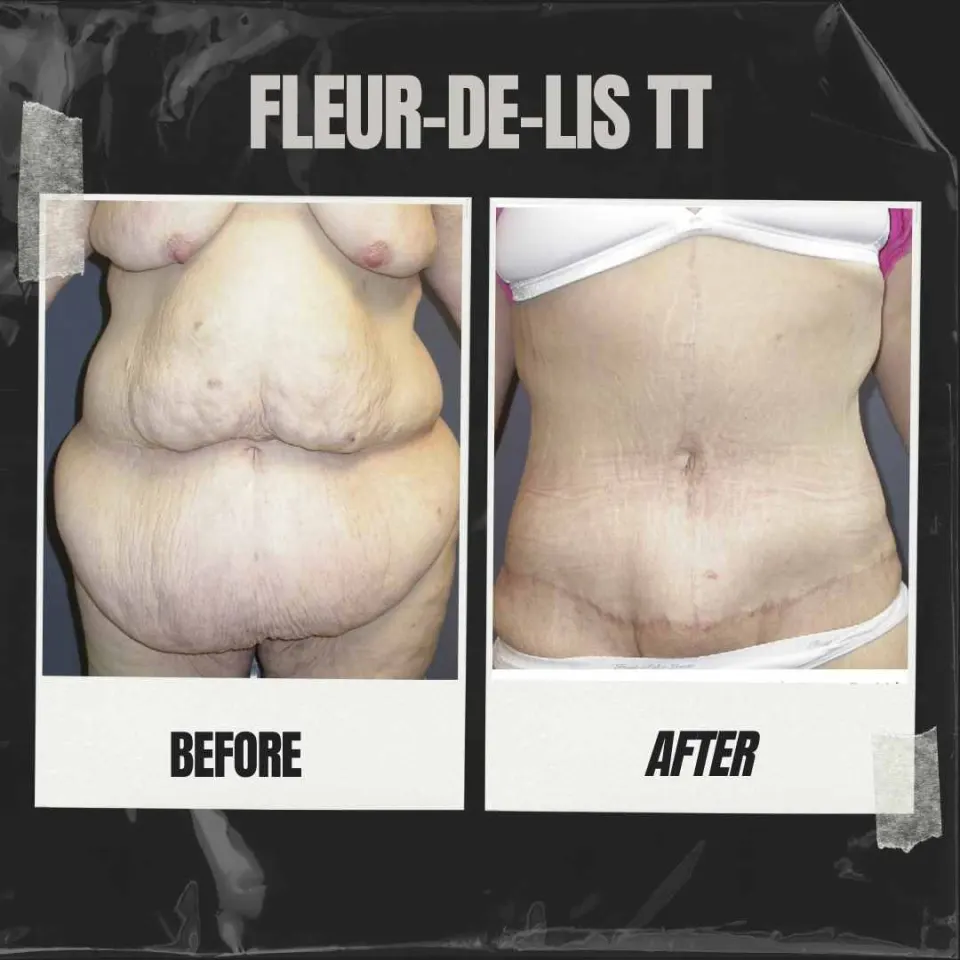
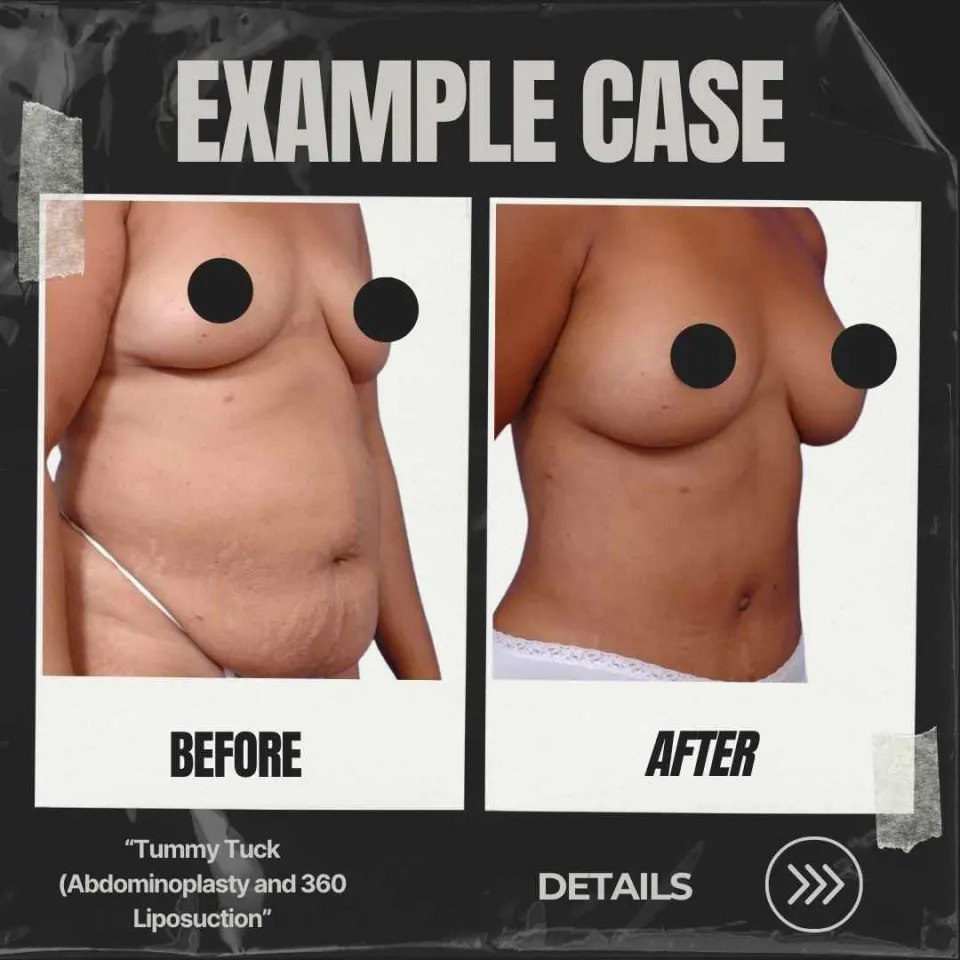
The procedure and recovery
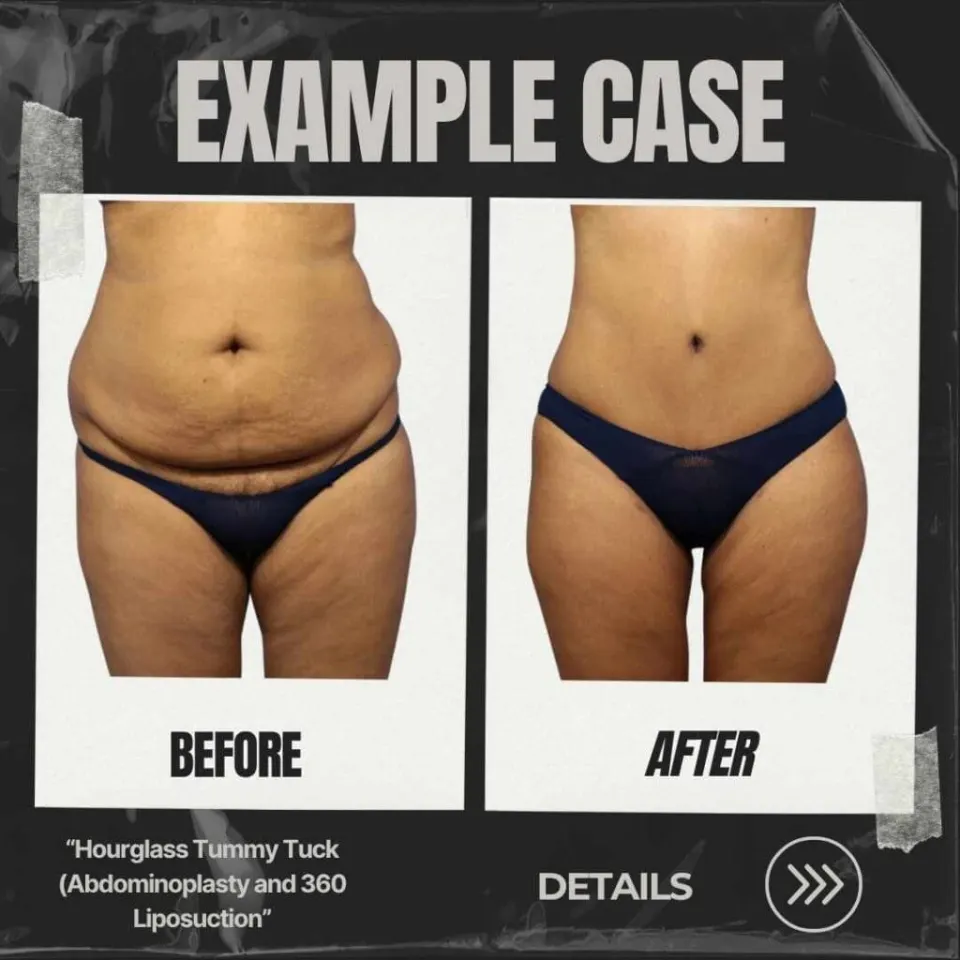
A fleur-de-lis tummy tuck takes around 2–4 hours under general anaesthesia. The surgeon removes the excess skin horizontally and vertically, usually repairs and tightens the abdominal muscles, and often combines the procedure with VASER liposuction to refine the waistline and flanks — a combination that gives a much better contour than skin removal alone.
You'll typically stay in Turkey around 5–7 days, flying home once your surgeon approves. Full recovery takes 4–6 weeks (longer than a standard tuck because of the more extensive surgery), with a compression garment worn throughout and heavy activity avoided. The final contour matures over 6–12 months as swelling fully resolves and the scars settle.
Why have it in Turkey?
Turkey has become a primary hub for massive-weight-loss body contouring, with surgeons in Istanbul and Antalya who handle these complex cases routinely — and JCI-accredited hospitals meeting the same standards as top Western centres. Combined with all-inclusive pricing at 60–70% below UK and US costs, it's why so many post-bariatric patients travel here.
But because this is major, technically demanding surgery, the surgeon's specific experience with post-weight-loss contouring matters enormously — verify board certification, an accredited hospital, and a real portfolio of similar cases (including healed scars), and never choose on price alone.
Is a fleur-de-lis right for you?
Send us photos and your weight-loss history for a free, honest assessment — including whether a standard tuck or fleur-de-lis suits you, and a clear quote.
Free Assessment → WhatsApp Us →Frequently Asked Questions
How much does a fleur-de-lis tummy tuck cost in Turkey?
Typically €4,500–€6,500 all-inclusive, versus £8,000–£12,000+ in the UK or $10,000–$20,000 in the US — a saving of 60–70%. Combining VASER liposuction or muscle repair may affect the final price.
How is it different from a standard tummy tuck?
A standard tuck uses one horizontal incision and removes lower-abdomen skin. The fleur-de-lis adds a vertical incision (making an anchor/inverted-T scar) to also remove upper-abdomen skin — essential after massive weight loss, but leaving a more visible scar.
How bad is the scar?
Honestly, more visible than a standard tuck — an anchor shape with a vertical line up the abdomen. It's red and raised for 6–8 weeks, then flattens and fades over 6–12 months without fully disappearing. The trade-off is far greater skin removal and waist definition.
Who is a good candidate?
People with major weight loss (30kg+, often post-bariatric) and loose skin in both the upper and lower abdomen, at a stable weight for 6+ months, BMI under 35, non-smokers, who accept the scar. If skin is only in the lower abdomen, a standard tuck is better.
How long is recovery?
About 4–6 weeks for full recovery (longer than a standard tuck), with a compression garment throughout. You'll usually stay in Turkey 5–7 days. The final contour matures over 6–12 months.
The Last Word from The More Clinics
The fleur-de-lis tummy tuck is a transformative operation for the right person — someone left with two-directional loose skin after major weight loss, for whom a standard tuck simply wouldn't be enough. Turkey offers it at 60–70% below Western prices, with surgeons experienced in post-weight-loss contouring.
The honest key is candidacy and clear eyes about the scar: this is a deliberate trade of a more visible anchor scar for dramatic skin removal. Send us your photos and weight-loss history and we'll tell you truthfully whether it's right for you — or whether a standard tuck would serve you better.
Free Assessment → WhatsApp Us →
Related: Standard tummy tuck · Liposuction · All plastic surgery
Medical disclaimer: This page is for general information only. Prices are indicative 2026 ranges that vary by surgeon, combined procedures and individual case, confirmed only after assessment. The fleur-de-lis leaves a permanent anchor-shaped scar. All surgery carries risks; results and scar healing vary by individual. Choose accredited clinics and board-certified surgeons.
SOURCES:
Tummy Tuck (Abdominoplasty & Panniculectomy), Cleveland Clinic
Tummy tuck, Mayo Clinic
Fleur-de-Lys abdominoplasty - A consecutive case series, Christopher G Duff
HOW THE MORE CLINICS KEEP THE CONTENT UP TO DATE:
Our dedicated medical and editorial teams work tirelessly to stay informed about the ever-evolving world of health news. By rigorously tracking the latest research, clinical guidelines, and significant developments across various medical fields, they ensure that our content remains accurate, relevant, and up-to-date.
This includes reviewing peer-reviewed studies, consulting with healthcare professionals, and monitoring advancements in medical technology. Their meticulous efforts and attention to detail allow us to provide you with trustworthy, reliable information that you can depend on to make informed decisions about your health and well-being.
However, we still insist on getting a healthcare professional's opinion before you make any decision about your health. Consulting with a qualified expert ensures that the choices you make are informed, safe, and tailored to your individual needs.
Last Updated: 8 September 2026
Written by The More Editorial Team and Medically Reviewed by Op. Dr. İsmail Gökhan Bacak, specialist in Plastic, Reconstructive and Aesthetic Surgery. See our Editorial Process.
This article provides general information and does not replace an individual medical assessment, diagnosis or treatment advice. Discuss decisions about your health and treatment with your treating clinician.