
Otoplasty — also known as ear pinning surgery — is a cosmetic procedure that reshapes, repositions or resizes the ears, most often to correct prominent or protruding ears, asymmetry, or deformities. It can be genuinely life-changing, especially for children and teenagers affected by bullying, and adults who've been self-conscious for years.
This complete guide covers everything: the techniques, the right age, honest cost by country, recovery, risks, and why Turkey has become a popular destination for otoplasty — with all-inclusive packages from a fraction of UK or US prices.
⚡ The 60-second answer - Otoplasty Turkey| Otoplasty cost in Turkey | → $1,500 – $4,000 (all-inclusive) |
| Same surgery UK / USA | → £3,000–£4,500 / $3,000–$10,000 |
| Best age for children | → from 5–6 years |
| Procedure time | → 1–2 hours; back to work in 1–2 weeks |
| Results | → permanent, high satisfaction |
→ Techniques (suture vs incisionless)
→ Candidacy & the right age
→ Recovery & results
What is otoplasty (ear pinning surgery)?
Otoplasty is a surgical procedure that improves the shape, size, position or proportion of the ears. It's commonly used to correct prominent or protruding ears, reduce large ears (macrotia), reshape misshapen ears, or correct asymmetry. Beyond the visual change, it brings significant psychological relief — particularly in children and teenagers. It can be performed on children from around age 5, as well as adults who have long been self-conscious about their ears.
Otoplasty cost: Turkey vs UK/USA (2026)
The cost of ear surgery varies widely by country and by the complexity of the case. Turkey offers all-inclusive packages at 50–70% below Western prices — driven by lower overheads and a favourable exchange rate, not lower quality.
| Country | Otoplasty cost |
|---|---|
| 🇹🇷 Turkey (all-inclusive) | $1,500 – $4,000 |
| 🇺🇸 USA | $3,000 – $10,000 |
| 🇬🇧 UK | £3,000 – £4,500 |
| 🇨🇦 Canada | $6,000 – $7,000 |
| 🇪🇺 Europe | €3,500 – €8,000 |
Three things affect your final price: one ear vs both — because operating room, anesthesia and facility fees are billed once per session, bilateral (both ears) surgery isn't double the single-ear price, typically only 35–50% more; technique — cartilage-sparing suture techniques cost less than cartilage-scoring or reconstruction; and complexity — simple prominent-ear correction costs less than earlobe repair, macrotia reduction, or revision (revision runs 20–40% higher). Turkey packages usually include the consultation, surgery, anesthesia, accommodation, transfers and aftercare.
Otoplasty techniques explained
There's no single "otoplasty" — the surgeon chooses the technique based on your ear anatomy and the degree of protrusion. The main approaches:
- Suture techniques (Mustardé, Furnas): the most widely used. Permanent "mattress" sutures recreate the natural inner fold (antihelical fold) and bring the ear closer to the head — without removing cartilage. The Mustardé technique achieves around 97% patient satisfaction with a low revision rate.
- Cartilage-scoring techniques (Stenström, Chongchet): the cartilage is gently scored to reshape it, reducing recurrence — but requiring an experienced hand to avoid overcorrection.
- Incisionless (suture-only) otoplasty: permanent sutures are placed through tiny needle punctures with no skin incision — no visible scar, faster recovery, often no general anesthesia. Best for mild-to-moderate protrusion (ears protruding ~15–20 mm or less), and suitable from around age 6. Results are slightly more subtle than open techniques.
Modern cartilage-sparing suture approaches are favoured for their strong safety profile and natural appearance. In a 2026 systematic review of 18 studies (1,590 patients), suture extrusion occurred in 5.4% of cases with a recurrence rate of 2.8% — which is why technique selection and surgeon experience matter so much for a lasting result.
The ear pinning procedure step by step
- Consultation & planning: the surgeon evaluates your ear structure, discusses goals and creates a customised plan.
- Incision placement: for open techniques, incisions are made behind the ear so scars are hidden in the natural fold.
- Cartilage reshaping: the cartilage is folded (sutures) or gently scored to achieve the desired contour and symmetry.
- Secure positioning: permanent sutures hold the ear in its new position.
- Closure & dressing: fine sutures close any incisions and a headband dressing supports the ears.
Candidacy & the right age
Good candidates are in general good health, with realistic expectations, and concerns such as prominent, protruding, asymmetrical or misshapen ears, or deformities from injury or congenital conditions.
The right age — and why timing matters The American Society of Plastic Surgeons recommends waiting until age 5–6, when 85–90% of ear cartilage growth is complete but the cartilage is still soft enough for optimal reshaping. For newborns, non-surgical infant ear moulding (e.g. EarWell, EarBuddies) can achieve 85–90% correction if started within the first 7 days of life — but it becomes ineffective after about 3 weeks, so parents noticing prominent ears at birth should act quickly. The psychological case for timely treatment in children is strong: published studies report that after otoplasty, the large majority of children experience increased happiness and self-confidence, and that bullying is reduced or stops entirely.Recovery & aftercare
Recovery is straightforward for most patients:
- First days: mild discomfort and swelling, managed with prescribed medication; a protective headband supports the ears.
- Week 1: bandages are replaced with a lighter dressing or headband.
- Weeks 2–3: most patients resume normal activities and return to work or school (often within 1–2 weeks), avoiding strenuous exertion.
- After 6 weeks: full healing; the final results become evident.
Key tips: follow all post-operative instructions, avoid sleeping on your side to prevent pressure on the ears, keep the site clean and dry, and avoid contact sports during healing.
Benefits of ear pinning surgery
- Enhanced confidence: correcting prominent ears relieves long-standing self-consciousness.
- Improved symmetry & facial harmony: balanced proportions that suit the whole face.
- Minimal scarring: incisions behind the ear (or none, with incisionless) are discreet.
- Long-lasting results: a one-time correction that usually lasts.
Risks & safety
Otoplasty is generally safe, but as with any surgery there are risks to be aware of: infection (minimised by proper sterile technique and aftercare), asymmetry or the need for minor revision, suture extrusion, and discreet scarring that usually fades. The single best way to minimise these is to choose a board-certified plastic surgeon experienced specifically in otoplasty. A skilled surgeon significantly reduces the risk of asymmetry and revision.
Why choose Turkey for otoplasty?
Turkey is a popular destination for cosmetic surgery, offering modern facilities, highly experienced surgeons, and all-inclusive care packages (accommodation and transfers included) at a fraction of Western prices. If you're comparing destinations, see our honest Turkey vs Mexico comparison. One practical note for international patients: because occasional revision is part of any surgery, choose an established clinic with clear aftercare and follow-up so any adjustment is handled smoothly.
Your all-inclusive otoplasty package in Turkey
Free Consultation → WhatsApp Us →
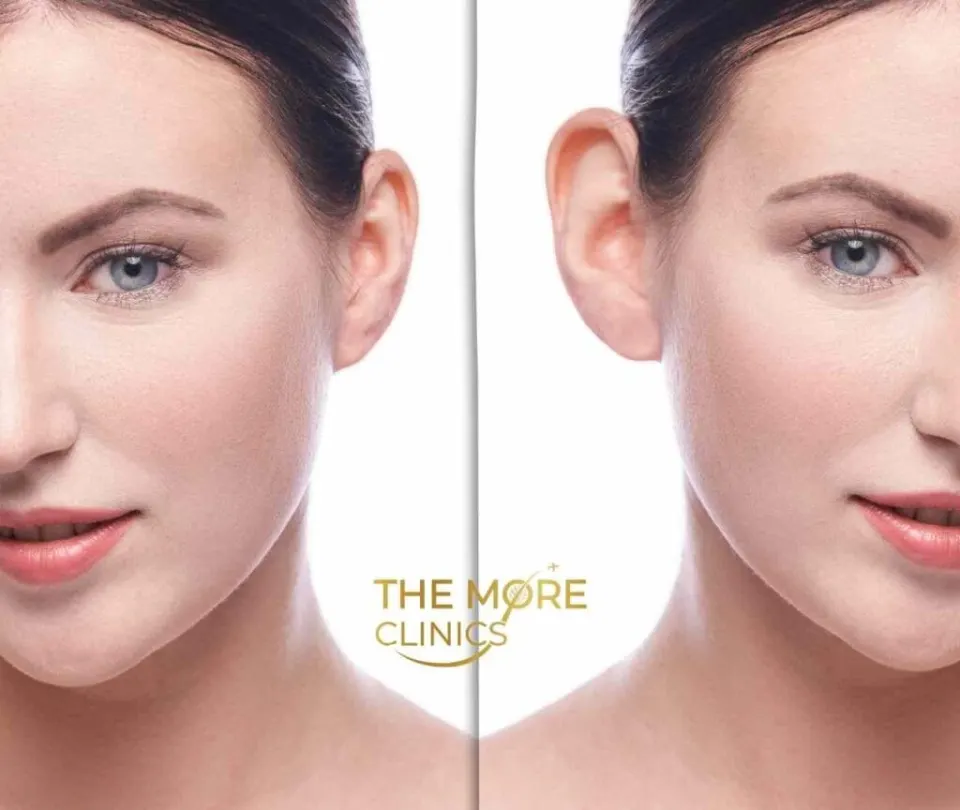
Turkey ear pinning before & after results
See real transformations in our before & after gallery.
Otoplasty Turkey — Frequently Asked Questions
How much does otoplasty cost in Turkey?
All-inclusive packages range from $1,500 to $4,000 depending on complexity and technique — 50–70% less than the UK (£3,000–£4,500) or USA ($3,000–$10,000). Both ears cost only about 35–50% more than one, not double.
Is ear pinning surgery painful?
Not usually — it's performed under local or general anesthesia, so pain during the procedure is controlled. Mild discomfort during recovery is easily managed with prescribed medication.
What age can a child have otoplasty?
From around 5–6 years, when ear cartilage growth is 85–90% complete but still soft enough for reshaping. For newborns, non-surgical ear moulding can work if started within the first week of life.
What's the difference between incisionless and traditional otoplasty?
Incisionless uses permanent sutures through tiny punctures — no skin incision, no visible scar, faster recovery, often no general anesthesia. It suits mild-to-moderate protrusion; traditional open techniques give more dramatic correction for severe cases.
How long does recovery take?
Most patients return to work or school within 1–2 weeks, wearing a supportive headband. Full healing and final results take about 6 weeks.
Are the results permanent?
Yes — otoplasty results are typically permanent. Choosing an experienced surgeon and the right technique keeps the recurrence and revision rates low.
Is it safe to travel after surgery?
Patients are usually cleared to travel within about a week, but always follow your surgeon's personalised guidance.
The Last Word from The More Clinics
Otoplasty is a safe, well-established procedure with high satisfaction and long-lasting results — and it can be genuinely life-changing, especially for children affected by bullying. The keys to a great outcome are the right technique for your ears and an experienced, board-certified surgeon. Turkey makes this accessible at a fraction of Western prices, without compromising those standards.
Our procedures are performed by an experienced plastic and reconstructive surgeon, with all-inclusive packages and full aftercare. A free WhatsApp consultation — you can send photos of your ears — is the simplest first step, in complete confidence.
Get a Free Consultation → WhatsApp Us →
Related: Plastic surgery in Turkey · Rhinoplasty Turkey · Before & after gallery · Turkey vs Mexico
SOURCES:
National Library of Medicine, PubMed: "Ear deformities, otoplasty, and ear reconstruction"
Journal of Oral and Maxillofacial Surgery: "Otoplasty for correction of the prominent ear"
PubMed / PMC: "Otoplasty Surgical Techniques and Clinical Outcomes: A Practical Review"
Otoplasty (PDF source)
 Written by The More Editorial Team and Medically Reviewed by Op. Dr. İsmail Gökhan Bacak, MD, Plastic and Reconstructive Surgeon. See Editorial Process. Last Updated: [21 August 2026]
Medical disclaimer: This guide is for informational purposes only and does not replace a personal consultation. Technique, suitability, recovery and results depend on individual assessment. Otoplasty carries surgical risks; consult a qualified, board-certified plastic surgeon before making any treatment decision.