Hair Transplant Gone Wrong: Signs, Causes & How It's Fixed
Talk to our team
In this article 7 sections
A hair transplant can be life-changing — but for a small percentage of patients the result is disappointing or clearly wrong: an unnatural "pluggy" hairline, patchy growth, visible scarring, or an over-harvested donor area. This guide explains honestly how to recognise a hair transplant gone wrong, why it happens, some well-known cases, and — most importantly — what can realistically be done to fix it, and when.
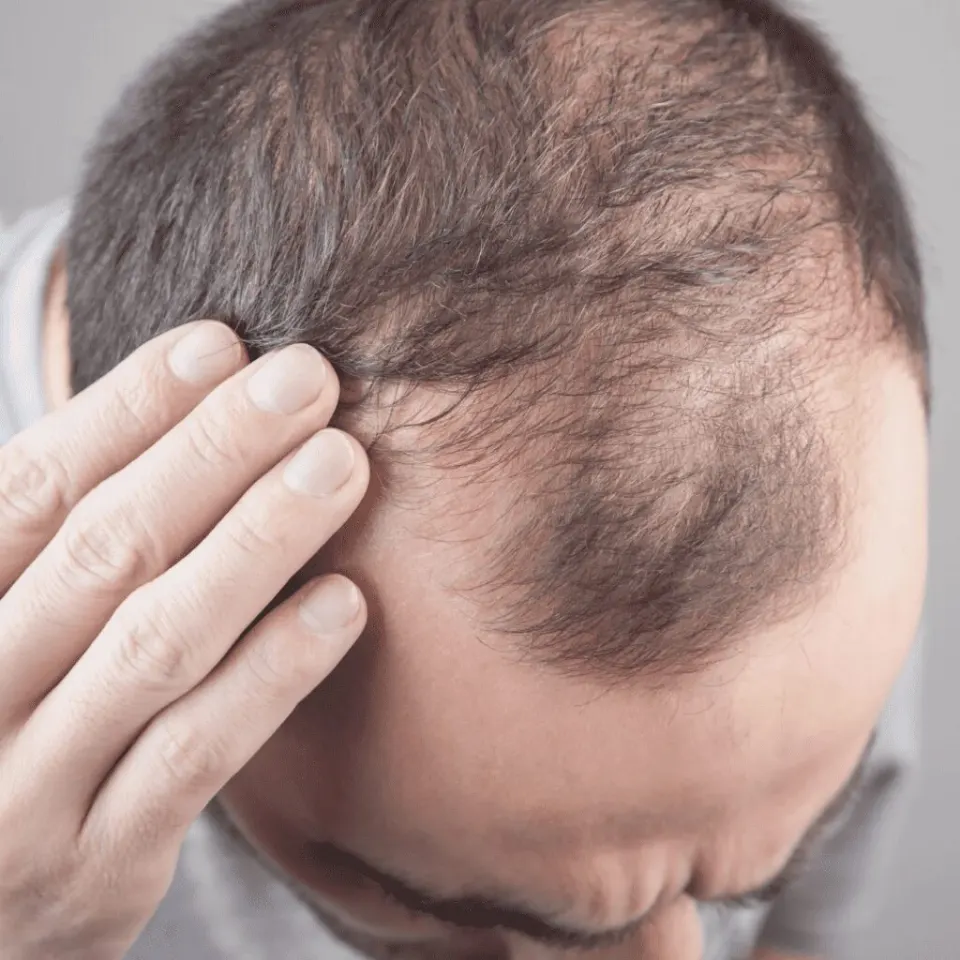
8 signs of a bad hair transplant
- Unnatural or "pluggy" hairline: a straight, too-dense or doll-like hairline that doesn't match the face — often from grafts placed at the wrong angle or in visible clusters.
- Wrong hair angle/direction: hairs standing perpendicular to the scalp instead of lying flat in the natural growth direction immediately betray the surgery.
- Graft failure / poor growth: transplanted hair that doesn't grow in as expected after a full year, leaving thin or bare areas.
- Over-harvested donor area: too many grafts taken from the back/sides, leaving visible thinning or "moth-eaten" patches where the donor should stay dense.
- Abnormal scarring: a stretched or wide linear scar from older FUT strip surgery, or noticeable white dot (punctate) scars from FUE when punches were too large or extraction too dense.
- Patchy or uneven density: clumps of density next to sparse areas, rather than a smooth, even result.
- Infection: persistent redness, swelling, bumps, pus or pain after healing should have finished — a sign something went wrong.
- Scalp necrosis (rare, serious): tissue damage from an overly aggressive or poorly executed procedure, which can cause permanent scarring.
Why hair transplants go wrong
A botched result usually traces back to one or more of these:
- Inexperienced or unsupervised operator: in some high-volume, low-cost clinics, technicians rather than qualified doctors perform key steps, leading to poor angles, density and hairline design.
- Over-harvesting for a bigger "wow": taking too many grafts at once damages the donor area permanently.
- Incorrect diagnosis: transplanting into active hair loss (like untreated pattern baldness or alopecia) without a plan for future loss.
- Outdated technique: old punch grafting or strip harvesting causes more scarring than modern FUE or DHI.
- Poor aftercare or infection: not following post-op instructions can cause graft failure.
- Insufficient donor hair: promising more coverage than the donor supply can actually deliver.
Celebrity hair transplant cases
Even public figures have had visible hair transplant issues — which is partly why the topic is so searched. Footballer Wayne Rooney spoke openly about an early transplant that looked unnatural, and later had corrective work; actor Jeremy Piven's early result was widely discussed for visible scarring and unevenness before being corrected. The takeaway isn't the gossip — it's that even high-profile, well-funded cases can go wrong first time, and that correction is possible. A poor first result is not the end of the road.
When to worry vs when to wait
| Timing | What's normal | What's a red flag |
|---|---|---|
| First 2 weeks | Scabbing, redness, shedding of transplanted hair | Spreading pus, severe pain, fever (infection) |
| 1–4 months | "Shock loss," little visible growth — normal | Ongoing infection, obvious donor over-harvest |
| 4–8 months | Patchy, uneven early growth — still normal | Pluggy hairline design already clearly visible |
| 12+ months | Full result in — final assessment point | Thin growth, unnatural hairline, visible scarring = likely failed |
The rule from repair specialists is consistent: wait a minimum of 12 months before judging or correcting. The scalp needs a full year for blood supply to rebuild and scar tissue to soften — operating on an unhealed scalp makes revision grafts fail and wastes precious donor hair.
How a hair transplant gone wrong is fixed
The good news: most failed transplants are correctable. The right approach depends on the type of damage and — critically — how much donor hair remains:
- Revision FUE: extracting poorly placed or oversized grafts and re-implanting them at the correct angle and density; adding grafts to fill patchy areas.
- Scar revision: transplanting grafts into scar tissue, or laser treatment, to reduce visible FUT/FUE scarring.
- Scalp micropigmentation (SMP): medical tattooing that camouflages scars and creates the illusion of density — no surgery, useful when donor supply is low.
- Body hair transplant (BHT): using beard or body hair as a supplemental donor source when the scalp donor is depleted.
- Combination approaches: often PRP alongside surgical revision, sometimes in two stages (soften the hairline first, add density later).
Unhappy with a previous transplant? Send photos for an honest assessment
Free Assessment → WhatsApp Us →Considering a repair? Our detailed guide covers the procedure, techniques and cost of correcting a failed result: Hair Transplant Repair: Fix Failed Results, Scars & Cost →
Hair Transplant Gone Wrong — Frequently Asked Questions
How do I know if my hair transplant failed?
The clearest signs after 12 months are very thin or no growth, an unnatural or pluggy hairline, and visible scarring or an over-harvested donor area. Before 12 months, patchiness is usually just normal healing — don't judge too early.
How common is a failed hair transplant?
Relatively uncommon with an experienced surgeon and modern FUE/DHI techniques, but it does happen — most often with high-volume, low-cost clinics where unqualified operators, over-harvesting or poor aftercare are involved.
Can a bad hair transplant be fixed?
Most can. Options include revision FUE, scar revision, scalp micropigmentation and body hair transplant, often combined. The key limit is how much donor hair remains — which is why avoiding a second mistake matters.
How long should I wait before a repair?
At least 12 months after the original procedure. The scalp must fully heal and the final result must be visible; operating too early causes revision grafts to fail and wastes limited donor hair.
What if my donor area is depleted?
If scalp donor supply is severely limited, surgical options are reduced. Body hair (beard/chest) can supplement in suitable candidates, and scalp micropigmentation can create the appearance of density without surgery.
Should I go back to the original clinic?
Most reputable clinics offer a revision rather than a refund — check your contract. But if the original clinic is unresponsive or was the source of the problem, an independent repair specialist is often the better path.
The Last Word from The More Clinics
A hair transplant gone wrong is disheartening, but it's rarely the end of the road — most aesthetic and technical errors can be corrected with the right specialist and a realistic plan. The two things that matter most are patience (wait the full 12 months before judging or fixing) and protecting your remaining donor hair by choosing an experienced revision surgeon rather than the cheapest option.
If you're unhappy with a previous result, you're welcome to send photos and your treatment history for a free, honest assessment — we'll tell you plainly what's realistic for your case.
Get a Free Assessment → WhatsApp Us →
Related: Hair transplant repair (procedure & cost) · Before & after · FUE guide · DHI guide · Types of hair loss
 Medically Reviewed by Dr. Seda Erdoğan, specialist in Hair Transplants and Dermatology. See Editorial Process. Last Updated: [22 August 2026]
Medical disclaimer: This guide is for informational purposes only and does not replace a personal consultation. Whether a result has truly failed, and which correction is appropriate, depends on individual assessment by a qualified specialist after the scalp has fully healed. Consult a specialist before making any decision about revision surgery.
This article provides general information and does not replace an individual medical assessment, diagnosis or treatment advice. Discuss decisions about your health and treatment with your treating clinician.