DHI vs FUE Hair Transplant: Which Is Right for You?
Talk to our team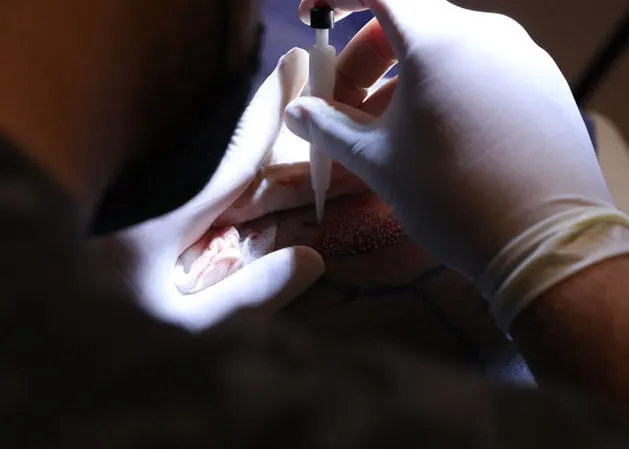
In this article 8 sections
DHI and FUE are the two leading hair transplant techniques today — and "which one is better?" is probably the most-asked question in hair restoration. Here's the honest answer up front: there's no universal "best" technique. Both are modern, minimally invasive, and capable of excellent, natural results in skilled hands.
The right choice depends on your hair loss pattern, how many grafts you need, your hair type, whether you mind shaving, your budget — and, above all, your surgeon's experience. This guide compares them clearly so you can understand which suits you.
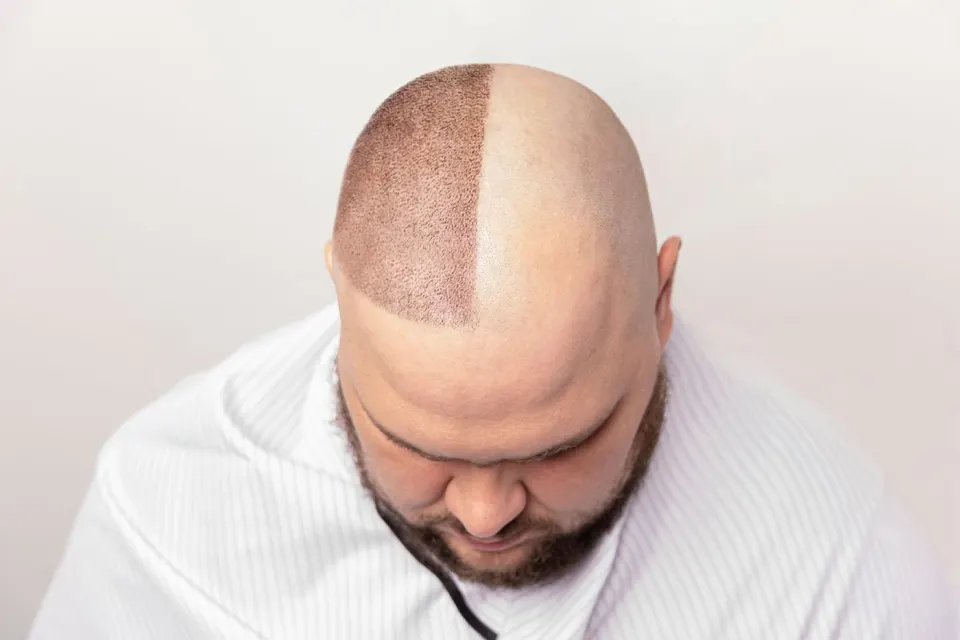
The honest short answer: FUE is usually better for larger areas and high graft counts — it's faster and more affordable. DHI is often better for hairline refinement, targeted density and no-shave procedures — but costs 40–60% more. Long-term results and recovery are very similar for both. The technique matters less than the surgeon performing it.
What is FUE?
Follicular Unit Extraction (FUE) is currently the most widely performed hair transplant technique in the world. The surgeon extracts individual follicular units from the donor area (usually the back of the head) using specialised micro-punches, creates tiny recipient channels in the balding area, and implants the grafts into those channels. Because it's efficient at moving large numbers of grafts, FUE is well suited to covering bigger areas. A popular advanced variant, Sapphire FUE, uses sapphire-tipped blades to create finer channels for a dense, natural result.
What is DHI?
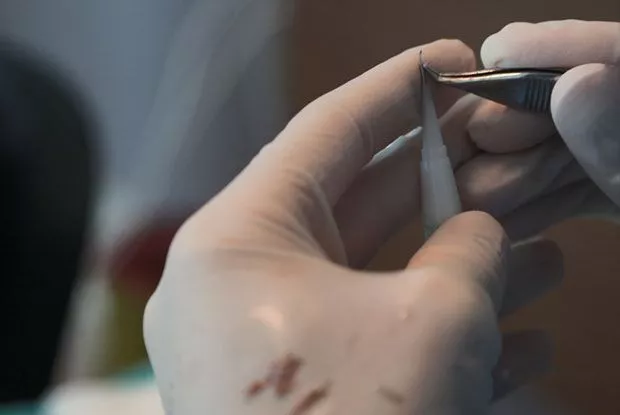
Direct Hair Implantation (DHI) uses a specialised tool called a Choi implanter pen, which extracts and implants each follicle in a single step — without pre-opening channels. This gives the surgeon precise control over the angle, depth and direction of every graft, which is ideal for creating density in targeted areas and for refining hairlines.
Because channels aren't opened in advance and the grafts spend less time outside the body, DHI is associated with less bleeding and crusting, and it more readily allows no-shave or partial-shave procedures.
DHI vs FUE: side by side
| FUE | DHI | |
|---|---|---|
| Method | Extract → open channels → implant | Extract & implant in one step (Choi pen) |
| Best for | Larger areas, high graft counts | Hairline refinement, targeted density |
| Graft capacity | Up to 4,000+ per session | Best under ~2,500 |
| Shaving | Usually full donor shave | No-shave / partial-shave possible |
| Duration | Faster (4–8 hrs) | Longer (30–50% more time) |
| Cost | More affordable | 40–60% more expensive |
| Recovery | Similar | Similar (slightly less crusting) |
| Final result | 12–18 months | 12–18 months |
Which is right for you?
Rather than one being better, each shines in different situations:
- Have a larger area or advanced hair loss (Norwood 5–7)
- Need a high number of grafts (3,000–5,000+)
- Are budget-conscious
- Don't mind shaving, or keep hair short anyway
- Want a faster procedure
- Want hairline refinement or targeted density
- Need fewer than ~2,500 grafts (earlier-stage loss)
- Prefer a no-shave or partial-shave procedure
- Have straight to slightly wavy hair
- Are also considering beard or eyebrow work (DHI's precision suits these)
Your hair type matters too: curly hair naturally creates more volume and coverage, while fine hair needs strategic placement to look dense — factors a good surgeon accounts for regardless of technique. The only reliable way to know which is right for you is a proper consultation that assesses your donor area, hair loss pattern, hair characteristics and goals.
Cost & recovery
DHI typically costs 40–60% more than FUE, because it uses specialised equipment (the Choi pen) and takes longer — each graft is individually loaded and placed. That extra cost buys precision and no-shave flexibility, not necessarily a better final result. Recovery, on the other hand, is very similar for both: initial growth appears at 2–3 months, and final results develop over 12–18 months regardless of technique. DHI may cause slightly less crusting and bleeding early on, but the overall healing timeline is comparable.
Why the surgeon matters more than the technique
Here's the single most important thing to take away: the technique matters far less than who performs it. A skilled, experienced surgeon achieves excellent, natural results with both FUE and DHI — matching the angle, depth and direction of your natural hair for a seamless hairline.
An inexperienced one can produce poor results with either. So rather than agonising over "DHI or FUE," focus on choosing a reputable clinic and an experienced surgeon who will recommend the right technique for your case honestly — not the one that's most profitable for them.
DHI vs FUE — Frequently Asked Questions
Which is better, DHI or FUE?
Neither is universally better. FUE suits larger areas and high graft counts (faster, cheaper); DHI suits hairline refinement, targeted density and no-shave procedures (pricier). Long-term results and recovery are similar. The surgeon's skill matters most.
Is DHI worth the extra cost?
It depends on your needs. DHI costs 40–60% more and buys precision and no-shave flexibility — genuinely valuable for hairline work or small refined areas. For large coverage, FUE gives similar results more affordably. There's no evidence DHI produces a fundamentally better outcome.
Which technique is best for a large bald area?
FUE — it efficiently handles high graft counts (4,000+ per session), making it the practical choice for advanced hair loss where broad coverage is the priority.
Which is best for the hairline?
DHI is often preferred for hairline refinement and targeted density, thanks to the Choi pen's precise control over angle, depth and direction.
Can I have DHI without shaving my head?
Often yes — DHI more readily accommodates no-shave or partial-shave procedures, which is useful if you have longer hair or want a discreet procedure. FUE usually requires shaving the donor area.
Do DHI and FUE have different recovery times?
Recovery is very similar. Initial growth appears at 2–3 months and final results at 12–18 months for both. DHI may cause slightly less crusting early on.
Which should I choose?
The one your surgeon recommends after assessing your hair loss pattern, donor area, hair type, graft needs and goals. There's no one-size-fits-all answer — a consultation is the reliable way to decide.
The Last Word from The More Clinics
DHI and FUE are both excellent, proven techniques — the "best" one is simply the one that fits your hair loss, your goals and your surgeon's expertise. FUE covers large areas efficiently and affordably; DHI offers precision and no-shave flexibility for refined work. But don't get lost in the technique debate: choosing an experienced, honest surgeon matters far more than the letters. Send us a photo and we'll tell you honestly which technique suits you and why — with a clear quote and no pressure.
Hair Transplant → WhatsApp Us →
Related: Hair transplant · Recovery & aftercare · Side effects
Medical disclaimer: This article is for general information only and does not replace a personal consultation. The right technique is determined by individual assessment of your hair loss, donor area and goals by a qualified specialist. Results vary by individual.
SOURCES:
Hair Transplantation, Pubmed
Healthline
American Hair Loss Association
HOW THE MORE CLINICS KEEP THE CONTENT UP TO DATE:
Our dedicated medical and editorial teams work tirelessly to stay informed about the ever-evolving world of health news. By rigorously tracking the latest research, clinical guidelines, and significant developments across various medical fields, they ensure that our content remains accurate, relevant, and up-to-date.
This includes reviewing peer-reviewed studies, consulting with healthcare professionals, and monitoring advancements in medical technology. Their meticulous efforts and attention to detail allow us to provide you with trustworthy, reliable information that you can depend on to make informed decisions about your health and well-being.
However, we still insist on getting a healthcare professional's opinion before you make any decision about your health. Consulting with a qualified expert ensures that the choices you make are informed, safe, and tailored to your individual needs.
Last Updated: [1 September 2026]
Written by The More Editorial Team and Medically Reviewed by Dr. Seda Erdoğan, specialist in Dermatology and Hair Transplantation. See our Editorial Process.
This article provides general information and does not replace an individual medical assessment, diagnosis or treatment advice. Discuss decisions about your health and treatment with your treating clinician.