Best Essential Oils for Hair Growth, Thickness & Scalp Health
Talk to our team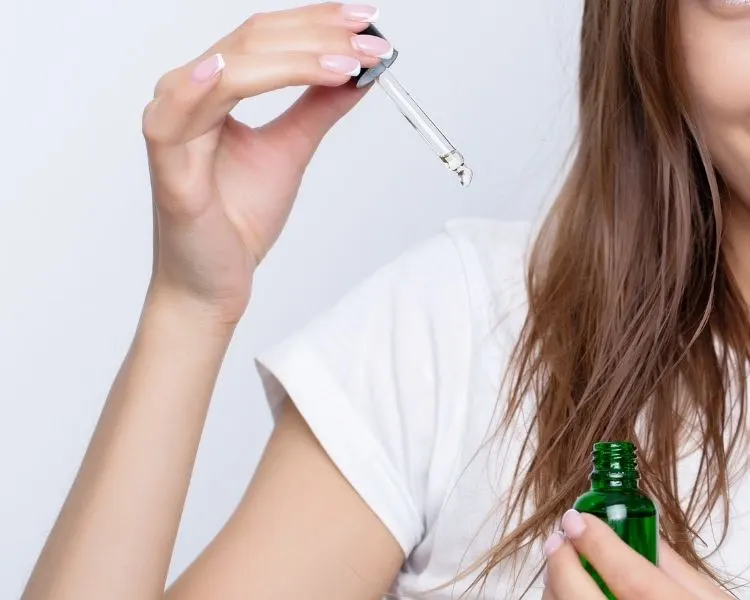
In this article 28 sections
Essential oils are the most researched natural approach to supporting hair growth — and the evidence is more substantive than most people realise. Peppermint oil has outperformed minoxidil in animal studies. Rosemary oil matched minoxidil in a randomised clinical trial in humans.
Lavender oil increased hair follicle count in peer-reviewed research. This guide covers all ten of the best-evidenced essential oils for hair growth, what the actual science says about each one, which oil to use for your specific concern, and how to use them safely and effectively.
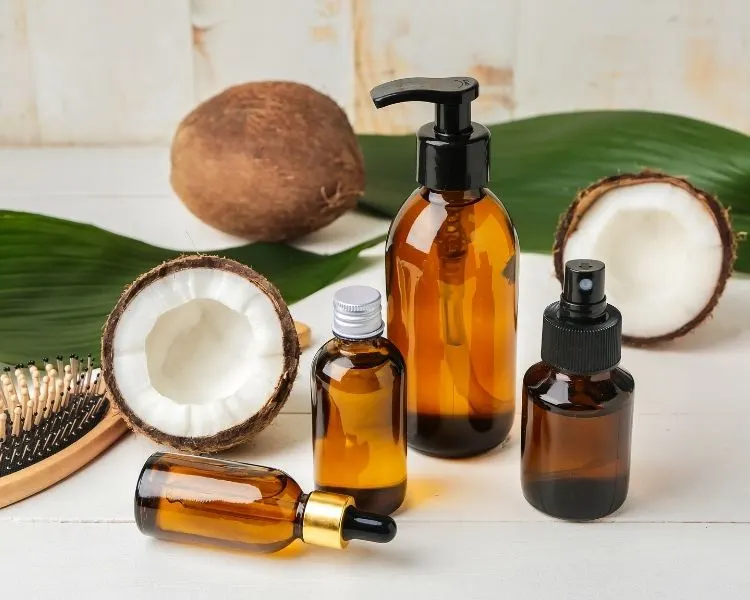
| Best essential oil for hair growth overall | Rosemary oil (human RCT evidence) |
| Best for scalp circulation and growth stimulation | Peppermint oil |
| Best for hair loss (alopecia areata) | Cedarwood oil blend |
| Best for scalp health and dandruff | Tea tree oil |
| Best for hair thickness and oily scalp | Clary sage oil |
| Best for shine and elasticity | Ylang-ylang oil |
| How to use — dilution ratio | 2–3 drops essential oil per 1 tbsp carrier oil |
| Frequency | 1–2 times per week |
Do essential oils actually work for hair growth?
Yes — with important caveats. Essential oils are not magic and they are not a substitute for medical treatment of clinical hair loss conditions. What they can do: stimulate scalp circulation, reduce scalp inflammation and infection, strengthen the hair shaft, and in some cases — particularly rosemary and peppermint — produce measurable increases in hair growth in peer-reviewed studies.
The key limitation is that most studies are small, some are conducted on animals (mice), and results vary significantly between individuals. An oil that produces dramatic growth in one person may do little for another, depending on the underlying cause of their hair concerns. For significant, progressive, or sudden hair loss, essential oils are a supportive measure — not a primary treatment. For genuine hair restoration, see: Hair Transplant Turkey →
How essential oils work for hair
Essential oils work through several mechanisms:
- Scalp circulation stimulation — oils like peppermint and rosemary increase blood flow to the scalp, delivering more oxygen and nutrients to hair follicles. This is the primary proposed mechanism for their hair growth effect.
- DHT inhibition — rosemary oil has demonstrated the ability to inhibit 5-alpha reductase, the enzyme that converts testosterone to DHT (dihydrotestosterone). DHT is the primary driver of androgenetic alopecia (male and female pattern baldness).
- Antimicrobial and antifungal action — tea tree, thyme, and cedarwood oils reduce scalp bacteria and fungi that cause dandruff, seborrhoeic dermatitis, and folliculitis — conditions that block hair follicles and cause shedding.
- Anti-inflammatory effects — lavender and chamomile oils reduce scalp inflammation that disrupts the hair growth cycle.
- Sebum regulation — clary sage and cedarwood oils balance oil production on the scalp, preventing follicle blockage.
The 10 best essential oils for hair — side-by-side comparison
| Oil | Primary benefit | Best for hair type | Evidence level | Leave on time |
|---|---|---|---|---|
| Rosemary | Growth stimulation, DHT inhibition | Thinning, pattern baldness | ★★★★★ Human RCT | 15–20 min |
| Peppermint | Circulation, anagen phase induction | Slow-growing, fine hair | ★★★★ Animal study | 15–20 min |
| Lavender | Follicle growth, anti-stress | All hair types | ★★★★ Animal study | 10–20 min |
| Tea Tree | Dandruff, scalp health | Oily, dandruff-prone | ★★★★ Human RCT | 5–10 min |
| Cedarwood | Sebum balance, alopecia areata | Dry or oily scalp, patchy loss | ★★★ Human case series | 15–20 min |
| Clary Sage | Thickness, sebum control | Oily hair, fine hair | ★★★ Small study | 15–20 min |
| Ylang-Ylang | Elasticity, breakage reduction | Dry, brittle, damaged hair | ★★★ Small study | 15–20 min |
| Chamomile | Soothing, scalp psoriasis | Sensitive scalp, dry hair | ★★★ Small study | 15–20 min |
| Thyme | Antimicrobial, circulation | Scalp infections, alopecia | ★★★ Small study | 15–20 min |
| Lemon | Scalp pH balance, shine | Oily hair, dull hair | ★★ Small study | 15 min max |
1. Rosemary Oil — the gold standard for hair growth
Rosemary oil is the most evidence-backed essential oil for human hair growth. A landmark randomised controlled trial published in Skinmed compared 2% rosemary essential oil with 2% minoxidil in patients with androgenetic alopecia over 6 months. Both groups showed statistically equivalent hair count increases — rosemary matched pharmaceutical minoxidil — with rosemary producing significantly less scalp itching as a side effect.
The proposed mechanism is dual: rosemary improves capillary blood supply to the scalp (similar to minoxidil's vasodilation effect) and inhibits 5-alpha reductase, the enzyme that converts testosterone to DHT — the hormone responsible for male pattern baldness and female pattern hair loss. It is also rich in antioxidants (rosmarinic acid, carnosic acid) that protect hair follicles from oxidative stress.
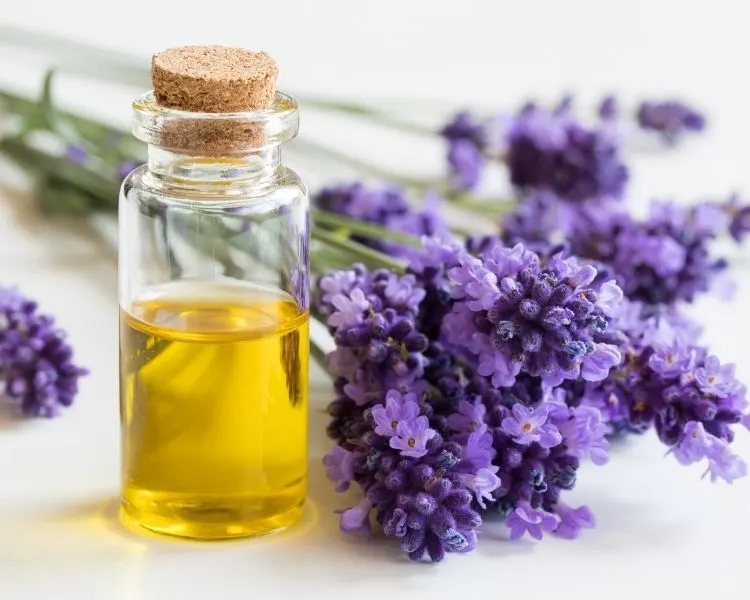
How to use rosemary oil for hair growth
- Mix 3 drops of 100% pure rosemary essential oil into 1 tablespoon of carrier oil (jojoba or coconut oil work well)
- Section hair to expose the scalp and apply the mixture directly with fingertips
- Massage gently for 3–5 minutes in circular motions — this alone increases blood flow
- Leave on for 15–20 minutes (or overnight for intensive treatment)
- Wash out thoroughly with your regular shampoo — you may need two washes
- Use 2 times per week consistently. The Skinmed trial ran for 6 months — results require patience.
2. Peppermint Oil — the circulation booster
Peppermint oil contains menthol, which produces a pronounced vasodilating effect on the scalp — you can feel it as a cooling tingle within seconds of application. A 2014 animal study published in Toxicological Research compared peppermint oil, minoxidil, jojoba oil, and saline in mice over 4 weeks. The peppermint oil group showed the greatest hair growth — a 92% increase in follicle number versus 50% for minoxidil — and uniquely, peppermint oil induced the anagen (active growth) phase of the hair cycle most rapidly.
No large-scale human RCT exists for peppermint oil yet — but the mechanistic rationale is strong. Scalp blood flow is a fundamental driver of follicle health, and peppermint's ability to increase dermal IGF-1 (insulin-like growth factor 1) provides an additional pathway for growth stimulation.
How to use peppermint oil
- Dilute 2–3 drops in 1 tablespoon of carrier oil — peppermint is one of the more potent oils and can cause irritation at higher concentrations
- Apply to the scalp, focusing on areas of concern
- Leave on for 15–20 minutes — the tingling sensation is normal and indicates improved blood flow
- Rinse thoroughly. Avoid contact with eyes — menthol causes significant irritation
- Use 1–2 times per week
3. Lavender Oil — follicle growth and stress reduction
A 2016 study published in Toxicological Research found that lavender oil applied topically to mice produced more hair and faster hair growth than control groups — a significant increase in follicle count, follicle depth, and dermal layer thickness. The proposed mechanism includes anti-inflammatory action and improved circulation to the dermal papilla (the structure at the base of each follicle that controls growth).
Lavender also has indirect benefits for hair: it reduces cortisol levels through its aromatherapy effect, and elevated cortisol (stress) is a well-documented cause of telogen effluvium — the sudden, diffuse hair shedding that often follows a physically or emotionally stressful period. For stress-related hair loss, lavender oil addresses both the scalp and the nervous system simultaneously.
How to use lavender oil
- Mix 2–3 drops per tablespoon of carrier oil (lavender pairs exceptionally well with jojoba)
- Apply to scalp with gentle massage — 3–5 minutes
- Leave for at least 10 minutes, or overnight for intensive use
- Rinse with shampoo. Use 1–2 times per week.
- Alternatively: add 5 drops to your conditioner to leave on for 3 minutes before rinsing
4. Tea Tree Oil — the scalp health essential
Tea tree oil (Melaleuca alternifolia) is the best-evidenced essential oil for scalp health. A double-blind RCT published in the Journal of the American Academy of Dermatology found that a 5% tea tree oil shampoo reduced dandruff by 41% over 4 weeks, significantly outperforming placebo in both lesion severity and itching. Dandruff (seborrhoeic dermatitis) caused by Malassezia yeast is one of the most common causes of scalp inflammation and associated hair shedding — treating it directly removes a barrier to growth.
Tea tree oil should not be used by those with sensitivity to it — it is one of the more reactive essential oils. Always patch test. Also: tea tree oil is toxic when ingested — keep out of reach of children.
How to use tea tree oil for scalp and hair
- Method 1 (targeted treatment): Dilute 5 drops in 1 tablespoon carrier oil. Apply to scalp, leave for 5–10 minutes, shampoo out. Use 1–2 times per week.
- Method 2 (daily maintenance): Add 10 drops to a full bottle of your shampoo. Use daily — rinse out after 2–3 minutes.
- Do not leave undiluted tea tree oil on the scalp — even at 5% concentration it can cause sensitisation with prolonged exposure.
5. Cedarwood Oil — for alopecia areata and scalp balance
Cedarwood oil is most notable for a 1998 study published in Archives of Dermatology that specifically examined patients with alopecia areata — the autoimmune condition causing patchy hair loss. Participants received daily scalp massages with a blend of cedarwood, thyme, rosemary, and lavender oils diluted in jojoba and grapeseed carrier oils. After 7 months, 44% of the treatment group showed significant improvement in hair growth, compared to 15% in the control group. This remains one of the few studies on alopecia areata and essential oils.
Cedarwood also balances sebum production — it is simultaneously suitable for dry scalps (where it stimulates oil glands) and oily scalps (where it regulates overproduction). This makes it one of the most broadly applicable oils for scalp health.
How to use cedarwood oil
- Mix 3 drops cedarwood with 1 tablespoon carrier oil (jojoba works well)
- For alopecia areata: combine with 2 drops rosemary + 2 drops thyme + 2 drops lavender in 2 tablespoons of mixed carrier oil (replicating the study blend)
- Massage into scalp for 5 minutes — daily for the study protocol, 3x weekly for maintenance
- Leave on for 15–20 minutes, then shampoo out
6. Clary Sage Oil — for thickness and oily scalp
Clary sage contains linalyl acetate, a compound that reduces sebum (oil) production on the scalp and has been shown in small studies to increase hair thickness. It is particularly effective for fine, flat hair where excess scalp oil weighs down the hair shaft and compresses follicle volume. Research has shown that clary sage can increase hair strand diameter — which is the definition of "thickness" at the individual hair level.
Clary sage also has mild phytoestrogenic properties — making it potentially beneficial for women experiencing hair thinning related to hormonal changes (perimenopause, postpartum). Note: avoid during pregnancy due to uterine-stimulating properties.
How to use clary sage oil
- Mix 2–3 drops per tablespoon of a lightweight carrier oil (jojoba or grapeseed)
- Apply to scalp and hair roots. Leave for 15–20 minutes before shampooing
- Alternatively: add 3 drops to your shampoo or conditioner and leave for 2 minutes before rinsing
- Use 1–2 times per week for oily hair; up to 3 times for fine, thinning hair
7. Ylang-Ylang Oil — for elasticity, breakage and shine
Ylang-ylang oil stimulates sebum production, making it ideal for dry, brittle hair that is prone to breakage. Studies have found that participants using ylang-ylang oil reported reduced hair breakage and increased hair elasticity — both of which allow hair to grow longer by preventing it from snapping before it reaches its potential length. It also adds significant shine, making it one of the best essential oils for hair aesthetics rather than purely scalp-focused growth.
Ylang-ylang has a very intense floral scent — use sparingly. More than 3–4 drops can cause headache in some individuals.
How to use ylang-ylang oil
- Mix 2 drops per tablespoon of carrier oil — no more. The scent is very powerful.
- Apply through the hair length (not just scalp) to focus on breakage protection
- Leave 15–20 minutes, then shampoo out
- Use 1 time per week — it can make hair greasy with overuse
8. Chamomile Oil — for sensitive scalps and shine
Chamomile is the gentlest of the ten oils and the best choice for those with sensitive skin, scalp psoriasis, eczema, or other inflammatory scalp conditions. It has proven anti-inflammatory properties — its active compound alpha-bisabolol reduces scalp inflammation and redness. Chamomile also adds natural shine and lightens hair slightly with repeated use (particularly on lighter hair colours).
How to use chamomile oil
- Mix 3 drops per tablespoon of almond or olive oil
- Apply to scalp and hair. Leave 15–20 minutes, then shampoo
- For sensitive scalps: dilute more than usual — 1–2 drops per tablespoon
- Use 1–2 times per week. Chamomile tea rinse (cooled, steeped chamomile) can be used as a leave-in rinse for ongoing scalp soothing.
9. Thyme Oil — the antimicrobial specialist
Thyme oil contains thymol and carvacrol — two of the most potent naturally occurring antimicrobial compounds. It is effective against the bacteria and fungi that cause folliculitis (infected hair follicles), seborrhoeic dermatitis, and other scalp conditions that physically obstruct hair growth. It was included in the cedarwood alopecia areata study blend for this reason.
Thyme is one of the more irritating essential oils — it must be well-diluted and should not be used on inflamed or broken skin.
How to use thyme oil
- Mix 2 drops per tablespoon of carrier oil — do not exceed this concentration
- Apply to scalp, focusing on any areas of dandruff or scalp infection
- Leave 15–20 minutes, then shampoo thoroughly
- Use 1 time per week. Patch test is essential before first use.
10. Lemon Oil — scalp pH balance and dandruff
Lemon essential oil has astringent properties that tighten the scalp and regulate excess oil production. It has antifungal activity against Malassezia (the yeast responsible for dandruff) and has been shown to reduce dandruff and improve hair strength in small studies. However, lemon oil is photosensitising — it significantly increases the risk of sunburn and hyperpigmentation when skin exposed to it goes out in the sun.
How to use lemon oil
- Mix 2 drops per tablespoon of carrier oil (coconut works well with lemon)
- Apply to scalp only — not on skin that will be exposed to sunlight
- Leave 15 minutes maximum. Always wash out thoroughly before going outdoors.
- Use 1 time per week only. Do not use before sun exposure.
Best essential oils by specific hair concern
Best essential oils for hair growth and thickness
For maximum growth and thickness, the evidence points to: Rosemary oil first (DHT inhibition + blood flow + human RCT), followed by peppermint oil (anagen phase induction), with clary sage for thickness specifically. A blend of these three in a quality carrier oil addresses growth from multiple angles simultaneously.
Recommended blend for hair growth and thickness: 3 drops rosemary + 2 drops peppermint + 2 drops clary sage in 2 tablespoons jojoba oil. Massage into scalp 2x weekly for minimum 3 months before evaluating results.
Best essential oils for scalp health
Tea tree oil is the clear leader for general scalp health — the only essential oil with a large-scale double-blind RCT specifically for dandruff. Cedarwood adds sebum regulation. Chamomile is the best choice for inflammatory or sensitive scalp conditions. A scalp-health blend: 5 drops tea tree + 2 drops cedarwood + 2 drops chamomile in 2 tablespoons carrier oil.
Best essential oils for hair loss
For alopecia areata (patchy hair loss): the cedarwood blend from the Archives of Dermatology study — cedarwood + thyme + rosemary + lavender in jojoba and grapeseed. For androgenetic alopecia (male pattern or female pattern baldness): rosemary oil daily, as per the Skinmed RCT protocol. For hair loss in women related to hormonal changes: clary sage + rosemary blend. For stress-related shedding (telogen effluvium): lavender oil — both topically and aromatically.
Carrier oils — which to choose and why
The carrier oil you choose affects how your essential oil penetrates the scalp, how much residue it leaves, and whether it adds its own hair benefits. Never use essential oils without a carrier oil.
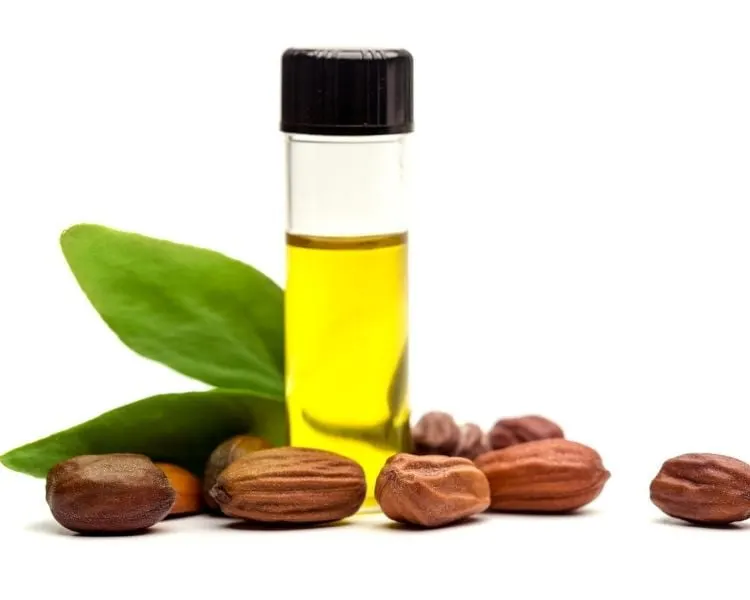
| Carrier oil | Best for | Key property | Feel on hair |
|---|---|---|---|
| Jojoba oil | All hair types, especially oily | Mimics scalp sebum — absorbs cleanly, balances oil | Light, non-greasy |
| Coconut oil | Dry, damaged, coarse hair | Penetrates hair shaft — reduces protein loss | Rich — may leave residue |
| Grapeseed oil | Fine, thin hair | Extremely lightweight — won't weigh hair down | Virtually weightless |
| Almond oil | Dry scalp, dandruff | Vitamin E rich — nourishes scalp, reduces flaking | Moderate weight |
| Argan oil | Frizzy, coarse, colour-treated | High Vitamin E + fatty acids — seals cuticle, reduces frizz | Silky, adds shine |
| Olive oil | Very dry or brittle hair | Rich antioxidants — deep conditioning | Heavy — weekly treatment only |
| Avocado oil | Thick, coarse, heat-damaged | Vitamins A, D, E — penetrates and reinforces | Rich, protective |
How to use essential oils for hair — complete method guide
Method 1: Scalp treatment (most effective for growth)
This is the primary delivery method for growth-focused use. The massage itself is an active component — it increases dermal blood flow independently of the oil.
- Mix your essential oil(s) with carrier oil in a small bowl or dropper bottle. Ratio: 2–3 drops essential oil per 1 tablespoon (15ml) carrier oil.
- Part the hair in sections to expose the scalp directly
- Apply the mixture along each part line with fingertips or a dropper
- Massage in slow circular motions for 3–5 minutes — cover the full scalp
- Leave on for the recommended time (oil-dependent — see the comparison table above)
- Wash out with shampoo. You may need two washes for heavy oils like coconut or olive.
- Repeat 1–2 times per week
Method 2: Shampoo or conditioner addition
Add 5–10 drops of essential oil per 100ml of your shampoo or conditioner. Shake well before each use. This provides a lower concentration than the scalp treatment but is effective for maintenance and scalp health. Leave shampoo on for 2–3 minutes before rinsing.
Method 3: Hair mask
Mix 3–5 drops of essential oil into a hair mask base (honey + yoghurt, mashed avocado, or egg + olive oil). Apply from scalp to tips. Leave 20–30 minutes under a shower cap. Rinse and shampoo. Use once weekly for deep conditioning alongside the growth benefits.
Method 4: Leave-in scalp mist
Mix 10 drops of lavender or rosemary essential oil into 100ml of water in a spray bottle. Shake vigorously before each use (oil and water separate). Mist lightly over the scalp between wash days. This is the most diluted delivery method but provides ongoing contact time without the oil weight.
Safety: side effects and who should be cautious
| Risk | Which oils | Prevention |
|---|---|---|
| Contact dermatitis | Tea tree, thyme, cinnamon | Always dilute. Patch test 24h before use. |
| Photosensitisation | Lemon, bergamot, citrus oils | Rinse out before sun exposure. Apply evenings only. |
| Hormonal effect | Clary sage, lavender (high dose) | Avoid during pregnancy. Use at standard dilution. |
| Eye irritation | Peppermint, tea tree | Wash hands after application. Keep away from eyes. |
| Toxicity if ingested | All essential oils | Never ingest. Keep out of reach of children. |
Pregnant women: consult a healthcare professional before using any essential oil, particularly clary sage, rosemary (at high doses), and thyme. See also: Hair Loss in Women Guide →
How long does it take to see results?
The hair growth cycle is 2–7 years with a 3-month resting phase (telogen) before shedding. Any topical intervention affecting the follicle takes at minimum 3 months to produce visible results — because that is how long it takes for a follicle to transition from resting to active growth and produce visible hair at the surface. The rosemary vs minoxidil study ran for 6 months.
Set realistic expectations: at 3 months you may notice reduced shedding and scalp improvement. At 6 months, visible changes in density and length in the treated areas. At 12 months, the full picture. Consistency is non-negotiable — applying an oil twice, noticing nothing, and stopping is the most common failure pattern.
When essential oils are not sufficient — hair transplant options
Essential oils are effective for supporting hair health, slowing miniaturisation, and optimising scalp conditions. They cannot regenerate follicles that have already been permanently destroyed by androgenetic alopecia or scarring alopecia. When you can see scalp clearly through thinning hair, when your hairline has moved back significantly, or when oil treatments have produced no improvement after 6 consistent months — the follicles in those areas are gone and no topical product will bring them back.
For these situations, hair transplantation is the only clinically proven solution. See hair transplant results → | Hair Transplant in Antalya, Turkey → | Hair Transplant Recovery Guide →
Frequently asked questions — essential oils for hair
What is the best essential oil for hair growth?
Rosemary oil — by a significant margin, based on evidence. It is the only essential oil to have matched a pharmaceutical hair growth treatment (minoxidil) in a randomised controlled trial in humans. For growth in pattern baldness specifically, nothing else comes close in terms of documented evidence. Peppermint oil is a strong second, particularly for those without androgenetic alopecia, based on its potent circulation-stimulating effect.
Which essential oils are best for promoting hair growth?
The best-evidenced oils for hair growth, in order: (1) Rosemary oil — human RCT vs minoxidil; (2) Peppermint oil — strongest animal study showing anagen phase induction; (3) Lavender oil — increased follicle count in animal study; (4) Cedarwood blend — human case series in alopecia areata. For a comprehensive approach, combine rosemary and peppermint in jojoba oil applied 2x weekly.
What essential oils are good for hair?
The answer depends on the specific concern. For growth: rosemary and peppermint. For scalp health and dandruff: tea tree. For thinning and oily scalp: clary sage and cedarwood. For dry, brittle, breaking hair: ylang-ylang and chamomile. For shine: ylang-ylang and lemon. For stress-related shedding: lavender. Most people benefit from a blend rather than a single oil.
Are essential oils safe for all hair types?
Yes, with appropriate selection. Lightweight carrier oils (jojoba, grapeseed) prevent heaviness in fine hair. Tea tree and lemon for oily hair. Ylang-ylang and chamomile for dry hair. The essential oil itself should always be patch tested regardless of hair type — sensitivity can develop at any time.
How often should I apply essential oils?
1–2 times per week for scalp treatments. Daily is unnecessary and can cause buildup and irritation. The scalp needs time to absorb and respond between applications. More is not better — consistency over months is what produces results.
Can essential oils replace minoxidil or finasteride?
Not as a replacement — as a complement. Rosemary oil has matched minoxidil in one study, but it has a slower onset. For someone with early-stage pattern hair loss who wants to avoid pharmaceutical side effects, rosemary oil is a legitimate evidence-based alternative. For advanced or rapidly progressing androgenetic alopecia, pharmaceutical intervention provides faster, more reliable response. They can also be used simultaneously.
Do essential oils work on bald spots?
On bald spots from alopecia areata (patchy, autoimmune): possibly — the cedarwood blend study showed 44% improvement. On bald spots from advanced androgenetic alopecia where follicles are no longer present: no. Essential oils cannot regenerate absent follicles. For those areas, hair transplantation is the appropriate solution.
The Last Word from The More Clinics
Essential oils are not a substitute for medicine — but the best of them, particularly rosemary and peppermint, have genuinely impressive evidence. Used consistently, with the right dilution, the right carrier oil, and realistic expectations about timelines, they are among the most effective natural interventions available for scalp health and hair growth support. The key word is consistent: twice weekly for six months, not twice and done.
For hair loss that has progressed beyond what topical interventions can address, our team at The More Clinics provides comprehensive hair restoration — from trichology assessment and non-surgical options to FUE and DHI hair transplant in Antalya. A free consultation tells you honestly where on the spectrum your situation sits and what is actually likely to help.
Get a Free Consultation → WhatsApp Us →
Medical disclaimer: This guide is for informational and educational purposes only. Essential oils are not a medical treatment for hair loss. Consult a dermatologist or trichologist for personalised assessment of hair loss conditions before beginning any treatment.
This article is medically reviewed by Dermatologist Dr. Seda Erdoğan, Last Update 13 August 2026
This article provides general information and does not replace an individual medical assessment, diagnosis or treatment advice. Discuss decisions about your health and treatment with your treating clinician.